Batis mystica
Batis mystica
Order: Passeriformes / Family: Platysteiridae
About the Batis mystica
The Forest Batis, scientifically known as Batis mystica, is a small, captivating bird found primarily in the densely wooded areas of eastern and southern Africa. This species plays a significant ecological role within its habitat, acting as both predator and prey. Its presence indicates a healthy, biodiverse forest environment. The Forest Batis thrives in the understory layers of forests, where it diligently forages for insects and other small invertebrates. This bird is particularly abundant in regions such as Kenya, Tanzania, and Mozambique, favoring elevations from sea level up to 1,800 meters. Its ecological role extends beyond just a predator of insects; it serves as a crucial part of the food web, providing sustenance for larger avian predators. Seasonally, the Forest Batis exhibits subtle behavioral changes. During the breeding season, males become more vocal and conspicuous, using their distinct calls to establish territories and attract mates. Outside of breeding periods, these birds are less vocal and tend to be more secretive, blending into the background of their forest habitats. Despite their small size, Forest Batises are essential indicators of forest health. Their presence suggests a robust insect population, which in turn supports a diverse range of other wildlife. As insectivores, they help control insect populations, preventing outbreaks that could otherwise harm vegetation. The Forest Batis is not just a charming resident of Africa's forests; it is a key player in maintaining the delicate balance of its ecosystem. Conservation efforts aimed at preserving forest habitats indirectly benefit this species, ensuring that these birds continue to thrive in their natural environments.
The Batis mystica belongs to the family Platysteiridae, within the order Passeriformes. These birds typically live average 4 years with a maximum recorded of 7 years.
How to Identify a Batis mystica
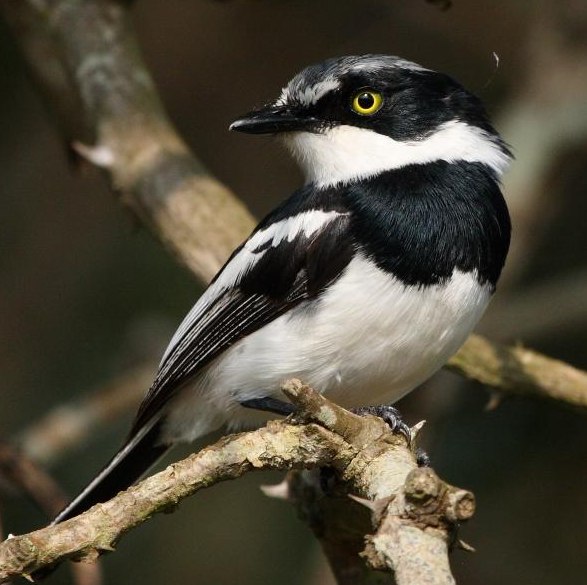
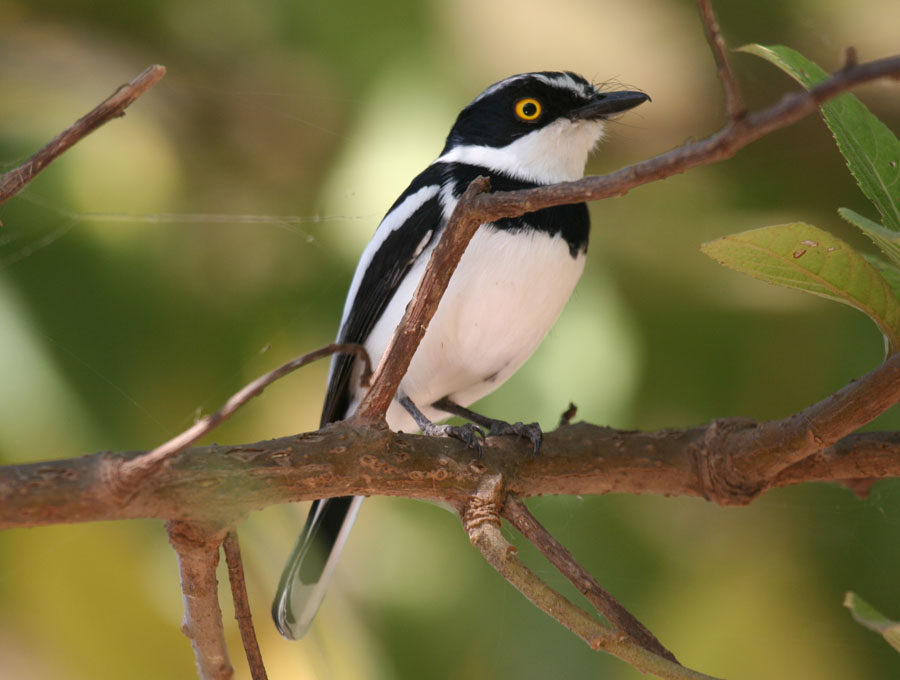
The adult Forest Batis, or Batis mystica, exhibits a distinctive plumage pattern characterized by a striking contrast of black, white, and gray. Males display a bold black mask across their faces, which extends down their throats, complemented by a crisp white breast and belly. The rest of the upperparts are a soft gray, with a noticeable white wingbar that is visible in flight. Females are slightly less striking but share the same basic pattern, with a more subdued black mask and a browner hue on their upperparts. Juveniles resemble females but with even more muted coloration and a generally browner appearance. This bird's small size, approximately 12 cm in length, makes it a compact yet conspicuous presence in its forest habitat. In flight, the Forest Batis displays a quick, darting silhouette, characterized by rapid wingbeats and short, direct flights between perches. When perched, it often adopts an upright position with its tail slightly cocked, providing a clear view of its distinctive plumage. The Forest Batis can be confused with similar species such as the Chinspot Batis, but it can be distinguished by its more pronounced black mask and the absence of a rufous spot on the flanks, a hallmark of the Chinspot. Observers should also note the Forest Batis's preferred habitat, as it rarely strays far from its forested environment, unlike some of its relatives.
Having trouble telling birds apart? Upload a photo to our bird identification tool for an instant species match.
Batis mystica Habitat and Range
Preferred Habitat
The Forest Batis is predominantly associated with dense, moist forest habitats across eastern and southern Africa. It thrives in both lowland and montane forests, with a preference for areas where the canopy is closed and the understory is rich with foliage. This bird is commonly found at elevations ranging from sea level to about 1,800 meters, showing a particular affinity for regions that offer a mix of mature trees and dense underbrush. While the Forest Batis is primarily a forest dweller, it can occasionally be found in well-wooded gardens or plantations, especially during non-breeding seasons when it may venture into more open areas. Unlike many other passerines, the Forest Batis does not typically inhabit urban environments, preferring the seclusion and complexity of natural forest ecosystems. Seasonal habitat shifts are subtle, with these birds maintaining a consistent presence in their preferred forest habitats year-round.
Geographic Range
The Forest Batis has a distribution that spans the eastern and southern regions of Africa, with its range extending from eastern Kenya and Tanzania down to Mozambique and parts of Zimbabwe. This bird is most commonly found within the coastal forests and inland forests of these areas, where the climate supports the dense, moist environments they favor. Within its range, the Forest Batis is considered a resident species, showing little to no migratory behavior. However, local movements do occur, often dictated by changes in food availability or breeding conditions. Population density tends to be higher in regions where forest cover is extensive and continuous, such as the Eastern Arc Mountains of Tanzania. Although not migratory, the Forest Batis may undertake short-distance dispersal movements after the breeding season, particularly juveniles seeking new territories.
Want to know which birds visit your area? Browse our backyard birds by location guides for region-specific species lists.
What Does the Batis mystica Eat?
The Forest Batis primarily feeds on a diet of insects and other small invertebrates, playing a vital role in controlling insect populations within its forest habitat. It employs a sit-and-wait foraging technique, often perching motionlessly before launching quick, precise sallies to snatch prey from foliage or the air. Common prey items include beetles, moths, caterpillars, and spiders, which it captures with remarkable agility. Seasonal variations in diet are minimal, though the abundance of certain prey types may influence foraging behavior and success. During the wetter months, when insect populations peak, the Forest Batis may increase its feeding frequency to take advantage of the surplus. Prey size is generally small, typically matching the size of the bird itself, allowing for quick consumption and minimal handling time. Feeding occurs throughout the day, with peaks in activity during the cooler morning and late afternoon hours.
Batis mystica Behavior and Social Structure
The Forest Batis exhibits a range of interesting behaviors that include both solitary and social aspects. These birds are generally seen alone or in pairs, particularly during the breeding season when pairs remain in close proximity to their nesting sites. Males are highly territorial, using a combination of vocalizations and visual displays to defend their space from intruders. Courtship involves a series of displays where the male fans his tail and flutters his wings while calling softly to the female. Outside the breeding season, the Forest Batis may become part of mixed-species foraging flocks, benefiting from the increased foraging efficiency and protection from predators that come with safety in numbers. Although generally shy, these birds exhibit a boldness when defending their nests, often engaging in distraction displays to lead potential threats away. Daily activity patterns involve periods of active foraging interspersed with rest periods, often in shaded areas to avoid the midday heat.
Batis mystica Nesting and Reproduction
The Forest Batis constructs a small, cup-shaped nest, carefully woven from fine plant materials like grass, twigs, and spider silk, which provides both strength and camouflage. Nests are typically located in the fork of a tree branch, at a height of 1 to 3 meters above the ground, offering protection from ground-based predators. The female lays a clutch of two to three eggs, which she incubates for approximately 14 to 16 days. During this period, the male plays a crucial role by providing food for his mate, ensuring she can devote her energy to incubation. After hatching, both parents feed the chicks, which fledge about 16 to 18 days later. The Forest Batis generally raises one to two broods per year, depending on food availability and environmental conditions. Parental care continues for a short period after fledging, with both parents guiding the young in their early foraging efforts.
Batis mystica Sounds and Vocalizations
The Forest Batis has a distinctive song that consists of a series of melodious, clear whistles, often described as 'swee-swee-swee,' repeated in a rhythmic pattern. This primary song serves multiple purposes, including territory defense and mate attraction. Calls are generally softer and less frequent, used primarily for communication between mates or within family groups. Alarm calls, on the other hand, are sharp and abrupt, serving as a warning to other birds about potential dangers. During the dawn chorus, the Forest Batis's song stands out with its clarity and consistency, often among the first to be heard in the early morning hours. Compared to other species, the Forest Batis's calls are less varied but highly effective for their intended purposes.
Interesting Facts About the Batis mystica
- 1The Forest Batis can catch insects mid-flight with impressive precision, a skill known as hawking.
- 2Despite its small size, the Forest Batis can be fiercely territorial, defending its area with vigor.
- 3Forest Batises are often found in mixed-species flocks, benefiting from the 'many eyes' effect for predator detection.
- 4The species' nest is intricately woven and camouflaged, often going unnoticed by predators and observers alike.
- 5The female Forest Batis may remain on the nest for long durations, relying on the male for food delivery during incubation.
- 6Forest Batises are monogamous, forming strong pair bonds that can last several breeding seasons.
- 7Their presence in a forest is a good indicator of the health and biodiversity of the environment.
Batis mystica Conservation Status
The Forest Batis is currently classified as Least Concern by the IUCN, with populations considered stable across much of its range. However, like many forest-dependent species, it faces threats from habitat loss due to deforestation, agricultural expansion, and human development. Conservation efforts focus on preserving and restoring natural forest habitats, particularly in biodiversity hotspots like the Eastern Arc Mountains. Historical population data suggest that while the overall numbers have remained stable, local declines have occurred in areas where habitat destruction is most severe. Efforts to mitigate these threats include the establishment of protected areas and conservation education programs aimed at sustainable land-use practices.
Other Platysteiridae Species


Birds Similar to the Batis mystica
These species are often confused with the Batis mystica due to similar appearance or overlapping range.