
Chinspot Batis
Batis molitor
Order: Passeriformes / Family: Platysteiridae
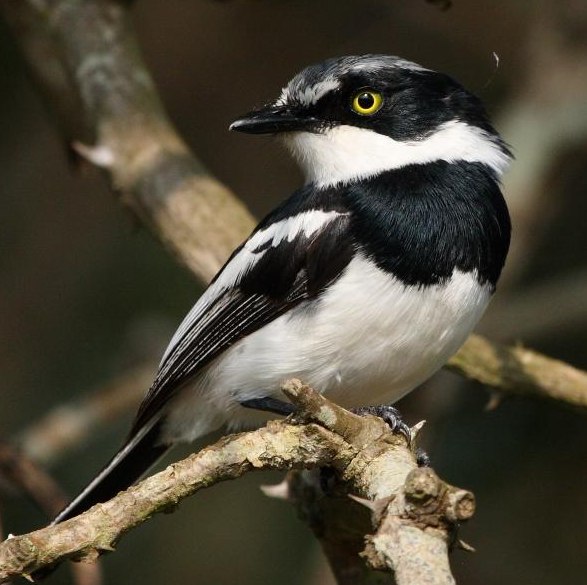
Wikimedia Commons
About the Chinspot Batis
The Chinspot Batis, scientifically known as Batis molitor, is a small passerine bird belonging to the family Platysteiridae. This bird is notable for its striking black and white plumage and the characteristic black spot on its chin, which gives it its common name. It inhabits a range of habitats in sub-Saharan Africa, including woodlands, scrublands, and savannas, and is particularly prevalent in regions like South Africa, Zimbabwe, and Botswana. The Chinspot Batis plays a significant ecological role as an insectivore, helping to control insect populations and thus maintaining the balance within its ecosystem. Its presence is often an indicator of healthy, undisturbed habitats. Seasonal behaviors of the Chinspot Batis include breeding during the rainy months when insect prey is abundant. During this time, males engage in complex courtship displays to attract females. In non-breeding seasons, the Chinspot Batis may be less conspicuous, as it does not typically migrate significant distances. However, some local movements may occur in response to food availability or environmental conditions. The Chinspot Batis is also a subject of interest for birdwatchers and researchers due to its intriguing behaviors and the role it plays in its natural habitat.
The Chinspot Batis belongs to the family Platysteiridae, within the order Passeriformes. These birds typically live average 5 years with a maximum recorded of 9 years.
How to Identify a Chinspot Batis
Adult Chinspot Batises have distinct black and white plumage, with a prominent black mask across their eyes and a black spot on the chin that is unique to this species. The back is slate gray, contrasting with the white underparts. Males and females are similar, though females may have a slightly browner tint on the back and less defined masks. Juveniles differ from adults by their duller plumage and lack of a distinctive chin spot. In terms of similar species, the Chinspot Batis can be confused with the Black-headed Batis, but the latter lacks the chin spot and has more extensive white on the wings. When in flight, the Chinspot Batis has a quick, undulating flight pattern, typical of small insectivorous birds. They perch upright on branches, often flicking their tail and wings, which is a helpful behavior for identification.
Having trouble telling birds apart? Upload a photo to our bird identification tool for an instant species match.
Chinspot Batis Habitat and Range
Preferred Habitat
The Chinspot Batis is commonly found in a variety of habitats, including dry savannas, open woodlands, and scrubby areas. It prefers areas with scattered trees and dense undergrowth, often at elevations ranging from sea level to 2,000 meters. In South Africa, the Chinspot Batis is frequently observed in acacia-dominated woodlands and mopane habitats. During the breeding season, it tends to select territories with abundant insect prey. This bird is adaptable to some extent, also occurring in secondary growth and garden environments, although it is less common in heavily urbanized areas. Seasonal shifts in habitat use are minimal, as this species is largely sedentary.
Geographic Range
The Chinspot Batis occurs across a wide swath of southern and eastern Africa. Its core range includes countries such as South Africa, Namibia, Botswana, Zimbabwe, and Mozambique. It also extends into parts of Zambia and Angola. Being primarily non-migratory, the Chinspot Batis does not undertake long-distance migrations but may exhibit short-range movements in response to environmental changes or food availability. Population densities are highest in areas where appropriate woodland and savanna habitats are intact. Its absence from arid deserts and densely forested areas indicates its specific habitat preferences.
Want to know which birds visit your area? Browse our backyard birds by location guides for region-specific species lists.
What Does the Chinspot Batis Eat?
The Chinspot Batis is primarily insectivorous, feeding on a variety of insects and other arthropods. Its diet includes beetles, ants, termites, and caterpillars, which it gleans from foliage or captures in mid-air sallies. Seasonally, the diet may vary slightly, with an increased intake of flying insects when they are more abundant during rainy seasons. The Chinspot Batis employs a sit-and-wait hunting strategy, often perching quietly before darting out to catch prey. Feeding occurs primarily during the cooler morning and late afternoon hours, reducing activity during the heat of the day.
Chinspot Batis Behavior and Social Structure
Socially, the Chinspot Batis is typically seen singly or in pairs, exhibiting strong territorial behavior, especially during the breeding season. Males perform aerial displays and sing to establish territory boundaries and attract mates. These displays include fluttering flights and exaggerated wing movements. The Chinspot Batis is also known for its loud, melodious calls, which play a crucial role in territory defense and courtship. When faced with predators, it uses a variety of alarm calls to warn other birds. Daily activity peaks during the early morning and late afternoon, with periods of rest during midday.
Chinspot Batis Nesting and Reproduction
Chinspot Batises construct small, cup-shaped nests, often placed in the fork of a tree branch. The nest is woven from fine plant materials and spider webs, camouflaged with lichens and bark to blend seamlessly with its surroundings. The typical clutch size ranges from two to three eggs, which are incubated primarily by the female for about 14 days. After hatching, both parents participate in feeding the chicks. The young fledge approximately 14 to 18 days post-hatching. The Chinspot Batis may raise one or two broods per year, depending on environmental conditions.
Chinspot Batis Sounds and Vocalizations
The primary song of the Chinspot Batis consists of a series of clear, whistled notes, often rendered as 'swee-swee-swee.' This song is typically heard at dawn and is used for both territory establishment and mate attraction. Call notes are sharp and piercing, serving as communication between mates or as alarm signals in the presence of predators. The bird's vocalizations are distinct and can be distinguished from other sympatric species by their rhythm and clarity.
Interesting Facts About the Chinspot Batis
- 1The Chinspot Batis is known for its remarkable ability to mimic calls of other bird species, adding complexity to its song.
- 2A Chinspot Batis's nest is meticulously camouflaged, making it difficult to spot even by experienced birdwatchers.
- 3This bird species often uses its striking plumage patterns as a form of visual communication during courtship displays.
- 4Chinspot Batises exhibit territorial monogamy, often remaining with the same mate across multiple breeding seasons.
- 5The Chinspot Batis can be highly adaptable, sometimes venturing into suburban gardens in search of prey.
- 6Despite its small size, the Chinspot Batis plays an essential role in controlling insect populations in its habitat.
- 7The Chinspot Batis's distinctive chin spot is not only a key identification feature but also plays a role in social interactions.
Chinspot Batis Conservation Status
Currently, the Chinspot Batis is classified as Least Concern by the IUCN, with stable population trends. While habitat loss poses a potential threat, this species demonstrates some adaptability to altered landscapes. Conservation efforts focus on preserving natural habitats and promoting sustainable land-use practices. Historically, the Chinspot Batis has maintained healthy population levels across its range, attributed to its adaptability and diverse habitat preferences.
Other Platysteiridae Species


Birds Similar to the Chinspot Batis
These species are often confused with the Chinspot Batis due to similar appearance or overlapping range.

