Short-tailed Batis
Batis mixta
Order: Passeriformes / Family: Platysteiridae

Wikimedia Commons
About the Short-tailed Batis
The Short-tailed Batis (Batis mixta) is a small passerine bird belonging to the family Platysteiridae. This agile and active bird is primarily found in the montane forests of eastern Africa, particularly in regions such as the Eastern Arc Mountains of Tanzania and Kenya. These forests are renowned for high biodiversity and endemism, making the presence of the Short-tailed Batis an important indicator of ecological health.
The significance of the Short-tailed Batis extends beyond its role as a forest resident. It serves as a vital component of the forest ecosystem, contributing to insect population control. The bird’s presence in these habitats also highlights the ecological richness and the importance of conservation efforts within these regions.
Ecologically, the Short-tailed Batis plays an essential role. It primarily feeds on insects, thus helping to maintain a balance in the forest ecosystem. During the breeding season, which typically occurs from October to March, this bird becomes particularly active, engaging in intricate courtship displays and vocal exchanges. Their seasonal behaviors are closely tied to the availability of food resources and nesting sites, making them a reliable indicator of seasonal changes within their habitat.
The Short-tailed Batis is a testament to the unique biodiversity of eastern Africa's montane forests. Its presence emphasizes the need for continued conservation efforts to preserve these critical habitats, which face threats from deforestation and habitat degradation. Its ecological role and behaviors underscore the interconnectedness of species within these vibrant ecosystems.
The Short-tailed Batis belongs to the family Platysteiridae, within the order Passeriformes. These birds typically live average 5 years with a maximum recorded of 8 years.
How to Identify a Short-tailed Batis
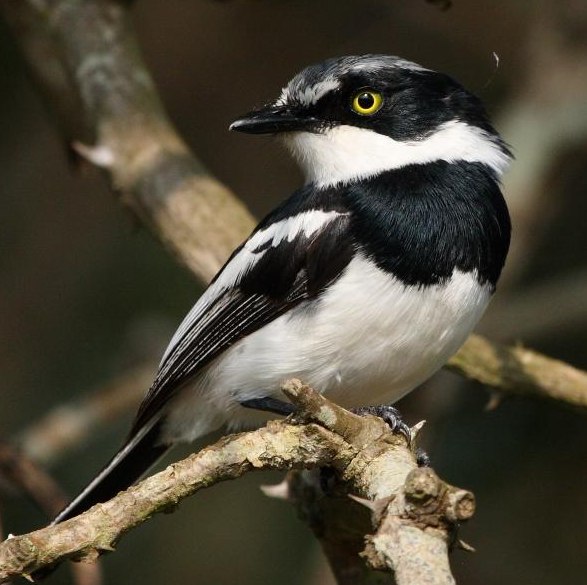
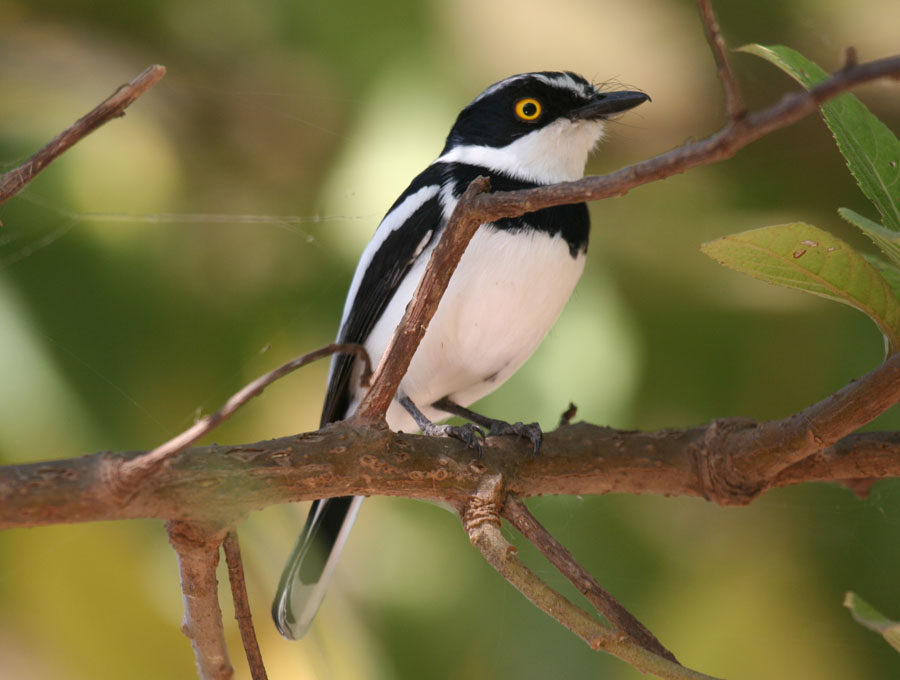
Identifying the Short-tailed Batis involves observing its distinctive black and white plumage. Adult males display a bold black face mask and a white throat, with a contrasting black breast band. The upperparts are predominantly black, while the underparts are white, creating a striking appearance. Females, while similar, can be distinguished by a slightly duller color palette and a narrower breast band.
Juvenile Short-tailed Batis exhibit a more subdued appearance compared to adults. Their plumage tends to be brownish-black, with less defined markings, which gradually develop as they mature. This coloration helps them remain inconspicuous to predators while they are still vulnerable.
In flight, the Short-tailed Batis exhibits a compact silhouette, with a short tail and quick, direct flight pattern. When perched, it often assumes an upright posture, which is characteristic of many members of the Platysteiridae family. The bird's size and distinct plumage make it unlikely to be confused with other species in its range, although novice birders might initially mistake it for other black and white forest birds. However, its unique face mask and breast band are key identifiers.
Having trouble telling birds apart? Upload a photo to our bird identification tool for an instant species match.
Short-tailed Batis Habitat and Range
Preferred Habitat
The Short-tailed Batis is primarily associated with montane and sub-montane forests. These habitats are often dense with a rich understory, providing ample cover and foraging opportunities. In Tanzania and Kenya, it inhabits mountainous regions, typically at elevations ranging from 1,500 to 2,500 meters.
During certain seasons, the bird may venture into adjacent forest edges or secondary growth areas, particularly when searching for food or nesting sites. However, it typically avoids open or heavily disturbed areas, preferring the safety and resources provided by intact forest habitats.
While the Short-tailed Batis is not commonly found in urban environments, its presence in rural areas near mountainous regions can occasionally be noted, especially when these areas retain significant forest cover. Seasonal shifts in habitat usage are generally minor, reflecting its strong preference for stable forest environments.
Geographic Range
The range of the Short-tailed Batis is confined to specific regions in eastern Africa. It is predominantly found in the Eastern Arc Mountains, a chain that stretches across Tanzania and southern Kenya. This area is known for its high levels of endemism and biodiversity, hosting numerous unique species.
The Short-tailed Batis does not undertake long-distance migrations, although it may exhibit some altitudinal movements in response to seasonal changes. During the breeding season, its range is more tightly associated with specific forested areas that provide optimal nesting conditions.
Population density can be relatively high in suitable habitats, such as the Usambara and Uluguru Mountains in Tanzania. However, its overall distribution is patchy, reflecting the fragmented nature of its montane forest habitat. Conservation efforts in these regions are crucial to maintaining the bird's current range and promoting population stability.
Want to know which birds visit your area? Browse our backyard birds by location guides for region-specific species lists.
What Does the Short-tailed Batis Eat?
The Short-tailed Batis primarily feeds on insects, making it an important predator within its ecosystem. Its diet consists of a variety of arthropods, including beetles, caterpillars, and spiders. This insectivorous diet helps control insect populations, contributing to forest health.
Dietary preferences can shift slightly with the seasons, aligning with the availability of prey. During the breeding season, there is an increased demand for food to support the energy-intensive activities of courtship and egg production.
Foraging behavior is characterized by active pursuit of prey, often involving short sallying flights from perches to capture insects in mid-air or glean them from foliage. The bird's keen eyesight and agile flight make it a proficient hunter, capable of catching even small, elusive prey. Feeding occurs throughout the day, with peaks in activity in the early morning and late afternoon when insect activity is highest.
Short-tailed Batis Behavior and Social Structure
The Short-tailed Batis is a socially active bird, often found in pairs or small family groups. It exhibits strong territorial behavior, with males vigorously defending their territories through vocalizations and displays.
Courtship involves complex displays, including wing flicking and tail spreading, accompanied by a series of calls. These behaviors are aimed at attracting mates and establishing pair bonds, which are crucial for successful breeding.
In response to potential threats, the Short-tailed Batis employs a combination of alarm calls and evasive maneuvers. Its small size and agility allow it to escape predators swiftly. Daily activity patterns include periods of foraging interspersed with rest and social interactions, reflecting the bird's need to balance energy expenditure with rest.
The bird's behavior highlights its adaptability and social nature, essential traits for survival in the dynamic environments of montane forests.
Short-tailed Batis Nesting and Reproduction
The nesting habits of the Short-tailed Batis involve constructing cup-shaped nests, typically placed in the forks of trees or dense shrubs. These nests are carefully crafted from plant fibers, moss, and spider webs, providing a secure and camouflaged environment for eggs and chicks.
A typical clutch consists of two to three eggs, which are incubated primarily by the female. The incubation period lasts around 14 to 16 days, during which the male plays a supportive role by providing food and defending the territory.
Once hatched, the chicks are altricial, requiring constant care and feeding by both parents. The fledging period lasts approximately 15 to 18 days, after which the young birds gradually gain independence. The Short-tailed Batis typically raises one brood per season, although favorable conditions may occasionally allow for a second.
Parental roles are well-defined, with both the male and female contributing to the feeding and protection of the young, ensuring high survival rates in the challenging forest environment.
Short-tailed Batis Sounds and Vocalizations
The vocalizations of the Short-tailed Batis are distinctive, playing a crucial role in communication and territory defense. The primary song is a series of melodious whistles, often described as a repetitive 'pee-pee-pee,' delivered with a consistent rhythm and moderate pitch.
Call notes include sharp 'chip' sounds, used in social interactions and as alarm calls. These calls are vital for maintaining contact between mates and signaling potential threats.
During the dawn chorus, the Short-tailed Batis becomes particularly vocal, contributing to the rich tapestry of sounds that characterize the forest environment. Its vocalizations, though not as complex as some songbirds, are essential for its social and territorial interactions.
Comparatively, the Short-tailed Batis's sounds are softer and more rhythmic than those of other Platysteiridae species, aiding in its identification by ear.
Interesting Facts About the Short-tailed Batis
- 1The Short-tailed Batis's scientific name, Batis mixta, reflects its mixed black and white plumage.
- 2Despite its striking appearance, the Short-tailed Batis is often overlooked due to its small size, measuring just 12 cm in length.
- 3This species exhibits a unique foraging technique, known as 'sallying,' where it captures insects mid-air during brief flights.
- 4The Eastern Arc Mountains, home to the Short-tailed Batis, are considered one of the world's top biodiversity hotspots.
- 5Unlike many birds, the Short-tailed Batis does not migrate long distances, making it a year-round resident of its forest habitat.
- 6Courtship displays of the Short-tailed Batis include elaborate wing and tail movements, accompanied by specific vocalizations.
- 7The Short-tailed Batis can often be spotted in the company of other small forest birds, forming loose mixed-species foraging flocks.
Short-tailed Batis Conservation Status
The Short-tailed Batis is currently listed as Least Concern by the IUCN, reflecting a relatively stable population trend. However, its dependence on montane forest habitats makes it vulnerable to habitat loss due to logging and agricultural expansion. Conservation efforts in eastern Africa focus on preserving these critical habitats. Protected areas and community-led forest management initiatives play a key role in safeguarding the bird's environment. Historically, the Short-tailed Batis has maintained stable populations, but ongoing habitat fragmentation poses a significant threat. Conservation strategies must prioritize habitat restoration and sustainable land-use practices to ensure long-term survival. The bird's presence in biodiverse regions underscores the importance of integrated conservation efforts that benefit multiple species within these ecosystems.
Other Platysteiridae Species


Birds Similar to the Short-tailed Batis
These species are often confused with the Short-tailed Batis due to similar appearance or overlapping range.