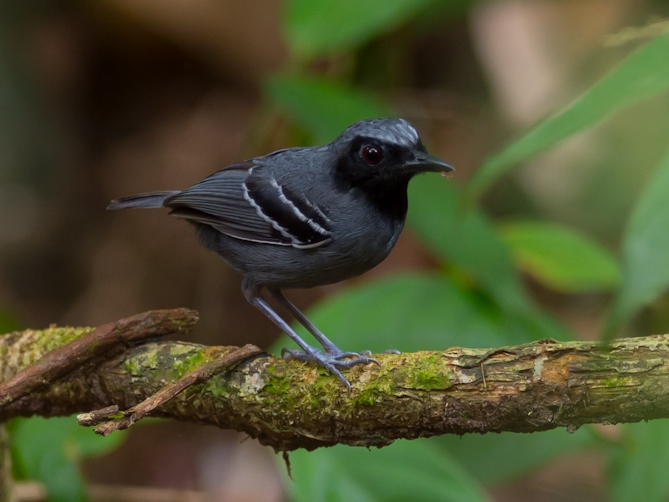
Black-headed Antbird
Percnostola rufifrons
Order: Passeriformes / Family: Thamnophilidae

Wikimedia Commons
About the Black-headed Antbird
The Black-headed Antbird, scientifically referred to as Percnostola rufifrons, is a captivating species within the Thamnophilidae family, primarily inhabiting the dense undergrowth of tropical forests. This species is most prominently found in the western Amazon basin, spanning countries such as Peru, Ecuador, Colombia, and northern Brazil. The Black-headed Antbird plays a crucial ecological role as an insectivore, helping to maintain the balance of insect populations within its habitat.
The significance of this bird extends beyond its environmental contributions. It serves as an indicator species, reflecting the health of tropical forest ecosystems. The presence of the Black-headed Antbird signifies a well-preserved forest, as it thrives in undisturbed environments. Unfortunately, habitat destruction due to logging and agriculture poses a threat to its population, making its conservation a priority for biodiversity maintenance.
Ecologically, the Black-headed Antbird is an essential part of the avian community within its range. It exhibits territorial behavior, often seen foraging close to the ground, sifting through leaf litter to uncover insects. Seasonally, the bird does not exhibit long-distance migration, but may shift altitudinally or move to different forest types in response to changes in insect abundance. Its adaptability to shifts within its habitat reflects the dynamic nature of tropical forest ecosystems.
The Black-headed Antbird belongs to the family Thamnophilidae, within the order Passeriformes. These birds typically live estimated lifespan is around 5-8 years in the wild, with limited data on maximum longevity..
How to Identify a Black-headed Antbird
The Black-headed Antbird is a small, yet distinctively colored bird, making identification relatively straightforward for those familiar with tropical avifauna. Adults possess a striking black head, which contrasts sharply with their rufous-brown body. This distinctive coloration helps to differentiate them from other antbirds that may exhibit more muted tones.
Juvenile Black-headed Antbirds, while maintaining some of the adult's coloration, often show duller shades and less contrast between the head and body, making them more challenging to identify. Both male and female birds exhibit the same plumage, a feature that is not common in all antbird species, simplifying the identification process during field observations.
In terms of behavior, the Black-headed Antbird often perches low in the understory, adopting a horizontal or slightly raised posture that provides camouflage against the leaf litter background. Its flight is typically short and direct, with rapid wing beats, often moving from one low perch to another within the dense forest undergrowth. Unlike some antbird species, the Black-headed Antbird does not often join mixed-species flocks, reducing potential confusion with similar species during birding expeditions.
Having trouble telling birds apart? Upload a photo to our bird identification tool for an instant species match.
Black-headed Antbird Habitat and Range
Preferred Habitat
The Black-headed Antbird primarily inhabits tropical lowland forests, with a strong preference for areas rich in undergrowth and thick leaf litter. These birds are typically found in regions with dense vegetation, such as the Amazon rainforest. Ideal habitats include primary forests, where human disturbance is minimal, allowing for a rich diversity of insects and other invertebrates.
Ranging from sea level up to elevations of about 1,200 meters, this bird can be found in various forest types, including terra firme forests and occasionally in seasonally flooded varzea forests. During the wet season, they may shift to slightly higher ground to avoid flooded areas, although they do not typically make significant seasonal migrations.
In terms of urban presence, the Black-headed Antbird is rarely found in developed areas, as it requires dense forest environments to thrive. Its reliance on pristine forest conditions underscores the importance of habitat conservation in maintaining healthy populations.
Geographic Range
The Black-headed Antbird's range is predominantly located within the western Amazon basin, an area known for its extensive and diverse tropical forests. They are commonly found across Peru, Ecuador, and Colombia, with populations extending into northern Brazil. In Ecuador, the species is more prevalent in the eastern lowlands and foothills of the Andes.
These birds are non-migratory, meaning they do not undertake long-distance migrations like some other avian species. Instead, they remain within their territorial range throughout the year, only moving locally in response to environmental changes or food availability.
Population density tends to be highest in regions with well-preserved forest landscapes, where human impact is minimal. The continuous loss of habitat due to deforestation and agricultural expansion poses a significant threat to their range, as the Black-headed Antbird relies heavily on intact forest ecosystems.
Want to know which birds visit your area? Browse our backyard birds by location guides for region-specific species lists.
What Does the Black-headed Antbird Eat?
The diet of the Black-headed Antbird consists primarily of insects and other small invertebrates, which it forages from the forest floor and low vegetation. Its feeding habits are highly specialized, focusing on a wide range of arthropods, including ants, beetles, and spiders, which it captures with precision from leaf litter and low shrubs.
Seasonally, there might be slight shifts in diet composition based on the availability of prey, but insects remain the mainstay throughout the year. During periods of high insect abundance, such as the rainy season, the Black-headed Antbird may consume larger quantities to sustain itself and its offspring.
Foraging techniques involve sifting through the leaf litter and probing into crevices with its bill to uncover hidden prey. The bird's foraging activity is primarily diurnal, aligning with the activity patterns of its prey, and it is often seen feeding alone or in pairs rather than in large groups.
Black-headed Antbird Behavior and Social Structure
The Black-headed Antbird exhibits a solitary or pair-based social structure, often maintaining exclusive territories that they defend vigorously against intruders. Territorial disputes involve vocalizations and physical displays, with both male and female participating in defense.
During the breeding season, which coincides with the onset of the rainy season, courtship displays become more pronounced. These involve a series of vocalizations and physical posturing to attract mates and establish pair bonds. The bird's vocal repertoire is crucial in these interactions, serving both in mate attraction and territory defense.
In response to predators, the Black-headed Antbird employs cryptic behavior, relying on its dull plumage and secretive habits to avoid detection. When threatened, it may freeze or retreat into denser vegetation rather than fly away, minimizing its visibility to predators.
Daily activity patterns of the Black-headed Antbird revolve around feeding and territory maintenance, with peaks in activity during the early morning and late afternoon. The bird's preference for low-light conditions within the dense forest understory dictates much of its behavior and interactions within the ecosystem.
Black-headed Antbird Nesting and Reproduction
The nesting habits of the Black-headed Antbird reflect its adaptation to life in the dense undergrowth of tropical forests. Nests are typically constructed low to the ground, within a meter of the forest floor, often concealed in thick vegetation to protect against predators.
The nest itself is a cup-shaped structure made from fine twigs, leaves, and other plant materials, often lined with softer substances to cushion the eggs. The clutch size usually consists of two to three eggs, which both parents incubate over a period of about 14 to 16 days.
After hatching, the fledglings remain in the nest for approximately 12 to 14 days before they are ready to leave. During this time, both parents take turns feeding the young and keeping them warm, demonstrating a high degree of parental investment. Typically, the Black-headed Antbird raises one brood per year, although favorable conditions may occasionally allow for a second brood.
Black-headed Antbird Sounds and Vocalizations
The primary song of the Black-headed Antbird is a series of clear, whistled notes that rise and fall in a rhythmic pattern. The pitch is moderate, with a smooth and melodious quality that distinguishes it from harsher calls of other antbird species.
In addition to its song, the Black-headed Antbird uses a variety of call notes for communication, including sharp 'chip' sounds to signal alarm or alertness to potential threats. These calls are often repeated in quick succession when the bird is agitated or defending its territory.
Dawn chorus behavior is particularly notable, with males beginning their vocalizations early in the morning, establishing their presence and territory boundaries. The song's clarity and rhythmic nature are comparable to well-tuned musical notes, making it a delightful experience for birders familiar with tropical avian soundscapes.
Interesting Facts About the Black-headed Antbird
- 1The Black-headed Antbird often follows army ant swarms to catch insects disturbed by the ants' movement.
- 2Despite its name, the Black-headed Antbird does not feed primarily on ants but consumes a wide variety of insects.
- 3During territorial disputes, Black-headed Antbirds use both vocal and visual signals to ward off competitors.
- 4The Black-headed Antbird's preference for dense understory makes it a challenging species for birdwatchers to spot.
- 5This species' vocalizations play a crucial role in maintaining pair bonds and establishing territory boundaries.
- 6The Black-headed Antbird's nest is often well camouflaged, blending seamlessly with the forest floor's leaf litter.
- 7Unlike migratory birds, the Black-headed Antbird remains within the same territory year-round, adapting to seasonal changes in food availability.
Black-headed Antbird Conservation Status
Currently, the Black-headed Antbird is classified as Least Concern by the IUCN, reflecting its relatively stable population trend across its range. However, ongoing habitat destruction poses a substantial threat to its future. Primary threats include deforestation due to logging activities and the conversion of forests to agricultural lands. These activities result in habitat fragmentation, which can isolate populations and reduce genetic diversity, making conservation efforts critical. Efforts to conserve the Black-headed Antbird focus on protecting large tracts of tropical forests and establishing reserves where the species can thrive without human interference. Historical population changes have shown declines in areas with significant habitat loss, highlighting the need for continued monitoring and habitat protection strategies.
Other Thamnophilidae Species

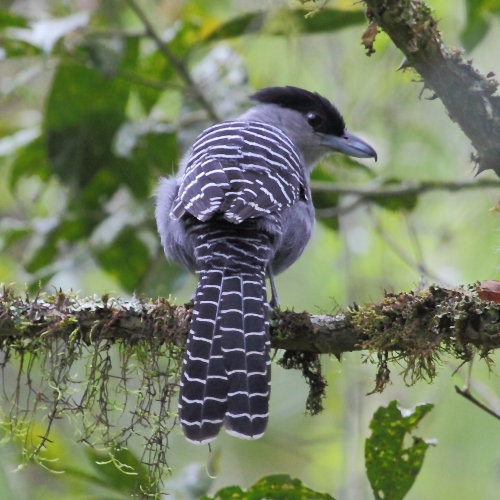


Birds Similar to the Black-headed Antbird
These species are often confused with the Black-headed Antbird due to similar appearance or overlapping range.