
Brown-streaked Flycatcher
Muscicapa williamsoni
Order: Passeriformes / Family: Muscicapidae

Wikimedia Commons
About the Brown-streaked Flycatcher
The Brown-streaked Flycatcher, Muscicapa williamsoni, is a small passerine bird belonging to the family Muscicapidae. It inhabits a range of environments across Southeast Asia, including parts of Thailand, Malaysia, and Myanmar. This species plays a significant ecological role as an insectivore, helping control insect populations in its habitat. The Brown-streaked Flycatcher thrives in forested areas, often seen in dense undergrowth and at the edges of woodland regions. It can also be found in secondary forests and well-wooded gardens, displaying adaptability to human-altered landscapes.
During the breeding season, typically from March to August, these birds become more conspicuous as they engage in courtship displays and territorial singing. The Brown-streaked Flycatcher is primarily sedentary, though some local movements may occur in response to food availability or habitat changes. Its presence is a reliable indicator of healthy forest ecosystems, as it requires abundant insect prey to sustain its diet.
The ecological role of Muscicapa williamsoni extends beyond insect control. It serves as prey for larger avian predators and mammals, thus contributing to the food web dynamics within its habitat. Additionally, the species' sensitivity to environmental changes makes it a useful bioindicator for monitoring habitat health and biodiversity. The Brown-streaked Flycatcher's presence is often associated with the vibrancy of its habitat, underscoring the interconnectedness of flora and fauna in these regions.
The Brown-streaked Flycatcher belongs to the family Muscicapidae, within the order Passeriformes. These birds typically live average 4-6 years with a maximum recorded of 8 years.
How to Identify a Brown-streaked Flycatcher
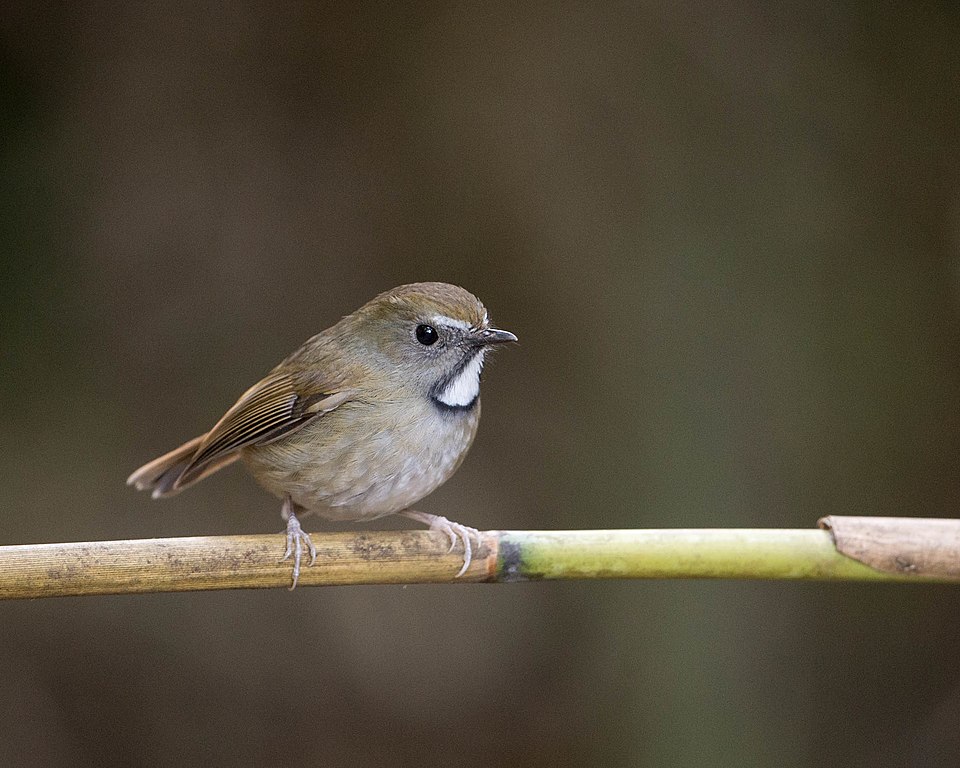
The Brown-streaked Flycatcher is a small bird, measuring approximately 13-14 cm in length. Its plumage is predominantly brown on the upperparts, with distinct streaking that provides camouflage among the branches and leaves. The underparts are paler, showcasing the eponymous brown streaks that are more prominent in good lighting. Adults possess a subtle eye-ring and a shorter, broader bill typical of the flycatcher family. Juveniles resemble adults but may have buffier wing bars and less discernible streaking on the underparts.
Sexual dimorphism is minimal in this species, with males and females exhibiting similar coloration and size. However, males may display slightly brighter plumage during the breeding season, aiding in courtship displays. In flight, the Brown-streaked Flycatcher presents a compact silhouette with rapid wingbeats and a steady, direct flight pattern.
The Brown-streaked Flycatcher can be confused with similar species such as the Asian Brown Flycatcher (Muscicapa dauurica), but it can be distinguished by its more pronounced streaking and slightly different habitat preferences. Its perching posture is upright, often on exposed branches or twigs, where it adeptly scans for insect prey.
Having trouble telling birds apart? Upload a photo to our bird identification tool for an instant species match.
Brown-streaked Flycatcher Habitat and Range
Preferred Habitat
The Brown-streaked Flycatcher inhabits lowland tropical and subtropical forests, favoring areas with dense undergrowth and ample tree cover. It is commonly found at elevations up to 1,500 meters, although it is most prevalent in lowland regions. These birds are adaptable, sometimes venturing into secondary forests and well-wooded gardens where human activity is minimal.
Seasonal habitat shifts are not pronounced for this species, as it tends to remain within its established territories year-round. This flycatcher is more frequently encountered in rural and semi-urban areas with sufficient tree cover than in densely populated urban centers. Its preference for forest edges and clearings makes it a regular presence in managed forest reserves and protected areas.
Geographic Range
The Brown-streaked Flycatcher's range is concentrated in Southeast Asia, predominantly within Thailand, Malaysia, and parts of Myanmar. Its breeding range overlaps significantly with its year-round range, as this species is mainly resident and non-migratory.
These flycatchers occupy a variety of forested habitats but are most commonly found in areas with dense foliage and abundant insect prey. While not considered migratory, some local movements may occur as individuals seek optimal foraging sites or respond to environmental changes. Population density is highest in regions with extensive forest cover and minimal human disturbance, such as national parks and protected wildlife areas.
Want to know which birds visit your area? Browse our backyard birds by location guides for region-specific species lists.
What Does the Brown-streaked Flycatcher Eat?
The diet of the Brown-streaked Flycatcher consists primarily of insects and other small arthropods. It favors a diverse array of prey, including beetles, flies, and caterpillars, which it captures in flight or gleans from vegetation. During the breeding season, its dietary needs increase to support nestlings, resulting in more frequent and intensive foraging activities.
This flycatcher employs a 'sit-and-wait' hunting technique, perching quietly until it spots prey, then launching quick, acrobatic flights to capture it mid-air. On occasion, it may also hawk insects from foliage or the ground. The species shows flexibility in its diet, occasionally consuming small fruits or berries when insect abundance is low, especially during the wet season when fruiting plants are more prevalent.
Brown-streaked Flycatcher Behavior and Social Structure
The Brown-streaked Flycatcher exhibits solitary or paired behavior, especially during the breeding season when males establish and defend territories through song and displays. Territories are often centered around prime foraging areas and suitable nesting sites. Courtship displays are subtle, involving soft calls and fluttering flights by the male to attract a mate.
While primarily solitary, these birds may join mixed-species foraging flocks during non-breeding seasons, taking advantage of the increased vigilance and foraging efficiency such groups offer. They are diurnal, active during the early morning and late afternoon when insect activity peaks. In response to predators, this flycatcher relies on its cryptic plumage and rapid flight to evade capture, often retreating to thicker cover when threatened.
Brown-streaked Flycatcher Nesting and Reproduction
The Brown-streaked Flycatcher constructs a cup-shaped nest using fine twigs, roots, and grass, often lined with softer materials such as feathers or plant down. Nests are typically placed in the fork of a tree or concealed within dense foliage, providing protection from predators and the elements.
Clutch size ranges from two to four eggs, with both parents sharing incubation duties over a period of approximately 12-14 days. After hatching, both the male and female participate in feeding and caring for the chicks. The fledging period lasts around two weeks, during which the young birds develop the skills necessary for independent survival. This species may produce one to two broods per year, depending on environmental conditions and food availability.
Brown-streaked Flycatcher Sounds and Vocalizations
The Brown-streaked Flycatcher's primary song is a series of clear, melodious whistles, each phrase typically consisting of two to three notes. The song is often delivered from a prominent perch and serves to establish territory and attract mates. Its call notes are softer and less elaborate, used for communication between mates or signaling alarm in response to potential threats.
During the dawn chorus, this flycatcher contributes its distinctive song to the morning symphony, often initiating singing just before sunrise. Its alarm calls are sharp and brief, serving to alert other birds of danger, often compared to the short, high-pitched 'chip' frequently heard in the forest understory.
Interesting Facts About the Brown-streaked Flycatcher
- 1The Brown-streaked Flycatcher is named after Herbert Williamson, an ornithologist who contributed to the study of Southeast Asian avifauna.
- 2Despite its small size, the Brown-streaked Flycatcher can consume up to 1.5 times its body weight in insects each day, showcasing its efficiency as a predator.
- 3The species' distinctive song can be heard over 100 meters away, serving as both a territorial marker and a mate attraction tool.
- 4It often participates in mixed-species flocks, benefiting from the collective vigilance against predators and increased foraging success.
- 5The Brown-streaked Flycatcher exhibits high site fidelity, often returning to the same breeding and foraging territories year after year.
- 6Though primarily insectivorous, this flycatcher occasionally supplements its diet with small berries, especially during seasonal insect scarcity.
- 7A study found that areas with healthy flycatcher populations also had significantly lower pest insect densities, highlighting their ecological importance.
Brown-streaked Flycatcher Conservation Status
The Brown-streaked Flycatcher currently holds a status of Least Concern on the IUCN Red List, with stable population trends across its range. Primary threats include habitat loss due to deforestation and land-use changes, which reduce available nesting and foraging sites. Conservation efforts focus on preserving and managing forest habitats, ensuring that these areas remain viable ecosystems for the flycatcher and other forest-dependent species. While historically resilient, ongoing monitoring of population trends and habitat quality is necessary to prevent future declines. The flycatcher's role as an insectivore makes it a vital component of forest health, and conservation strategies that maintain biodiversity benefit this species and the broader ecosystem.
Other Muscicapidae Species


Birds Similar to the Brown-streaked Flycatcher
These species are often confused with the Brown-streaked Flycatcher due to similar appearance or overlapping range.
