
Eyebrowed Jungle Flycatcher
Rhinomyias gularis
Order: Passeriformes / Family: Muscicapidae

Wikimedia Commons
About the Eyebrowed Jungle Flycatcher
The Eyebrowed Jungle Flycatcher, scientifically recognized as Rhinomyias gularis, is a captivating bird species with a remarkable presence in Southeast Asia's tropical forests. This small passerine, belonging to the Muscicapidae family, plays a significant ecological role as both an insect predator and a seed disperser. Found predominantly in the subtropical and tropical moist lowland forests, the Eyebrowed Jungle Flycatcher thrives in countries like the Philippines, where its elusive nature challenges birdwatchers and researchers alike.
Historically, this bird's distribution has been closely tied to the availability of pristine forest environments, signifying its importance as an indicator species for healthy forest ecosystems. The Eyebrowed Jungle Flycatcher contributes to maintaining insect populations at manageable levels, thereby indirectly supporting plant health and growth. During breeding seasons, which typically align with the onset of the wet season, these flycatchers become more territorial and vocal, their presence often marked by their distinct calls echoing through the forest canopy.
The ecological significance of the Eyebrowed Jungle Flycatcher extends beyond its immediate habitat. As forests in Southeast Asia face ongoing threats from deforestation and habitat fragmentation, this species' survival becomes increasingly intertwined with conservation efforts aimed at preserving biodiversity hotspots. Understanding the habitat preferences and behaviors of the Eyebrowed Jungle Flycatcher can thus offer insights into broader environmental health and guide initiatives to safeguard remaining forested areas.
Seasonally, the Eyebrowed Jungle Flycatcher exhibits subtle shifts in behavior and habitat use, largely driven by food availability and climatic conditions. Their adaptability to varying forest strata, from the understory to mid-canopy levels, allows them to exploit different insect populations throughout the year. This adaptability underscores their resilience, though it also highlights the pressures they face as forested areas diminish.
The Eyebrowed Jungle Flycatcher belongs to the family Muscicapidae, within the order Passeriformes. These birds typically live typically 4-6 years, with a maximum recorded lifespan of 8 years..
How to Identify a Eyebrowed Jungle Flycatcher
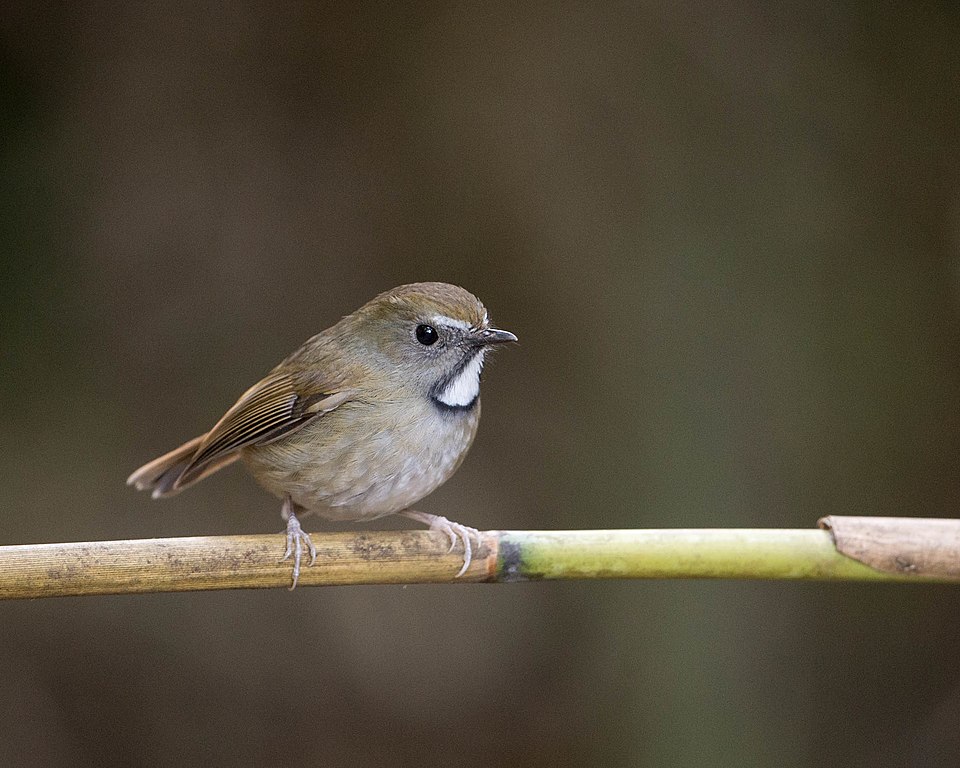
The Eyebrowed Jungle Flycatcher is a small bird, approximately 13 to 15 centimeters in length, with a predominantly olive-brown plumage. The most distinctive feature of this species is the prominent white supercilium, or 'eyebrow,' which contrasts sharply with its darker eye stripe and crown. This feature serves as a key identification mark, especially in dimly lit forest environments.
The adult Eyebrowed Jungle Flycatcher exhibits subtle sexual dimorphism. While both sexes share similar overall coloration, males may appear slightly brighter, particularly during the breeding season. Juveniles display a more muted version of the adult plumage, with additional speckling on the breast and flanks, which fades as they mature.
In flight, the Eyebrowed Jungle Flycatcher exhibits a compact silhouette, with rapid wingbeats that are typical of many flycatcher species. When perching, they often adopt an upright posture, frequently flicking their tails. This behavior, combined with their distinctive plumage, helps distinguish them from other sympatric flycatchers such as the Brown-streaked Flycatcher (Musciapa latirostris) which lacks the distinctive eyebrow.
Having trouble telling birds apart? Upload a photo to our bird identification tool for an instant species match.
Eyebrowed Jungle Flycatcher Habitat and Range
Preferred Habitat
The Eyebrowed Jungle Flycatcher predominantly inhabits tropical and subtropical moist lowland forests, favoring dense undergrowth and forest edges. These birds are most commonly found at elevations ranging from sea level to about 1,500 meters, though they primarily occupy lower elevations where undergrowth is thickest.
They show a marked preference for primary and old-growth forests, where the diversity of insect prey is highest. However, they can also be found in secondary forests and occasionally in well-vegetated gardens or plantations near forest borders.
Seasonal movements within their habitat occur primarily in response to changes in food availability and climatic conditions. During the breeding season, they may move to slightly higher elevations or denser forest areas to find optimal nesting sites and better protection from predators.
Geographic Range
The Eyebrowed Jungle Flycatcher is endemic to Southeast Asia, with its primary range centered in the Philippines. Within this archipelago, it is found across several islands, including Luzon, Mindanao, and the Visayas group, where forest cover remains substantial.
Though considered a resident species with no significant migratory patterns, some local movements might occur between seasons, particularly in response to resource availability or environmental disturbances such as typhoons.
Population densities vary, with higher concentrations found in undisturbed forest regions. The species is notably absent from heavily deforested areas, highlighting its reliance on healthy forest ecosystems for survival.
Want to know which birds visit your area? Browse our backyard birds by location guides for region-specific species lists.
What Does the Eyebrowed Jungle Flycatcher Eat?
The Eyebrowed Jungle Flycatcher primarily feeds on insects, which it captures through agile aerial sallies and gleaning from foliage. Its diet includes a variety of arthropods, such as beetles, ants, and caterpillars, reflecting its adaptability to seasonal changes in insect abundance.
During the wet season, when insect populations peak, the flycatcher becomes more active, often catching prey in mid-flight. In drier periods, it relies more on gleaning techniques, carefully extracting insects from leaves and bark.
Prey size typically ranges from small to medium-sized insects, ensuring a diverse diet that supports its nutritional needs throughout the year. Feeding usually occurs during daylight hours, with peak activity in the early morning and late afternoon when insects are most active.
Eyebrowed Jungle Flycatcher Behavior and Social Structure
The Eyebrowed Jungle Flycatcher exhibits a solitary and territorial nature, particularly during the breeding season. Males establish and defend territories through vocalizations and displays, often engaging in aerial chases to deter intruders.
Courtship involves intricate displays, where males perform fluttering flights and sing to attract females. Once paired, these birds tend to stay monogamous throughout the breeding season, indicating a strong pair bond.
While generally solitary, the Eyebrowed Jungle Flycatcher may join mixed-species flocks outside of the breeding season, benefiting from the collective vigilance against predators. When faced with threats, they often employ alarm calls and evasive maneuvers to escape.
Daily activity patterns show peaks in the early morning and late afternoon, aligning with insect activity. During hotter midday hours, they may retreat to shaded areas to conserve energy.
Eyebrowed Jungle Flycatcher Nesting and Reproduction
The nesting habits of the Eyebrowed Jungle Flycatcher involve constructing cup-shaped nests from natural materials such as twigs, moss, and leaves. These nests are typically placed in the fork of a tree or concealed among dense foliage to provide camouflage from predators.
Clutch size usually ranges from two to three eggs, with an incubation period lasting approximately 14 to 16 days. Both parents participate in incubation, though the female primarily assumes this role while the male provides food and vigilance.
After hatching, the fledglings remain in the nest for about 14 days, during which both parents feed and care for them. Post-fledging, the young continue to receive parental support until they become independent, usually within a month. The species typically raises one brood per year, though favorable conditions may lead to a second.
Eyebrowed Jungle Flycatcher Sounds and Vocalizations
The Eyebrowed Jungle Flycatcher's song is characterized by a series of clear, melodious whistles, often starting with a rising note followed by a descending sequence. These calls serve both territorial and mate-attraction functions.
Their call notes are shorter and sharper, sometimes described as a 'chip' or 'chirp,' used primarily for communication between mates or to alert others of nearby threats.
Alarm calls are more urgent and harsh, reflecting the presence of predators. During dawn, the bird participates in a chorus that adds a distinctive layer to the forest soundscape, providing an auditory symbol of its presence.
Interesting Facts About the Eyebrowed Jungle Flycatcher
- 1The Eyebrowed Jungle Flycatcher is one of only a few species within its genus, highlighting its unique evolutionary path.
- 2Despite its small size, this flycatcher plays a pivotal role in controlling insect populations, showcasing its ecological importance.
- 3The distinctive white eyebrow of the Eyebrowed Jungle Flycatcher aids in its identification, even in dense foliage.
- 4This species is primarily a resident bird; however, it may exhibit altitudinal migration in response to environmental changes.
- 5The Eyebrowed Jungle Flycatcher's melodious song is often among the first sounds heard at dawn in its forest habitat.
- 6Research suggests that habitat fragmentation may lead to changes in the species' behavioral patterns, emphasizing the need for continuous study.
- 7The Eyebrowed Jungle Flycatcher contributes to seed dispersal, facilitating forest regeneration and biodiversity.
Eyebrowed Jungle Flycatcher Conservation Status
According to the IUCN, the Eyebrowed Jungle Flycatcher is currently listed as Near Threatened, with its population trend showing a decline. The primary threats to its survival include habitat loss due to deforestation and land conversion for agriculture. Conservation efforts focus on protecting remaining forest habitats and promoting sustainable land-use practices. Initiatives include the establishment of protected areas and engaging local communities in conservation activities. Historically, the Eyebrowed Jungle Flycatcher's population has fluctuated in response to habitat availability. Continuous monitoring and adaptive management strategies are vital to preventing further declines.
Other Muscicapidae Species


Birds Similar to the Eyebrowed Jungle Flycatcher
These species are often confused with the Eyebrowed Jungle Flycatcher due to similar appearance or overlapping range.
