
Golden-crowned Manakin
Lepidothrix vilasboasi
Order: Passeriformes / Family: Pipridae

Wikimedia Commons
About the Golden-crowned Manakin
The Golden-crowned Manakin, scientifically known as Lepidothrix vilasboasi, is a striking bird species that inhabits the dense tropical forests of the Amazon Basin, primarily in the Tapajós River region of Brazil. This small, vibrant bird is notable not only for its visual appeal but also for its ecological significance within its habitat. As a member of the Pipridae family, this manakin plays a crucial role in the seed dispersal of various fruiting plants, thus contributing to the maintenance of biodiversity in its forest environment. The Golden-crowned Manakin's status was uncertain for many years, being known only from a few specimens collected in the mid-20th century. It wasn't until recent years that ornithologists confirmed its existence in the wild. This has sparked significant interest in its conservation and the protection of its habitat. Its presence in the rich biodiversity of the Amazon underscores the importance of preserving such environments that are still under threat from deforestation and human exploitation. The bird's vivid plumage, particularly its distinctive golden crown, makes it an iconic species among birdwatchers and researchers alike. The Golden-crowned Manakin's ecological role extends beyond mere aesthetics; its feeding and nesting behaviors contribute to the forest's health and regeneration. During the breeding season, males engage in elaborate courtship displays to attract females, a behavior characteristic of manakins. These displays often occur in well-defined arenas on the forest floor or low perches, where the males perform a series of quick movements and vocalizations. Outside the breeding season, the Golden-crowned Manakin continues to play a role in the ecosystem as a frugivore, aiding in the spread of seeds from the fruits it consumes. Its ability to thrive in the dense forest environment, while still maintaining enough visibility to attract mates and avoid predators, highlights the complex balance of survival strategies exhibited by this species. The bird's adaptation to both the wet and dry seasons in the Amazon showcases its resilience and the intricate connections it has with its environment. Understanding the Golden-crowned Manakin's life cycle and habits provides valuable insights into the functioning of tropical forest ecosystems and the broader challenges these ecosystems face in an era of rapid environmental change.
The Golden-crowned Manakin belongs to the family Pipridae, within the order Passeriformes. These birds typically live 5-8 years, with a maximum recorded lifespan of 10 years..
How to Identify a Golden-crowned Manakin
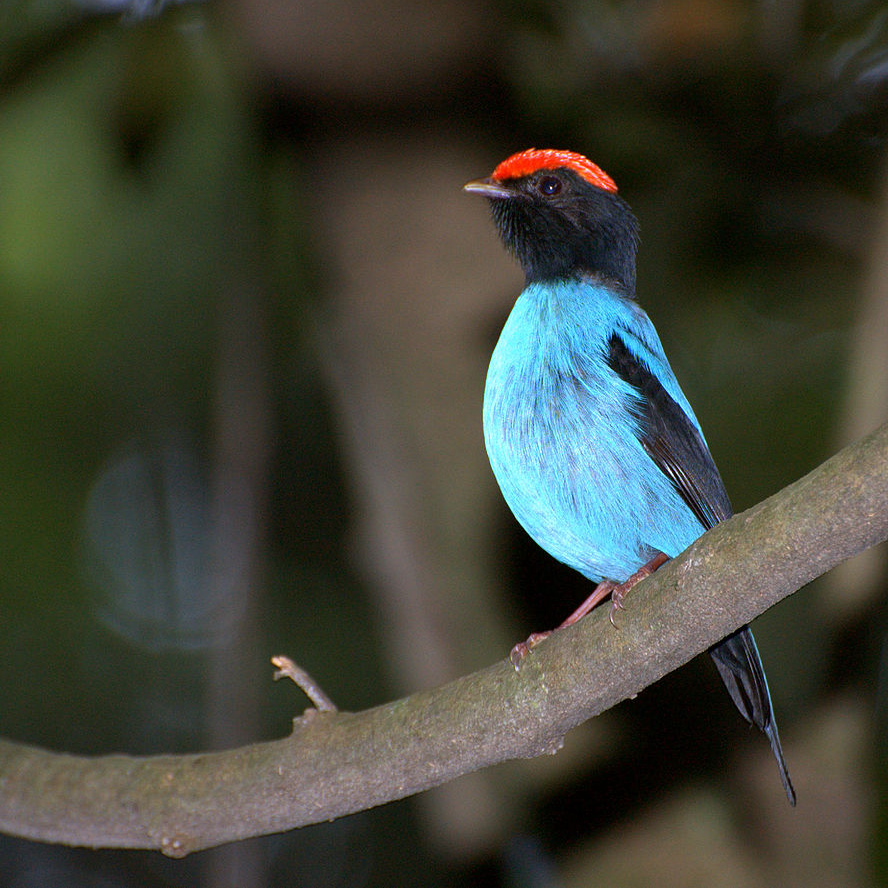
The adult male Golden-crowned Manakin is easily recognized by its vibrant golden-yellow crown, which starkly contrasts with its otherwise iridescent green body. The female, while lacking the striking crown, exhibits a more subdued green coloration that offers excellent camouflage among the foliage. Juvenile birds resemble females but may show hints of yellow as they mature. In terms of size, the Golden-crowned Manakin is relatively small, measuring around 10 centimeters in length. This compact size, combined with its vivid coloring, distinguishes it from similar manakin species, such as the White-fronted Manakin, which lacks the bright crown. The bird's flight silhouette is characterized by rapid, direct flight patterns typical of many small passerine birds, with quick wing beats that facilitate agile movements through the dense forest canopy. When perched, the Golden-crowned Manakin often sits upright on thin branches, its posture alert and attentive, allowing it to quickly respond to potential mates or threats. Its unique coloration and behavior make it a favorite among birdwatchers and researchers alike.
Having trouble telling birds apart? Upload a photo to our bird identification tool for an instant species match.
Golden-crowned Manakin Habitat and Range
Preferred Habitat
The Golden-crowned Manakin thrives in the humid tropical forests of the Amazon Basin, particularly in primary and secondary growth areas. These forests provide the dense canopy and undergrowth that the species favors for feeding and nesting. Typically found at elevations ranging from 100 to 300 meters, the bird is most commonly observed in regions with abundant fruiting trees, which offer a plentiful food supply. Unlike some other manakin species, the Golden-crowned Manakin shows little inclination for urban or heavily disturbed areas, preferring the relative isolation of thick forest. Seasonal shifts in habitat usage are minimal, as the consistent climate of the Amazon allows the bird to maintain a relatively stable presence throughout the year.
Geographic Range
The Golden-crowned Manakin's range is restricted to the southern Amazon Basin, specifically within the Tapajós River region in Brazil. Its distribution is highly localized, primarily confined to this small area, which has led to its classification as a rare and somewhat elusive species. This restricted range means that the bird does not undertake significant migrations, instead maintaining a year-round presence within its established territory. Population density is highest in areas where forest cover is dense and undisturbed, although precise hotspots remain under study due to the bird's elusive nature and the challenges of surveying in dense rainforest environments. Conservationists focus on this specific region to ensure the survival of the species.
Want to know which birds visit your area? Browse our backyard birds by location guides for region-specific species lists.
What Does the Golden-crowned Manakin Eat?
The Golden-crowned Manakin's diet primarily consists of a variety of fruits, which it forages from the mid and lower canopy levels of the forest. Its frugivorous diet includes berries and small fruits from diverse plant species, aiding in seed dispersal as the bird digests and excretes the seeds. During certain seasons, the bird may also consume insects and small arthropods, supplementing its diet with protein sources that are plentiful in its habitat. This dietary flexibility allows the Golden-crowned Manakin to adapt to the seasonal availability of food resources, ensuring its survival in the fluctuating conditions of the rainforest. The bird typically feeds alone or in small groups, using quick, agile movements to snatch food items while hovering or perching.
Golden-crowned Manakin Behavior and Social Structure
Golden-crowned Manakins display fascinating social and behavioral traits, particularly during the breeding season. Males engage in complex courtship displays, which involve a series of acrobatic maneuvers and vocalizations designed to attract females. These displays often take place in leks, where multiple males gather to perform and compete for the attention of potential mates. Despite the competitive nature of these gatherings, the displays are highly ritualized and rarely lead to physical confrontations. Outside the breeding season, the Golden-crowned Manakin is generally solitary or found in small family groups. It exhibits territorial behavior, defending its feeding and nesting areas from other manakins and potential predators. The bird's daily activity patterns are diurnal, with feeding and social interactions occurring primarily in the early morning and late afternoon. Its response to predators involves quick, evasive flight and use of dense foliage for cover, demonstrating the bird's adaptability and survival instincts.
Golden-crowned Manakin Nesting and Reproduction
The Golden-crowned Manakin constructs its nest in the dense undergrowth of the rainforest, typically placing it on a low branch or shrub. The nest is a small, cup-shaped structure made from fine plant materials like leaves, grasses, and spider silk, providing a secure environment for the eggs. The female is primarily responsible for nest building and incubation, laying a clutch of two eggs. The incubation period lasts about 18 to 20 days, with the female diligently tending to the eggs. Once hatched, the chicks remain in the nest for approximately two weeks before fledging. During this time, both parents participate in feeding and caring for the young, ensuring their safety and nourishment. The Golden-crowned Manakin typically raises one brood per year, although favorable conditions may lead to the occasional second brood.
Golden-crowned Manakin Sounds and Vocalizations
The Golden-crowned Manakin's primary vocalization is a series of sharp, high-pitched notes that form a rhythmic, melodious song. These calls serve both to attract mates and to establish territory. During the dawn chorus, males are particularly vocal, using their songs to communicate presence and readiness for breeding. The bird's call notes are distinct and carry well through the dense forest, making them an essential tool for communication. Alarm calls are short and abrupt, alerting others to potential dangers. The quality of the sounds is clear and piercing, ensuring they stand out amidst the cacophony of the rainforest.
Interesting Facts About the Golden-crowned Manakin
- 1The Golden-crowned Manakin was only rediscovered in the wild in 2002, decades after its initial discovery.
- 2Its bright golden crown is a unique feature among manakins, earning it the name 'Golden-crowned'.
- 3Manakins, including the Golden-crowned, are known for their elaborate courtship dances, which can involve up to 10 different moves.
- 4The species plays a critical role in seed dispersal, helping maintain the diversity of the rainforest ecosystem.
- 5The Golden-crowned Manakin has one of the smallest ranges of any manakin species, limited to parts of the Amazon Basin.
- 6Despite its vibrant colors, the bird is still difficult to spot due to its rapid movements and dense habitat.
- 7The bird's diet is almost exclusively frugivorous, making it a key player in the forest's ecological balance.
Golden-crowned Manakin Conservation Status
The IUCN currently lists the Golden-crowned Manakin as Near Threatened, with its population trend considered stable but vulnerable to habitat loss. The primary threats to its survival include deforestation and habitat fragmentation due to logging and agricultural expansion in the Amazon Basin. Conservation efforts focus on habitat preservation and protection of the bird's limited range. Initiatives by local and international organizations aim to raise awareness and implement measures to safeguard the remaining tracts of forest critical to the species' survival. Historical data suggests a consistent presence in its known range, though with increasing pressure from human activities, the need for conservation action is urgent.
Other Pipridae Species


Birds Similar to the Golden-crowned Manakin
These species are often confused with the Golden-crowned Manakin due to similar appearance or overlapping range.

