
Orange-bellied Manakin
Lepidothrix suavissima
Order: Passeriformes / Family: Pipridae

Wikimedia Commons
About the Orange-bellied Manakin
The Orange-bellied Manakin, known scientifically as Lepidothrix suavissima, is a captivating bird inhabiting the dense tropical forests of South America, particularly in countries like Colombia, Brazil, and Venezuela. This small passerine is a member of the Pipridae family, known for their dazzling plumage and elaborate courtship performances. The dense canopy of lowland rainforests provides an ideal habitat for these birds, where they play a crucial role in seed dispersal through their fruit-based diet. The Orange-bellied Manakin contributes significantly to the ecological dynamics of these forests by aiding plant regeneration and maintaining biodiversity. Throughout the year, these birds exhibit interesting behaviors that are closely tied to seasonal changes. During the breeding season, the males engage in complex courtship rituals that involve rapid, acrobatic flights and a series of distinctive calls to attract females. These performances are essential not only for reproduction but also for maintaining the hierarchical social structure within their groups. Outside the breeding season, the Orange-bellied Manakin continues to be an active participant in the forest ecosystem, often joining mixed-species flocks. Their presence in these flocks aids in mutual protection against predators and increases foraging efficiency. Despite their significant ecological role, the Orange-bellied Manakin faces threats from habitat destruction due to deforestation and agricultural expansion. Conservation efforts focused on preserving tropical forests are vital to ensuring the survival of this species and maintaining the ecological balance of their habitat.
The Orange-bellied Manakin belongs to the family Pipridae, within the order Passeriformes. These birds typically live 5-7 years, with a maximum recorded lifespan of 9 years..
How to Identify a Orange-bellied Manakin
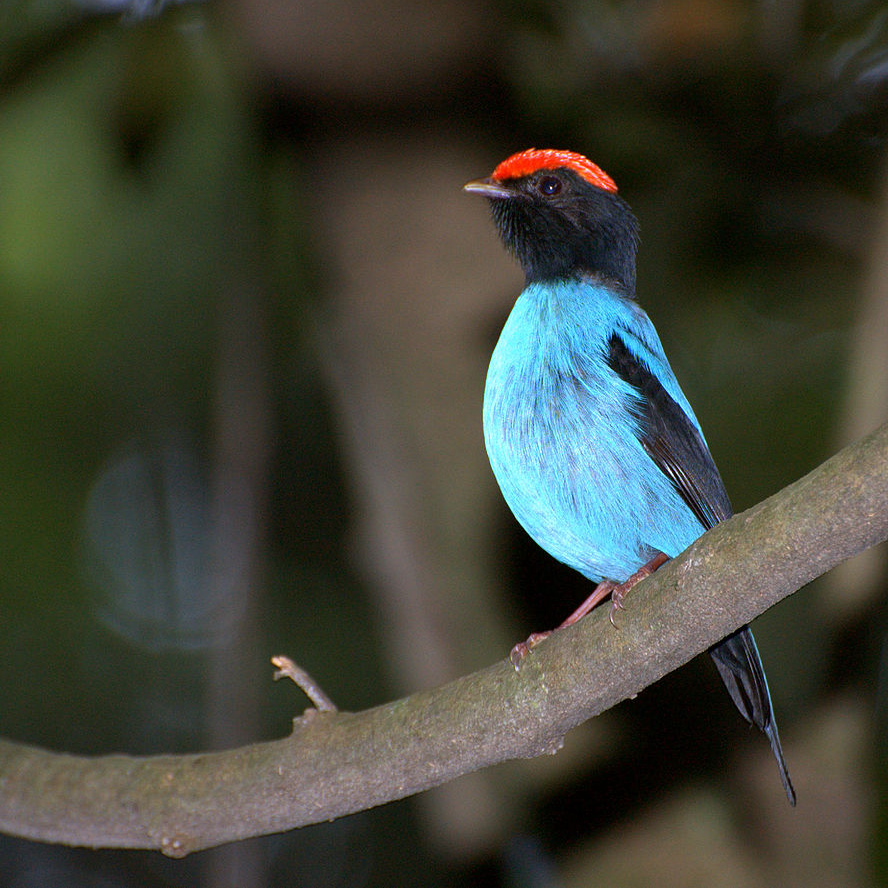
Identifying the Orange-bellied Manakin involves noting its distinct coloration and size. Adult males exhibit a striking orange belly, with a contrasting black head, back, and wings. This vibrant belly is the key feature in distinguishing them from other manakin species. In contrast, females and juveniles possess more subdued green plumage that provides effective camouflage in the dense foliage. These differences in plumage between the sexes are not uncommon among manakins, as males often need to attract mates through their brilliant displays. While females are generally duller, allowing them to blend into their surroundings for nesting. The Orange-bellied Manakin is a small bird, typically measuring around 10 cm in length, with a compact, robust body. Its short wings and tail, combined with its vibrant plumage, make it unmistakable when observed in the field. When in flight, it can be challenging to spot due to its rapid, darting movements. However, when perched, its unique color pattern and small size make it easier to identify. Confusion with other manakin species is possible, but the orange belly of this species remains a reliable distinguishing feature.
Having trouble telling birds apart? Upload a photo to our bird identification tool for an instant species match.
Orange-bellied Manakin Habitat and Range
Preferred Habitat
The Orange-bellied Manakin thrives in the dense, humid lowland rainforests of northern South America. Preferring elevations from sea level up to 1,200 meters, these birds are most commonly found in regions where the forest canopy is thick and offers ample fruiting plants. In addition to primary rainforests, they inhabit secondary growth forests and forest edges, which provide abundant food resources and nesting sites. While predominantly a forest dweller, the Orange-bellied Manakin occasionally ventures into nearby plantations and gardens, especially when fruit is abundant. Unlike some other manakin species, they show a preference for undisturbed forest habitats, which provide the complex structure necessary for their acrobatic courtship displays. Seasonal shifts in habitat are minimal, as they are non-migratory and remain within their forest territories throughout the year. They are less frequently observed in urban or heavily disturbed areas, underscoring their reliance on intact forest ecosystems for survival.
Geographic Range
The breeding range of the Orange-bellied Manakin spans across the northern part of South America, with significant populations found in Colombia, Venezuela, and the Amazonian regions of Brazil. Within these countries, they inhabit the vast tracts of lowland tropical rainforest, where they can find the dense canopy cover they require. Unlike many other bird species, the Orange-bellied Manakin does not undertake long-distance migrations. Instead, they remain within their forested territories year-round. Local movements may occur in response to fruit availability, but these are usually confined within the same forested regions. The Amazon Basin represents a population density hotspot for the species, with suitable habitat conditions promoting stable populations. However, localized declines may occur due to deforestation and habitat fragmentation, highlighting the importance of conserving large, contiguous forest areas to support their populations.
Want to know which birds visit your area? Browse our backyard birds by location guides for region-specific species lists.
What Does the Orange-bellied Manakin Eat?
The diet of the Orange-bellied Manakin primarily consists of fruits and berries, making them frugivorous. They typically consume small, easily digestible fruits that are abundant in their rainforest habitat. Seasonal changes in fruit availability influence their diet, with some shifts towards more insect consumption during periods of fruit scarcity. Manakins are known for their unique foraging techniques, which often involve hovering near fruiting branches to pluck berries with precision. They usually forage alone or in small groups, occasionally joining mixed-species flocks where they can take advantage of the group's collective foraging efforts. The size of their prey, primarily insects, tends to be small, ensuring easy capture and digestion. Their feeding schedule is primarily diurnal, with peak foraging activity occurring during the early morning and late afternoon when temperatures are cooler and fruit availability is higher.
Orange-bellied Manakin Behavior and Social Structure
The Orange-bellied Manakin exhibits fascinating social and behavioral traits, particularly in its courtship displays. Males are known for their elaborate performances, which include acrobatic flights and a series of vocalizations designed to attract females. During these displays, males often compete for the best lekking sites, which are small, cleared areas within the forest where they can showcase their vibrant plumage and agility. These displays are not only crucial for attracting mates but also play a role in maintaining social hierarchies within their groups. Outside of the breeding season, the species often forms part of mixed-species flocks, a strategy that offers increased protection against predators and improves foraging success. The Orange-bellied Manakin is generally non-territorial outside the breeding season, but males may exhibit aggressive behaviors to defend their display sites. Their daily activity patterns show peaks in the early morning and late afternoon, aligning with periods of optimal foraging conditions. In response to predators, they rely on their cryptic plumage and quick, agile movements to elude capture.
Orange-bellied Manakin Nesting and Reproduction
Nesting for the Orange-bellied Manakin involves the construction of a small, cup-shaped nest, typically situated in the fork of a tree or shrub. The nests are often made from a combination of plant fibers, leaves, and moss, providing a sturdy yet camouflaged structure. Females are primarily responsible for nest building, while males focus on courtship displays. Clutch sizes are usually small, consisting of 1-2 eggs, which allows for more focused parental care. The incubation period lasts approximately 17-20 days, during which the female exclusively incubates the eggs. After hatching, the fledging period extends for about 15-20 days, with both parents taking part in feeding and protecting the young. In a typical breeding season, the Orange-bellied Manakin may produce 1-2 broods, depending on environmental conditions and food availability.
Orange-bellied Manakin Sounds and Vocalizations
The vocalizations of the Orange-bellied Manakin are characterized by a series of short, high-pitched notes that form a melodious trill. These calls play a critical role in communication during courtship displays, helping males attract females and establish territory within the lek. The primary song consists of rhythmic sequences that can be compared to the sound of a faint, rapid whistle. In addition to their song, they produce various call notes that serve as communication signals among group members, particularly in mixed-species flocks. Alarm calls are typically sharp and abrupt, designed to alert others of potential predators. During the dawn chorus, males often join in with their songs, contributing to the rich tapestry of sounds that define the rainforest at daybreak.
Interesting Facts About the Orange-bellied Manakin
- 1The Orange-bellied Manakin's courtship display includes a rapid series of acrobatic flights and hovering maneuvers.
- 2Males and females of the species exhibit significant plumage differences, with males showcasing a vibrant orange belly.
- 3Despite their small size, Orange-bellied Manakins play a crucial role in seed dispersal in their rainforest habitats.
- 4These birds are non-migratory, remaining within their tropical forest territories throughout the year.
- 5The Orange-bellied Manakin is part of the Pipridae family, known for their exceptional courtship displays.
- 6Their diet consists primarily of fruits, but they also consume small insects, particularly when fruit is scarce.
- 7The species is most active during the early morning and late afternoon, coinciding with peak foraging periods.
Orange-bellied Manakin Conservation Status
Currently, the Orange-bellied Manakin is listed as Least Concern by the IUCN, although its populations face pressures from ongoing habitat destruction. Deforestation for agriculture and logging represents the primary threat, leading to habitat fragmentation and population declines in some areas. Conservation efforts focus on preserving large areas of contiguous rainforest, which are essential for maintaining viable populations. Historically, the population trend has been relatively stable, but localized declines in heavily deforested regions underscore the need for targeted conservation actions. Efforts to promote sustainable land-use practices and create protected areas are crucial for the long-term preservation of this species and its habitat.
Other Pipridae Species


Birds Similar to the Orange-bellied Manakin
These species are often confused with the Orange-bellied Manakin due to similar appearance or overlapping range.

