
Grey-throated Tit-Flycatcher
Myioparus griseigularis
Order: Passeriformes / Family: Muscicapidae

Wikimedia Commons
About the Grey-throated Tit-Flycatcher
The Grey-throated Tit-Flycatcher, known scientifically as Myioparus griseigularis, is a captivating member of the Muscicapidae family. This small passerine bird is predominantly found across various regions in sub-Saharan Africa. Its presence is significant in the understory of lowland forests, where it plays a vital role in controlling insect populations. The species is particularly noted for its adaptability to both primary and secondary forests, demonstrating its ecological versatility. In addition to forested areas, the Grey-throated Tit-Flycatcher can also be seen in woodland savannas, where it actively participates in the food web by feeding on a variety of insects and small arthropods. The bird's ecological role extends to its role as prey for larger birds and mammals, maintaining a balanced ecosystem.
During the breeding season, the Grey-throated Tit-Flycatcher becomes more conspicuous due to its vocalizations as it establishes territories and attracts mates. It is generally a resident bird, showing minimal migratory behavior, which means it adapts to seasonal changes within its existing habitat range rather than embarking on long migrations. This sedentary nature allows it to occupy a consistent ecological niche year-round. The bird’s ability to thrive in both pristine and disturbed habitats highlights its resilience in the face of habitat alterations, an increasingly important trait as deforestation and habitat fragmentation become more prevalent.
The Grey-throated Tit-Flycatcher’s population, although not fully quantified, appears stable across its range. However, continued monitoring is essential to ensure that habitat loss does not begin to negatively impact its numbers. Conservation efforts focusing on preserving forest habitats are crucial, not only for this species but for the myriad of other organisms that share its environment. Studies of the Grey-throated Tit-Flycatcher provide valuable insights into the broader health of tropical forest ecosystems, making it an important species for ornithologists and conservationists alike.
The Grey-throated Tit-Flycatcher belongs to the family Muscicapidae, within the order Passeriformes. These birds typically live average 4-5 years with a maximum recorded of 7 years.
How to Identify a Grey-throated Tit-Flycatcher
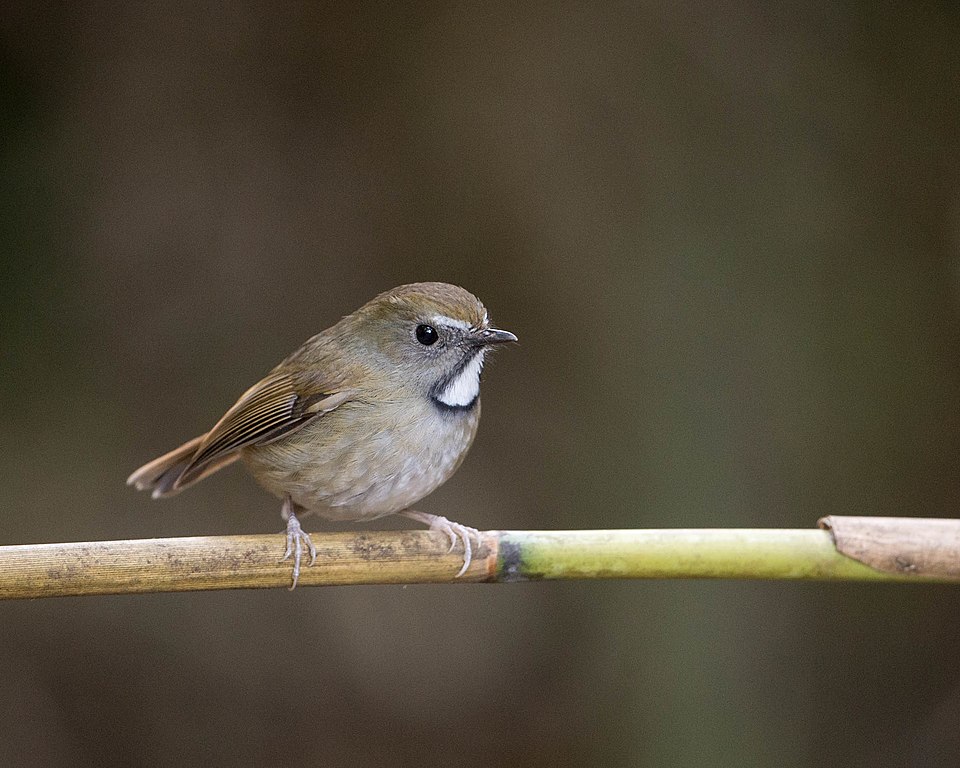
The Grey-throated Tit-Flycatcher is a small bird, measuring approximately 12 cm in length. Adult birds are characterized by their distinct gray throat which contrasts with their otherwise white underparts. The upperparts are a muted olive-brown, providing excellent camouflage among the foliage. Both sexes appear similar, though the males might exhibit slightly brighter plumage during the breeding season.
Juveniles differ somewhat from adults, displaying a more muted overall coloration with buffy edges to their feathers, which gradually molt into the adult plumage as they mature. When observing in the field, look for the bird’s agile movements as it flits through the lower canopy and understory, often perching momentarily on branches to survey for insects.
The Grey-throated Tit-Flycatcher can sometimes be confused with other small flycatchers within its range, such as the Pale Flycatcher (Bradornis pallidus). However, the distinct gray throat and smaller size of the Grey-throated Tit-Flycatcher can help differentiate it. Its flight silhouette is characterized by rapid wing beats and sudden changes in direction, typical of insectivorous birds.
Having trouble telling birds apart? Upload a photo to our bird identification tool for an instant species match.
Grey-throated Tit-Flycatcher Habitat and Range
Preferred Habitat
The Grey-throated Tit-Flycatcher predominantly inhabits lowland tropical forests, thriving in both primary and secondary growth. It is commonly found at elevations ranging from sea level up to 1800 meters, although it is more frequently observed at lower elevations. In addition to forested areas, this species can adapt to woodland savannas, particularly where there is a mix of dense undergrowth and open spaces.
Although primarily a forest-dweller, the Grey-throated Tit-Flycatcher has shown some adaptability to fragmented habitats and edges of urban areas, provided there is sufficient tree cover and underbrush to support its insectivorous diet. Seasonal shifts in habitat are minimal, as the bird tends to remain within its established territory throughout the year, adjusting to the changing availability of food and nesting sites within the same general area.
Geographic Range
The Grey-throated Tit-Flycatcher is distributed widely across sub-Saharan Africa. Its range includes countries such as Nigeria, Cameroon, Gabon, the Democratic Republic of Congo, and Uganda. This bird is a year-round resident in these regions, exhibiting little to no long-distance migration behavior. Within its range, it tends to favor areas that offer a mixture of mature forests and secondary growth, allowing it to exploit a variety of habitats.
The species is most densely populated in areas with extensive forest cover, particularly in the Congo Basin and surrounding regions. These areas serve as critical strongholds for the species due to the availability of food resources and nesting sites. Although its range is broad, the density of the Grey-throated Tit-Flycatcher may fluctuate locally, influenced by factors such as habitat quality and competition with other insectivorous birds.
Want to know which birds visit your area? Browse our backyard birds by location guides for region-specific species lists.
What Does the Grey-throated Tit-Flycatcher Eat?
The Grey-throated Tit-Flycatcher primarily feeds on a diet of insects and small arthropods, making it an important insectivore within its ecosystem. Its diet varies seasonally, with a higher intake of flying insects such as flies and beetles during the wet season when these prey items are more abundant. During the drier months, the bird may shift to consuming more ground-dwelling insects and spiders found among the leaf litter.
Foraging behavior is characterized by short sallies from a perch to capture insects in flight, a technique known as hawking. The Grey-throated Tit-Flycatcher also gleans insects from foliage, demonstrating a degree of versatility in its foraging strategies. This adaptability in diet and foraging technique allows it to maintain a steady food intake throughout the year, despite seasonal fluctuations in prey availability.
Grey-throated Tit-Flycatcher Behavior and Social Structure
Socially, the Grey-throated Tit-Flycatcher is generally solitary or found in pairs, particularly during the breeding season when it becomes more territorial. Males establish territories through song and display, often engaging in vocal duets with females to strengthen pair bonds. During non-breeding times, small groups may form, particularly in areas with abundant food.
In terms of predator response, the Grey-throated Tit-Flycatcher exhibits typical flycatcher wariness, using dense foliage as cover. It maintains a vigilant posture, often pausing mid-flight to scan for potential threats. Daily activity patterns include active foraging in the early morning and late afternoon, with a period of reduced activity during the hottest part of the day.
Courtship displays involve a combination of song and visual displays, where the male showcases his plumage and agility. These behaviors play a crucial role in mate selection and territory establishment, ensuring reproductive success in a competitive environment.
Grey-throated Tit-Flycatcher Nesting and Reproduction
The nesting habits of the Grey-throated Tit-Flycatcher involve constructing cup-shaped nests made from fine grasses, leaves, and spider silk, typically situated in the fork of a small tree or shrub. These nests are well-hidden within dense foliage, providing protection from predators.
A typical clutch consists of 2-3 eggs, which the female incubates for about two weeks. Both parents participate in feeding the fledglings, which leave the nest approximately 14-17 days after hatching. The Grey-throated Tit-Flycatcher may raise two broods per year, depending on environmental conditions and food availability. Parental care extends beyond fledging, with juveniles often staying close to their parents until they are fully independent.
Grey-throated Tit-Flycatcher Sounds and Vocalizations
The Grey-throated Tit-Flycatcher's song is a series of high-pitched, melodic whistles, often described as sweet and clear. These vocalizations play a critical role in territory establishment and mate attraction. In addition to its primary song, the bird emits call notes that are sharp and distinct, serving as contact calls between mates or signaling alarm when a threat is perceived.
During the dawn chorus, the Grey-throated Tit-Flycatcher is particularly vocal, contributing to the symphony of sounds that fill the forest air. When compared to similar species, its song is notably more melodic, aiding in its identification by both human observers and other birds.
Interesting Facts About the Grey-throated Tit-Flycatcher
- 1The Grey-throated Tit-Flycatcher is known for its agile, acrobatic flight, often darting quickly through dense foliage.
- 2Despite its small size, the Grey-throated Tit-Flycatcher contributes significantly to insect population control in its habitat.
- 3This bird is one of the few flycatchers that can be found in both primary and secondary forests, showcasing its adaptability.
- 4With a melodious song, the Grey-throated Tit-Flycatcher is a key contributor to the dawn chorus in African forests.
- 5The species' ability to thrive in fragmented habitats makes it an important indicator of ecosystem health.
Grey-throated Tit-Flycatcher Conservation Status
Currently, the Grey-throated Tit-Flycatcher is classified as a species of Least Concern by the IUCN. Its population appears stable, although precise numbers are difficult to ascertain due to its wide distribution and secretive nature. The primary threats to the species include habitat loss and fragmentation due to deforestation for agriculture and logging activities. Conservation efforts focus on preserving large tracts of forest habitat, promoting sustainable land-use practices, and raising awareness about the importance of biodiversity in tropical ecosystems. While historical population changes have been minimal, ongoing monitoring is necessary to ensure that the species does not face increased risk in the future.
Other Muscicapidae Species


Birds Similar to the Grey-throated Tit-Flycatcher
These species are often confused with the Grey-throated Tit-Flycatcher due to similar appearance or overlapping range.

