
White-bellied Shortwing
Myiomela major
Order: Passeriformes / Family: Muscicapidae

Wikimedia Commons
About the White-bellied Shortwing
The White-bellied Shortwing (Myiomela major) is a notable member of the Muscicapidae family, primarily inhabiting the dense, evergreen forests of the Western Ghats in India. This small, elusive bird plays a critical role in its ecosystem by participating in insect population control and acting as a pollinator for certain plant species. Its presence is often an indicator of a healthy forest environment.
This bird is endemic to the Western Ghats, a biodiversity hotspot known for its rich variety of flora and fauna. The White-bellied Shortwing thrives in the montane forests of this region, which provide both the cover and the food sources it needs for survival. These forests are characterized by high humidity and frequent mist, conditions to which the bird has perfectly adapted.
The conservation significance of the White-bellied Shortwing lies in its restricted range and specialized habitat requirements, making it vulnerable to deforestation and habitat fragmentation. Its ecological role extends beyond insect control, as it also aids in seed dispersal. During the breeding season, which coincides with the monsoon, the White-bellied Shortwing becomes more vocal and territorial, establishing its presence through melodious songs that resonate through the thick understory.
Seasonal behaviors of the White-bellied Shortwing include increased vocal activity during the breeding season and a more secretive demeanor during the non-breeding months. These birds are primarily resident and do not undertake long migrations, although they may exhibit local movements in response to changes in food availability or habitat conditions. Their contribution to the ecosystem underscores the importance of conservation efforts aimed at preserving the unique montane habitats of the Western Ghats.
The White-bellied Shortwing belongs to the family Muscicapidae, within the order Passeriformes. These birds typically live average 5-6 years with a maximum recorded of 9 years.
How to Identify a White-bellied Shortwing
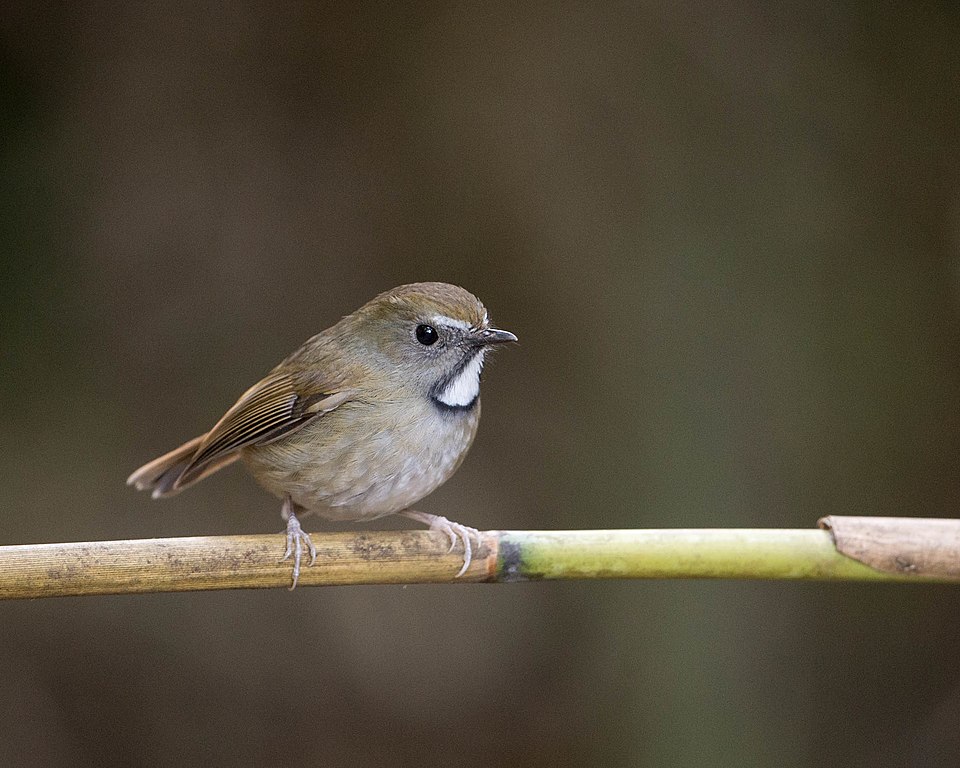
The White-bellied Shortwing is a medium-sized songbird with a distinctively plump appearance. Adult birds exhibit a stark contrast between their dark upperparts and pure white underparts, making them relatively easy to identify in their forest habitat. The head, back, and wings are a rich, dark brown, which helps them blend into the forest understory.
Males and females appear similar, though males may have a slightly glossier plumage. Juveniles, however, differ significantly in appearance, being entirely brown without the characteristic white belly of adults. This helps them remain camouflaged in the dense foliage as they mature.
In flight, the White-bellied Shortwing displays a rapid, direct flight pattern, with wings that appear rounded in silhouette. This flight style is adapted for maneuvering through the tightly packed trees of its forest home. When perched, it often adopts an upright posture, facilitating quick takeoffs.
While no other species completely mimics the White-bellied Shortwing's appearance, care should be taken not to confuse it with other similar-sized songbirds of the region. Its unique coloration and habitat preference typically set it apart from potential lookalikes.
Having trouble telling birds apart? Upload a photo to our bird identification tool for an instant species match.
White-bellied Shortwing Habitat and Range
Preferred Habitat
The White-bellied Shortwing is a denizen of the dense, evergreen montane forests of the Western Ghats. It selects habitats at elevations ranging from 1,200 to 2,200 meters, where the microclimate supports a rich undergrowth of ferns, shrubs, and moss-laden trees. These forests are often shrouded in mist, providing the humidity and cover that these birds require.
Within these habitats, the White-bellied Shortwing favors areas with dense underbrush and a thick canopy, which offer protection from predators and harsh weather. Seasonal shifts in habitat usage are minimal, as this species remains within its preferred montane environment year-round, although some altitudinal movement may occur in response to food availability.
The species is predominantly found in rural and remote forest areas, avoiding urban environments. Its reliance on pristine forest ecosystems links its survival to the conservation of these habitats, making it a flagship species for the Western Ghats' montane forests.
Geographic Range
The White-bellied Shortwing is endemic to the Western Ghats of India, with its range confined to this narrow strip of mountainous terrain stretching from Maharashtra in the north to Tamil Nadu and Kerala in the south. This limited distribution makes it particularly sensitive to habitat changes within this region.
Within the Western Ghats, the bird is most commonly encountered in the high-altitude montane forests, where it finds both its food and nesting sites. It is a sedentary species, exhibiting little to no long-distance migration, although there may be some local movement in response to seasonal variations in food availability.
Population density hotspots include the Nilgiri Hills, Anamalai Hills, and the Palani Hills, where suitable habitat remains relatively intact. Due to its restricted range and specialized habitat needs, the White-bellied Shortwing is considered vulnerable to habitat loss and fragmentation caused by human activities such as agriculture and development.
Want to know which birds visit your area? Browse our backyard birds by location guides for region-specific species lists.
What Does the White-bellied Shortwing Eat?
The diet of the White-bellied Shortwing primarily consists of insects and other small invertebrates, which it forages from the forest floor and lower vegetation layers. This bird employs a methodical search technique, hopping along the ground and through the underbrush, flipping over leaves and probing crevices to uncover hidden prey.
In addition to insects, the White-bellied Shortwing consumes berries and fruits, particularly during times when insect abundance is lower. This dietary flexibility helps it to survive periods of scarcity and contributes to its role as a seed disperser within its ecosystem.
Feeding activity peaks during the early morning and late afternoon, when the bird is most active. During these times, the White-bellied Shortwing can be observed diligently searching for food, pausing occasionally to consume its finds before resuming its foraging routine.
White-bellied Shortwing Behavior and Social Structure
The White-bellied Shortwing exhibits solitary or paired behavior, with individuals maintaining territories during the breeding season. These territories are vigorously defended through song and visual displays, with males often engaging in singing duels with neighboring rivals.
Courtship displays involve males showcasing their vocal prowess and performing subtle wing and tail movements to attract a mate. Once paired, the birds remain monogamous throughout the breeding season, cooperating closely in nest building and chick rearing.
Though generally secretive, the White-bellied Shortwing becomes more conspicuous during the breeding season, often perching in prominent locations to sing. Its response to predators involves remaining motionless and relying on its cryptic plumage for concealment. Daily activity patterns include periods of intense foraging interspersed with rest and preening.
White-bellied Shortwing Nesting and Reproduction
The White-bellied Shortwing constructs a cup-shaped nest, expertly hidden among dense vegetation or in a tree crevice. Both male and female participate in gathering materials such as moss, leaves, and twigs to create a sturdy structure that offers protection against the elements and predators.
The nest is typically situated low to the ground, within the dense understory, which provides cover and reduces the risk of predation. The female lays a clutch of two to three eggs, which she incubates for about two weeks while the male remains nearby to assist with feeding and defense.
Once hatched, the chicks remain in the nest for approximately two to three weeks before fledging. During this time, both parents are actively involved in feeding and protecting the young. The White-bellied Shortwing generally raises one brood per year, though conditions may allow for a second if resources are plentiful.
White-bellied Shortwing Sounds and Vocalizations
The primary song of the White-bellied Shortwing is a melodious series of clear, whistling notes delivered with a rhythmic cadence that rises and falls in pitch. These songs serve to establish territory and attract mates, often heard at dawn and dusk when the forest is quieter.
In addition to its song, the White-bellied Shortwing produces a variety of call notes, including sharp, high-pitched chips used for communication between mates or as an alert to potential threats. Alarm calls are more abrupt and serve to warn of predators, prompting a swift retreat into dense cover.
The bird's song can be compared to the gentle flow of a mountain stream, full of variation and clarity, which enhances the natural soundscape of its montane forest home.
Interesting Facts About the White-bellied Shortwing
- 1The White-bellied Shortwing is also known as the Nilgiri Blue Robin, highlighting its association with the Nilgiri region.
- 2Despite its name, the White-bellied Shortwing has a relatively long tail compared to other shortwings, aiding in agility.
- 3This bird's song is one of the most complex among Indian songbirds, consisting of multiple variations and sequences.
- 4The White-bellied Shortwing's habitat preference for high elevations makes it a reliable indicator of montane forest health.
- 5It plays a significant role in its ecosystem by controlling insect populations and dispersing seeds of native plants.
- 6The montane forests of the Western Ghats, home to the White-bellied Shortwing, are recognized as a UNESCO World Heritage Site.
- 7The bird's elusive nature and preference for dense cover often make it challenging for birdwatchers to spot in the wild.
White-bellied Shortwing Conservation Status
The White-bellied Shortwing is currently listed as Vulnerable on the IUCN Red List due to its restricted range and declining habitat. The primary threats to its survival include deforestation and habitat fragmentation driven by agricultural expansion, logging, and human encroachment. Recent conservation efforts focus on habitat preservation and restoration, with emphasis on protecting the montane forests of the Western Ghats. Organizations are working to mitigate habitat loss through reforestation projects and the establishment of protected areas. While historical population trends indicate stability, recent pressures have heightened concern for the species' future. Continued conservation action is crucial to ensure the long-term survival of the White-bellied Shortwing and the rich biodiversity of its home region.
Other Muscicapidae Species


Birds Similar to the White-bellied Shortwing
These species are often confused with the White-bellied Shortwing due to similar appearance or overlapping range.

