
Henna-tailed Jungle Flycatcher
Rhinomyias colonus
Order: Passeriformes / Family: Muscicapidae

Wikimedia Commons
About the Henna-tailed Jungle Flycatcher
The Henna-tailed Jungle Flycatcher (Rhinomyias colonus) is a captivating songbird belonging to the family Muscicapidae. This bird is native to the lush tropical forests of Southeast Asia, particularly thriving in the rich biodiversity of Indonesia and Malaysia. Known for its vibrant tail coloration, this flycatcher plays a crucial role in its ecosystems as both a predator of insects and a prey species for larger animals. Its presence indicates a healthy forest environment, making it a key species for conservationists monitoring forest health.
This bird's ecology is deeply intertwined with the dense forest understory, where it contributes to the control of insect populations. The Henna-tailed Jungle Flycatcher is an insectivore and primarily feeds on a wide array of insects and arthropods, capturing them mid-flight or picking them off foliage with deft precision. During certain times of the year, it may adjust its diet to include berries and small fruits, which aids in seed dispersal, further highlighting its ecological importance.
Seasonally, the Henna-tailed Jungle Flycatcher exhibits subtle shifts in behavior and location. During the breeding season, pairs become more territorial, often seen defending their chosen patches of forest with vigor. Outside the breeding season, these birds may become more elusive, blending seamlessly into the intricate tapestry of the jungle. Observers may note an increase in vocal activity during the dawn and dusk hours, as the flycatcher engages in its characteristic melodious song.
The preservation of the Henna-tailed Jungle Flycatcher's habitat is of utmost importance. As deforestation continues to threaten Southeast Asian rainforests, this species faces increasing pressures. Conservation efforts focus on protecting large tracts of forest and creating corridors that allow for safe passage between fragmented habitats. Understanding the Henna-tailed Jungle Flycatcher's role in its ecosystem can help drive these efforts and preserve not only this species but the myriad others that share its home.
The Henna-tailed Jungle Flycatcher belongs to the family Muscicapidae, within the order Passeriformes. These birds typically live average 5-6 years with a max recorded of 8 years..
How to Identify a Henna-tailed Jungle Flycatcher
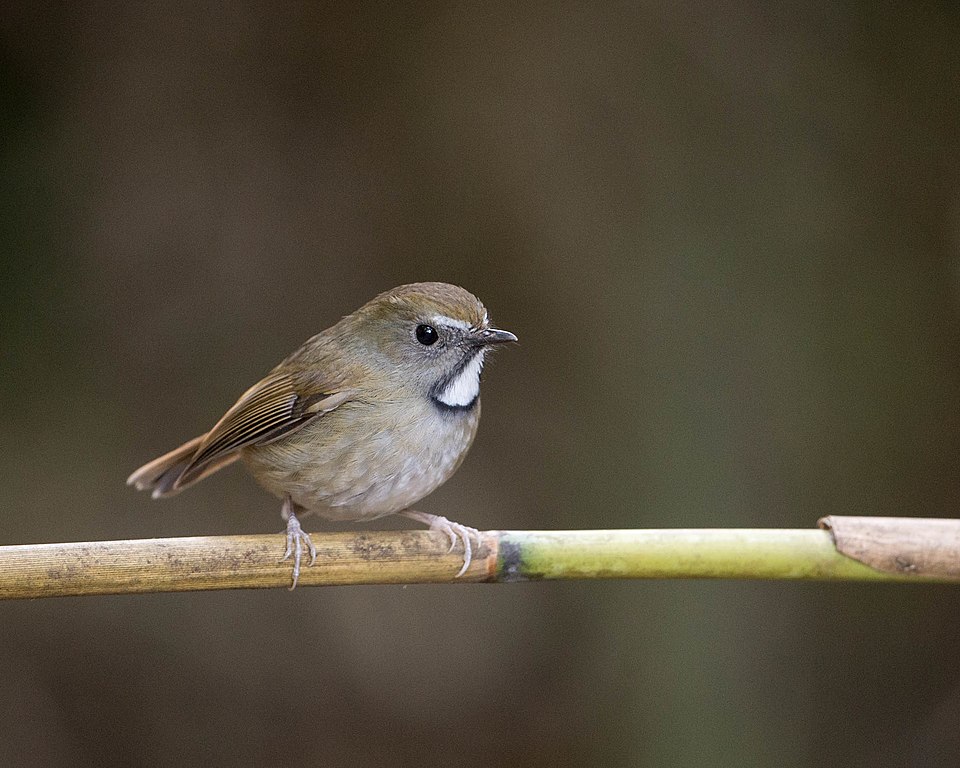
The Henna-tailed Jungle Flycatcher is a small bird, measuring about 15 cm in length and weighing approximately 20 grams. Its most striking feature is its henna-colored tail, which contrasts with its otherwise subtle plumage. The upperparts are predominantly olive-brown, blending seamlessly with the leafy forest surroundings. Its underparts are lighter, with a creamy hue that extends from the throat to the belly.
In terms of sexual dimorphism, males and females appear quite similar, which can make field identification challenging. However, during the breeding season, males may exhibit slightly more vivid coloration and a more pronounced tail pattern, likely as a result of increased blood flow to the feathers during displays.
Juveniles can be distinguished by their more muted tail coloration and overall less distinct plumage markings. They lack the crispness of the adult's plumage and often show a mottled appearance on their upperparts. When in flight, the Henna-tailed Jungle Flycatcher's silhouette is characterized by its rapid wingbeats and agile maneuvering, typical of flycatchers. On a perch, it maintains an upright posture, often flicking its tail as it surveys its surroundings for prey.
Having trouble telling birds apart? Upload a photo to our bird identification tool for an instant species match.
Henna-tailed Jungle Flycatcher Habitat and Range
Preferred Habitat
The Henna-tailed Jungle Flycatcher predominantly resides in lowland tropical rainforests, particularly favoring areas with dense understory vegetation. These environments provide ample cover and a rich supply of insects, which are crucial for its diet. It can be found at elevations ranging from sea level up to about 1500 meters, although it is most commonly encountered below 1000 meters.
This species shows a preference for undisturbed primary forests but can also adapt to secondary growth areas, provided there is sufficient foliage density. During the wet season, it may venture into more open areas at the forest edge, taking advantage of the increased insect activity. Urban expansion rarely affects the Henna-tailed Jungle Flycatcher, as it tends to avoid heavily populated areas, instead remaining in secluded forest tracts.
Geographic Range
The Henna-tailed Jungle Flycatcher's range is largely confined to Southeast Asia, with notable populations in Indonesia and Malaysia. It is primarily a resident species, meaning it does not undertake long migratory journeys. Instead, it may exhibit altitudinal migrations, moving to lower elevations during the cooler months in search of warmth and consistent food sources.
In Indonesia, it is widespread across the major islands such as Sumatra, Borneo, and Java, where it is a common sight in lowland forested regions. In Malaysia, it is primarily found on the Malay Peninsula and parts of Borneo. While it does not migrate in the traditional sense, the flycatcher's movements between elevations and areas of varied forest density can be significant, particularly during breeding or in response to environmental changes.
Want to know which birds visit your area? Browse our backyard birds by location guides for region-specific species lists.
What Does the Henna-tailed Jungle Flycatcher Eat?
The Henna-tailed Jungle Flycatcher primarily feeds on insects and other small arthropods, which it captures through a technique known as 'hawking.' This involves sallying forth from a perch to snatch flying insects with remarkable agility. Common prey items include beetles, flies, and spiders, which it consumes in large quantities.
Seasonal changes can influence its diet, with the bird occasionally consuming small fruits and berries, particularly during periods of insect scarcity. This dietary flexibility not only aids in its survival but also contributes to seed dispersal within its habitat. The flycatcher predominantly forages during the early morning and late afternoon, times when insect activity peaks.
Henna-tailed Jungle Flycatcher Behavior and Social Structure
The Henna-tailed Jungle Flycatcher exhibits a range of intriguing behaviors that reflect its adaptation to life in dense forest environments. Socially, it is generally solitary or seen in pairs, particularly during the breeding season when it becomes highly territorial. Its territory defenses include aerial displays and vocalizations aimed at deterring intruders.
Courtship involves a series of displays where males showcase their vibrant tail feathers and engage in song to attract mates. Once paired, the Henna-tailed Jungle Flycatcher remains monogamous through the breeding season, with both partners taking part in nest-building and rearing the young.
This species is known for its alertness and quick response to potential predators. Upon sensing danger, it emits a sharp alarm call that serves to warn conspecifics and other small birds in the vicinity. Daily activities include periods of active foraging interspersed with rest and preening sessions, which are vital for maintaining its plumage.
Henna-tailed Jungle Flycatcher Nesting and Reproduction
The Henna-tailed Jungle Flycatcher constructs a cup-shaped nest using a combination of moss, leaves, and fine plant fibers, carefully woven together to form a secure structure. Nests are typically situated a few meters above ground in the fork of a tree or shrub, providing a balance of concealment and accessibility.
The clutch size generally consists of two to three eggs, which are incubated predominantly by the female. The incubation period lasts approximately 12 to 14 days. Once hatched, both parents take turns feeding the nestlings, which fledge after about 15 days. The species usually raises one brood per year, though in optimal conditions, a second brood may occur.
Henna-tailed Jungle Flycatcher Sounds and Vocalizations
The Henna-tailed Jungle Flycatcher's song is a melodious series of notes that can be described as a flute-like sequence, with a rhythm that is both steady and captivating. The pitch is moderate, and the quality is clear, making it a pleasant addition to the forest soundscape.
Its call notes are sharp and concise, often used in communication between mates or as a territorial warning. Alarm calls are distinct, characterized by a rapid, high-pitched sequence that alerts nearby birds to potential threats. During the dawn chorus, the flycatcher participates actively, contributing its voice to the symphony of the jungle.
Interesting Facts About the Henna-tailed Jungle Flycatcher
- 1The Henna-tailed Jungle Flycatcher has a lifespan of up to 8 years in the wild, making it relatively long-lived for a small bird.
- 2Despite its colorful tail, the Henna-tailed Jungle Flycatcher is adept at camouflage, blending seamlessly into the forest understory.
- 3This species is known to engage in 'anting,' a behavior where birds use ants to help maintain feather health.
- 4The Henna-tailed Jungle Flycatcher's song can sometimes be mistaken for that of a distant whistle, highlighting its melodic nature.
- 5It plays a critical role in its ecosystem by controlling insect populations, acting as a natural pest regulator.
- 6The flycatcher's preference for dense forests makes it an indicator species for the health of its habitat.
- 7Young Henna-tailed Jungle Flycatchers undergo rapid plumage changes, maturing into adult plumage within their first year.
Henna-tailed Jungle Flycatcher Conservation Status
Currently, the Henna-tailed Jungle Flycatcher is classified as Least Concern according to the IUCN Red List. However, its populations are subject to pressures from habitat destruction due to logging and agricultural expansion. While the overall population trend is stable, localized declines have been noted in areas where deforestation is rampant. Conservation efforts focus on preserving large tracts of primary forest and implementing sustainable land-use practices. Additionally, establishing protected areas and wildlife corridors are crucial steps in ensuring the species' long-term survival.
Other Muscicapidae Species


Birds Similar to the Henna-tailed Jungle Flycatcher
These species are often confused with the Henna-tailed Jungle Flycatcher due to similar appearance or overlapping range.
