Indicator sparrmanii
Indicator sparrmanii
Order: Piciformes / Family: Indicatoridae
About the Indicator sparrmanii
The Greater Honeyguide, scientifically known as Indicator sparrmanii, is a remarkable bird species belonging to the family Indicatoridae and order Piciformes. This bird has carved out a special ecological niche, primarily residing in sub-Saharan Africa, where it has a fascinating mutualistic relationship with humans and other mammals. The Greater Honeyguide is adept at locating wild beehives, and it actively seeks out human or mammalian partners to lead them to these hives. Once the hive is opened and the honey is harvested, the bird feeds on the leftover beeswax and larvae, a diet that few other birds can digest. This unique foraging behavior highlights the bird’s ecological importance, as it not only benefits from but also facilitates the foraging activities of its partners.
In terms of habitat, Indicator sparrmanii is quite adaptable, thriving in a variety of woodlands, savannas, and forest edges. It is especially prevalent in countries such as South Africa, Kenya, Tanzania, and Zimbabwe. The bird's range expands across sub-Saharan Africa, and its presence is a crucial component of the local ecosystem, aiding in the dispersal of pollen and perhaps inadvertently pollinating plants during its searches for food. The Greater Honeyguide is particularly active during the breeding season, which varies geographically but often coincides with the rainy season when food resources are abundant.
Indicator sparrmanii plays a role in controlling bee populations and is involved in a co-evolutionary relationship with bees and their predators. This bird's presence is a reliable indicator of healthy, functioning ecosystems, as it requires diverse and rich habitats to thrive. Its interactions with humans are a testament to its intelligence and adaptability, showcasing a rare instance of interspecies collaboration in the animal kingdom. Observing the Greater Honeyguide in its natural habitat offers insights into the intricate web of relationships that sustain biodiversity in sub-Saharan Africa.
The Indicator sparrmanii belongs to the family Indicatoridae, within the order Piciformes. These birds typically live average 4-6 years with max recorded at 9 years..
How to Identify a Indicator sparrmanii
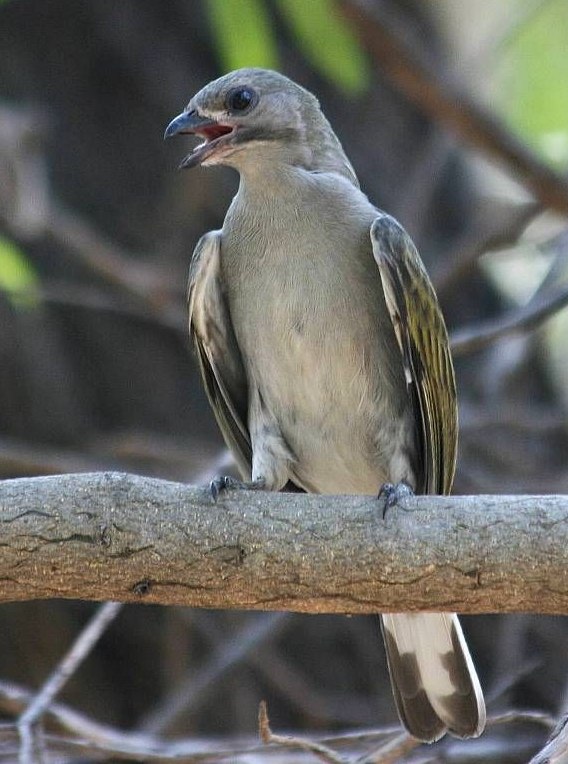
The Greater Honeyguide is a medium-sized bird, approximately 19 to 21 centimeters in length, with distinct field marks that facilitate easy identification. Adult males and females are similar in appearance, although males typically exhibit slightly brighter plumage. Their upperparts are primarily olive-brown with a subtle greenish tint, while their underparts are paler with a noticeable light streaking. The head features a conspicuous white patch on the side of the face, a distinguishing characteristic of the species.
Juvenile Greater Honeyguides differ in appearance from adults, possessing more muted tones and lacking the prominent white facial patch. The juveniles' plumage can lead to confusion with other honeyguide species, but the combination of size, habitat, and behavior often aids in correct identification. In flight, their wings are broad with a relatively short tail, creating a distinctive silhouette that experienced birders can recognize at a distance.
When perched, the Greater Honeyguide holds its body in a slightly upright posture, which, combined with its frequent wing flicking and tail wagging, can assist in its identification. While similar in coloration to other honeyguides, such as the Lesser Honeyguide, the Greater Honeyguide's larger size and unique vocalizations help differentiate it from its relatives.
Having trouble telling birds apart? Upload a photo to our bird identification tool for an instant species match.
Indicator sparrmanii Habitat and Range
Preferred Habitat
The Greater Honeyguide thrives in a variety of habitats across sub-Saharan Africa, favoring woodlands, savannas, and forest edges. It shows a preference for areas with a mixture of trees and open ground, often close to water sources. This bird is commonly found in elevations ranging from sea level to about 2,000 meters, making it adaptable to different ecological zones.
In terms of seasonal habitat shifts, Indicator sparrmanii does not undergo long-distance migrations, but it may move locally in response to the availability of food resources and nesting sites. The bird is equally at home in rural and semi-urban environments, where it can take advantage of human-altered landscapes that provide ample nesting opportunities and food.
Despite its adaptability, the Greater Honeyguide remains dependent on habitats that support bee populations, as bees are central to its foraging strategy. Consequently, the presence of this bird is often an indicator of a healthy and diverse ecosystem, capable of sustaining both avian and insect life.
Geographic Range
The Greater Honeyguide inhabits a broad range across sub-Saharan Africa. It is widely distributed from Senegal and Gambia in the west, stretching east through Kenya and Tanzania, and extending south to South Africa and Namibia. This species is a resident bird, meaning it does not engage in extensive migratory behavior, but rather stays within its established range throughout the year.
During the breeding season, which varies geographically, the bird is more actively seen in areas with abundant food sources. Its range includes a variety of countries such as Zimbabwe, Botswana, Mozambique, and Zambia, where it is relatively common in suitable habitats. Population density tends to be higher in regions where traditional beekeeping practices are prevalent, as these provide ample opportunities for its unique guiding behavior.
The Greater Honeyguide's presence is less common in densely forested regions or deserts, as these environments do not support the necessary bee populations or offer the same level of human interaction. However, in areas where its ecological requirements are met, the bird is a familiar sight, interacting frequently with both humans and other mammals.
Want to know which birds visit your area? Browse our backyard birds by location guides for region-specific species lists.
What Does the Indicator sparrmanii Eat?
The diet of the Greater Honeyguide revolves predominantly around beeswax and bee larvae, making it one of the few bird species adapted to digest these challenging substances. The bird's relationship with bees is pivotal, as it relies on humans or mammals to open beehives, after which it feasts on the remnants. This mutualistic relationship is a defining aspect of its feeding behavior.
In addition to beeswax and larvae, Indicator sparrmanii supplements its diet with small insects, such as beetles and ants. Seasonal changes can influence the availability of these secondary food sources, but wax and larvae remain staples throughout the year. The bird's foraging technique involves a unique guiding behavior, where it actively leads humans or honey badgers to beehives, enhancing its chances of accessing its preferred food.
The Greater Honeyguide typically forages during daylight hours, with peak activity in the early morning and late afternoon when bees are most active. Its ability to digest beeswax is facilitated by specialized enzymes, setting it apart from most other bird species and enabling it to exploit this unique ecological niche.
Indicator sparrmanii Behavior and Social Structure
The Greater Honeyguide exhibits a fascinating array of behaviors, particularly its social structure and territorial tendencies. Unlike many other bird species, it does not form large flocks but is often seen in pairs or small family groups. It is known for its territorial behavior, with males defending their territory vigorously, often using vocalizations and displays to assert dominance.
One of the most notable behaviors of Indicator sparrmanii is its guiding behavior. This involves leading potential partners, such as humans or honey badgers, to wild beehives. The bird uses a distinct call to attract attention and employs a series of movements and vocalizations to guide its partner. This behavior is not only a feeding strategy but also a form of interspecies communication, showcasing the bird's intelligence and adaptability.
During the breeding season, the Greater Honeyguide engages in courtship displays that include vocalizations and physical displays. The bird is diurnal, with most of its activities, including feeding and territorial interactions, occurring during daylight hours. Its response to predators is typically evasive, relying on its flight capabilities and the cover of vegetation to escape threats.
Indicator sparrmanii Nesting and Reproduction
The Greater Honeyguide has a unique nesting strategy, as it is a brood parasite. It does not build its own nests but instead lays its eggs in the nests of other bird species, such as barbets and woodpeckers. The female honeyguide typically lays one egg per host nest, ensuring that its offspring receives the necessary care from the unsuspecting host parents.
The incubation period for Indicator sparrmanii eggs is approximately 12 to 16 days. Once hatched, the young honeyguide often has a specialized hook on its beak that it uses to eliminate competition from the host species' chicks. This aggressive strategy increases the survival chances of the honeyguide chick.
The fledging timeline for the Greater Honeyguide is around 21 to 30 days, during which the host parents continue to care for the chick, unaware of its true identity. Parental roles in this species are limited to egg-laying, as the host birds assume all nurturing responsibilities. The Greater Honeyguide can have multiple broods per year, depending on the availability of host nests and environmental conditions.
Indicator sparrmanii Sounds and Vocalizations
The vocalizations of the Greater Honeyguide are distinctive and play a crucial role in its guiding behavior. The primary song consists of a series of sharp, high-pitched notes that are delivered in a rhythmic, repetitive pattern. These calls are often described as musical and melodious, making them easy to distinguish from other bird species.
In addition to its primary song, Indicator sparrmanii also produces various call notes used in communication with potential partners and for territorial defense. Its alarm calls are sharp and urgent, serving as a warning to other birds about the presence of predators.
During the dawn chorus, the Greater Honeyguide's calls are particularly prominent, as it actively seeks partners for its guiding behavior. These vocalizations are not only essential for communication but also play a role in establishing and maintaining the bird's territory.
Interesting Facts About the Indicator sparrmanii
- 1The Greater Honeyguide can digest beeswax, a feat few other birds can achieve, thanks to specialized enzymes.
- 2This bird has been known to guide humans to beehives for centuries, a behavior documented in folklore across Africa.
- 3Indicator sparrmanii can travel up to 3 kilometers in search of a partner to lead to a beehive.
- 4The species is a brood parasite, laying eggs in the nests of up to 30 different bird species.
- 5Their guiding call is so distinctive that it is often used by local tribes to locate honeyguides in the wild.
- 6The Greater Honeyguide plays a role in controlling bee populations by consuming bee larvae and wax.
- 7Despite its reliance on humans, the bird remains predominantly wild, rarely becoming domesticated or reliant on human settlements.
Indicator sparrmanii Conservation Status
The Greater Honeyguide is currently listed as a species of Least Concern by the IUCN, indicating a stable population trend. However, it faces potential threats from habitat destruction, particularly in areas where deforestation and land conversion reduce the availability of suitable habitats and host species for nesting. Conservation efforts focus on preserving natural habitats and promoting traditional beekeeping practices, which benefit both the honeyguide and local communities. Historical population changes have been minimal, but continued monitoring is necessary to ensure that environmental changes do not adversely affect the species. The bird's mutualistic relationship with humans provides a unique conservation opportunity, as promoting awareness of its ecological role can foster efforts to protect its habitat and ensure the survival of this remarkable species.