
Thick-billed Honeyguide
Indicator conirostris
Order: Piciformes / Family: Indicatoridae
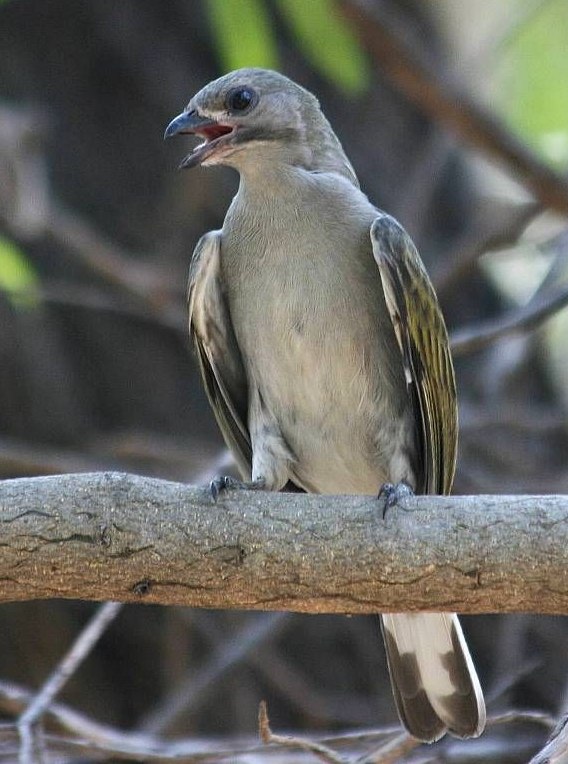
Wikimedia Commons
About the Thick-billed Honeyguide
The Thick-billed Honeyguide (Indicator conirostris) is a fascinating member of the Indicatoridae family, known for its mutualistic relationship with humans in guiding them to honeybee nests. Native to the dense forests and woodlands of sub-Saharan Africa, particularly prevalent in regions like the Congo Basin, this bird inhabits the humid, tropical ecosystems that provide abundant food resources. The species is most frequently observed in countries such as Gabon, Cameroon, and the Democratic Republic of Congo, where the forest canopy offers refuge and sustenance. The Thick-billed Honeyguide plays an ecological role by consuming beeswax and larvae, thus helping control bee populations and facilitating nutrient recycling within its habitat. Seasonal behaviors include adapting to the availability of bee colonies, often shifting its foraging activities in response to the seasonal movement and availability of its primary food resources. The honeyguide’s presence is a vital component of the forest ecosystem, as it not only maintains bee populations but also indirectly supports the human practice of honey collection. The bird's contribution to both ecological balance and human culture underscores its significance as a species worthy of study and conservation.
The Thick-billed Honeyguide belongs to the family Indicatoridae, within the order Piciformes. These birds typically live typically 7-9 years in the wild..
How to Identify a Thick-billed Honeyguide
The Thick-billed Honeyguide can be identified by its robust, conical bill, which is notably larger than that of other honeyguides. Adult plumage is primarily olive-brown with subtle streaking that blends seamlessly into the forest environment. The underparts are paler, featuring a yellowish wash that aids in distinguishing it from similar species. Juvenile birds exhibit slightly duller plumage, lacking the more defined streaking seen in adults. Males and females appear similar, with minor variations in size, females generally being slightly smaller. In flight, the Thick-billed Honeyguide exhibits a rapid, direct flight pattern, with short bursts of flapping followed by glides. When perched, it often adopts an upright posture, making it easier to spot among the dense foliage. Confusion with other species, such as the Lesser Honeyguide, can occur, though the Thick-billed's larger bill and subtle plumage differences help in accurate identification.
Having trouble telling birds apart? Upload a photo to our bird identification tool for an instant species match.
Thick-billed Honeyguide Habitat and Range
Preferred Habitat
The preferred habitat of the Thick-billed Honeyguide consists of dense, humid forests and woodlands, where it thrives in the complex vertical structure provided by the canopy. It is commonly found at elevations ranging from lowland regions up to 1500 meters. Seasonal habitat shifts are minimal, as the bird generally remains in forested areas year-round. Though primarily a forest dweller, the Thick-billed Honeyguide can occasionally be found in adjacent rural areas where forest patches persist. Its presence in urban environments is rare, as it relies heavily on the natural resources found within its native forest habitats.
Geographic Range
The range of the Thick-billed Honeyguide is primarily centered in Central and West Africa. During breeding, it is most prevalent in countries such as the Democratic Republic of Congo, Gabon, and Cameroon. The species is generally non-migratory, maintaining relatively stable populations within its established range throughout the year. There are no significant migration corridors, as the bird tends to inhabit regions where food resources are consistently available. Population densities are highest in the Congo Basin, where suitable habitat conditions and food resources are abundant.
Want to know which birds visit your area? Browse our backyard birds by location guides for region-specific species lists.
What Does the Thick-billed Honeyguide Eat?
The Thick-billed Honeyguide predominantly feeds on beeswax, bee larvae, and other insects, making it a specialized forager within its ecosystem. Seasonal diet changes are minimal, as the bird relies on the availability of bee colonies throughout the year. It employs a unique foraging technique, often leading humans to bee nests to access the beeswax and larvae left behind after honey collection. The honeyguide also consumes a variety of small insects, supplementing its diet during times when bee resources are scarce. Feeding typically occurs during the day, with peak activity in the early morning and late afternoon when bee activity is highest.
Thick-billed Honeyguide Behavior and Social Structure
Socially, the Thick-billed Honeyguide is generally solitary, though it may occasionally associate with mixed-species foraging flocks. Territorial behavior is exhibited through vocalizations and displays, particularly during the breeding season. Courtship displays involve the male singing and performing aerial maneuvers to attract a mate. The bird’s response to predators includes a series of alarm calls and evasive flight patterns. Daily activity patterns involve periods of foraging interspersed with rest, often perched high in the canopy where it remains vigilant for potential threats or opportunities to lead humans to honeybee nests.
Thick-billed Honeyguide Nesting and Reproduction
The Thick-billed Honeyguide is known for its brood parasitic nesting behavior, laying its eggs in the nests of other bird species. Preferred host species are often small hole-nesting birds found within the same forest habitat. Clutch size typically consists of one egg per host nest. The incubation period is dependent on the host species, with fledging occurring approximately two weeks after hatching. The roles of parental care are absent, as the host bird assumes responsibility for rearing the young honeyguide. Generally, the Thick-billed Honeyguide produces one brood per year, though this can vary depending on environmental conditions and host availability.
Thick-billed Honeyguide Sounds and Vocalizations
The primary song of the Thick-billed Honeyguide is a series of melodious whistles, each note crisp and clear, often delivered from a high perch. Call notes include a distinctive 'peep' or 'churr' sound that functions in communication and territory establishment. Alarm calls are sharp and piercing, serving to alert other birds of potential danger. The dawn chorus is marked by vigorous singing, as the honeyguide asserts its presence in the early morning hours. Its vocalizations could be compared to the clear, flute-like tones of a thrush, though delivered with more urgency.
Interesting Facts About the Thick-billed Honeyguide
- 1The Thick-billed Honeyguide is one of the few bird species known to lead humans to honeybee nests, a behavior rooted in mutualism.
- 2Its diet primarily consists of beeswax and bee larvae, a unique specialization among birds.
- 3Unlike most birds, the Thick-billed Honeyguide is a brood parasite, relying on other species to raise its young.
- 4It can be found at elevations up to 1500 meters but predominantly inhabits lowland tropical forests.
- 5The honeyguide's relationship with humans extends back centuries, with cultural significance in African folklore.
- 6The Thick-billed Honeyguide's bill is specially adapted to handle tough beeswax, setting it apart from other honeyguides.
- 7Despite its solitary nature, it sometimes joins mixed-species flocks, benefiting from collaborative foraging.
Thick-billed Honeyguide Conservation Status
The IUCN currently lists the Thick-billed Honeyguide as a species of least concern, with stable population trends across its range. However, primary threats include habitat loss due to deforestation and agricultural expansion. Conservation efforts focus on preserving forest habitats and promoting sustainable land use practices. Historical population changes have been minimal, though localized declines may occur in regions experiencing significant habitat degradation.
Other Indicatoridae Species


Birds Similar to the Thick-billed Honeyguide
These species are often confused with the Thick-billed Honeyguide due to similar appearance or overlapping range.
