Lyre-tailed Honeyguide
Melichneutes robustus
Order: Piciformes / Family: Indicatoridae

Wikimedia Commons
About the Lyre-tailed Honeyguide
The Lyre-tailed Honeyguide, Melichneutes robustus, is a unique avian species belonging to the family Indicatoridae. This bird is particularly fascinating for its symbiotic relationship with humans and other animals, guiding them to the nests of wild bees. Found primarily in the dense, humid forests of Central and West Africa, including countries like Cameroon, Gabon, and the Democratic Republic of the Congo, it plays a crucial role in these ecosystems by facilitating honey harvesting and indirectly promoting plant pollination. The bird's presence indicates a healthy, biodiverse environment, as it thrives in undisturbed habitats where traditional honey-gathering practices are maintained.
Throughout the year, the Lyre-tailed Honeyguide can be observed in lowland tropical forests, where it remains non-migratory. It shows a preference for habitats with abundant bee activity and is often found near forest edges and clearings. During the breeding season, which varies depending on the region, the bird becomes more vocal and active, engaging in complex courtship displays. These displays are instrumental in strengthening pair bonds and ensuring reproductive success.
Ecologically, the Lyre-tailed Honeyguide occupies a niche that involves both plant and insect interactions. By consuming beeswax and larvae, it helps control bee populations, thus maintaining a balance within its ecosystem. The bird's ability to thrive in these environments underscores its adaptability and resilience. However, deforestation and habitat fragmentation pose significant threats to its survival, highlighting the need for conservation efforts to preserve these crucial forest habitats.
The Lyre-tailed Honeyguide belongs to the family Indicatoridae, within the order Piciformes. These birds typically live averages 5-7 years with a maximum recorded lifespan of 10 years..
How to Identify a Lyre-tailed Honeyguide
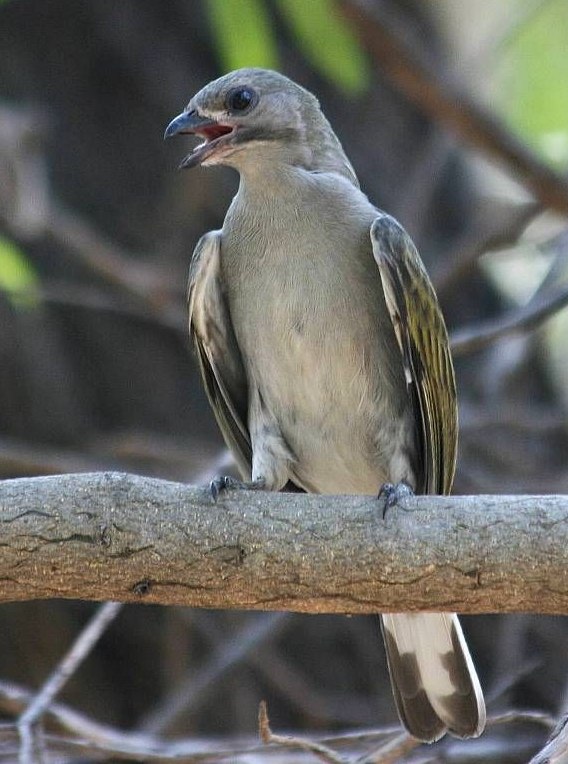
The Lyre-tailed Honeyguide is unmistakable with its striking tail feathers that resemble a lyre, which is especially pronounced in males. Adult males exhibit a predominantly olive-brown plumage with subtle streaks and an elongated tail that can extend up to 50 centimeters. Females are generally more subdued in color, with shorter tails and less pronounced markings. Juveniles resemble females but with even less distinct markings, making them more challenging to identify.
In flight, the Lyre-tailed Honeyguide presents a silhouette characterized by its long tail and relatively small body. The wings are broad and rounded, allowing for agile maneuverability through dense forest canopies. When perched, the bird sits upright, often flicking its tail, a behavior that aids in communication and territorial displays.
The Lyre-tailed Honeyguide can occasionally be confused with other honeyguides, such as the Greater Honeyguide, but its unique tail is a definitive distinguishing feature. Additionally, its habitat preferences and behaviors further aid in identification, as it is predominantly found in deep forest areas rather than more open habitats.
Having trouble telling birds apart? Upload a photo to our bird identification tool for an instant species match.
Lyre-tailed Honeyguide Habitat and Range
Preferred Habitat
The Lyre-tailed Honeyguide inhabits the dense, humid lowland forests of Central and West Africa. These forests provide the ideal conditions and resources necessary for its survival, including abundant bee populations. It thrives in regions like the Congo Basin, where the forest structure offers both cover and food sources.
Typically found at elevations ranging from sea level up to 1,500 meters, the bird shows a strong preference for undisturbed forest environments. Seasonal changes do not significantly alter its habitat preferences, as it remains a year-round resident of these forests.
While the bird is not commonly found in urban settings, it may occasionally venture into rural areas where traditional honey-harvesting practices exist. This behavior underscores its dependence on specific ecological conditions and human activities for survival.
Geographic Range
The range of the Lyre-tailed Honeyguide is concentrated in the tropical regions of Central and West Africa. Countries such as Cameroon, Gabon, the Democratic Republic of the Congo, and Equatorial Guinea form the core of its distribution.
It does not undertake long migrations but is known to move locally in response to food availability and nesting opportunities. Its presence is most dense in regions where traditional bee-keeping and honey-gathering practices occur, as these activities provide reliable food sources.
Breeding occurs within its established range, with population density hotspots often coinciding with areas of rich biodiversity and healthy forest ecosystems. As a non-migratory species, the Lyre-tailed Honeyguide remains confined to its tropical range year-round.
Want to know which birds visit your area? Browse our backyard birds by location guides for region-specific species lists.
What Does the Lyre-tailed Honeyguide Eat?
The diet of the Lyre-tailed Honeyguide primarily consists of beeswax and bee larvae, making it a specialized feeder within its ecosystem. It strategically forages near active bee colonies, often following other animals or humans to locate these sites.
Seasonal variations can influence its diet, with some individuals opportunistically consuming other insects and small invertebrates when bees are less active. Its foraging technique is characterized by agility and precision, enabling it to extract food from hard-to-reach places within tree cavities.
The bird typically feeds during daylight hours, with a preference for early morning and late afternoon when bee activity is at its peak. This feeding schedule aligns with its role as a guide for honey-seekers, facilitating mutualistic interactions within its habitat.
Lyre-tailed Honeyguide Behavior and Social Structure
The Lyre-tailed Honeyguide exhibits complex social behaviors, particularly during the breeding season. Males engage in elaborate courtship displays, using their distinctive tails to attract females. These displays involve rapid tail movements and vocalizations that serve both to entice potential mates and establish territory.
Territoriality is a prominent feature of its behavior, with individuals fiercely defending their chosen areas from intruders. Despite this, the species is generally solitary outside the breeding season, though it may be seen in loose associations when following honey gatherers.
In response to predators, the Lyre-tailed Honeyguide relies on its agility and forest cover for protection. Its daily activities are primarily diurnal, with periods of rest interspersed with foraging and territorial patrols.
Lyre-tailed Honeyguide Nesting and Reproduction
The nesting habits of the Lyre-tailed Honeyguide are distinctive within the Indicatoridae family. Unlike many birds, it does not build its own nest but instead practices brood parasitism, laying its eggs in the nests of other bird species. Preferred hosts include barbets and woodpeckers, whose nest sites provide the necessary protection and resources for the honeyguide's young.
Clutch size is typically limited to one or two eggs per host nest. The incubation period aligns with that of the host species, allowing the honeyguide chick to hatch and thrive alongside its foster siblings.
The fledging timeline is dependent on the host's care, with honeyguide chicks generally developing rapidly due to the ample food provided by their unsuspecting caregivers. This strategy allows the Lyre-tailed Honeyguide to focus on reproductive success without the energy investment required for nest building.
Lyre-tailed Honeyguide Sounds and Vocalizations
The vocalizations of the Lyre-tailed Honeyguide are a key aspect of its behavior, particularly during the breeding season. Its primary song consists of a series of melodious whistles interspersed with sharp, rhythmic notes. The pitch and quality of these sounds are reminiscent of a flute, with a clear, penetrating tone.
Call notes are varied, including a distinctive 'chee-chee-chee' that serves as both an alarm call and a contact call. These notes are often repeated in rapid succession when the bird is agitated or seeking to communicate with nearby individuals.
During the dawn chorus, the Lyre-tailed Honeyguide becomes particularly vocal, its calls echoing through the forest canopy. This behavior underscores its territorial nature and plays a crucial role in maintaining social bonds within its population.
Interesting Facts About the Lyre-tailed Honeyguide
- 1The Lyre-tailed Honeyguide's tail can measure up to 50 centimeters, making it one of the longest tails relative to body size among birds.
- 2This honeyguide is one of the few bird species that consume beeswax, a practice that is possible due to specialized digestive enzymes.
- 3Unlike many birds, the Lyre-tailed Honeyguide practices brood parasitism, laying its eggs in the nests of other species.
- 4The relationship between honeyguides and humans dates back thousands of years, as documented in ancient African folklore.
- 5Lyre-tailed Honeyguides have been observed leading humans to beehives, a behavior that benefits both the bird and the honey gatherers.
- 6The species' distinct vocalizations during dawn chorus play a significant role in maintaining territory and attracting mates.
- 7Despite being forest dwellers, Lyre-tailed Honeyguides occasionally venture into open areas to guide humans to potential food sources.
Lyre-tailed Honeyguide Conservation Status
Currently, the Lyre-tailed Honeyguide holds a conservation status of Least Concern according to the IUCN Red List. However, its population is experiencing a gradual decline due to habitat loss and fragmentation caused by deforestation and agricultural expansion. Primary threats include logging activities and the conversion of forest land to farmland, which disrupt the bird's habitat and food sources. Conservation efforts focus on preserving forest habitats and supporting traditional, sustainable honey-harvesting practices that benefit both humans and honeyguides. While historically stable, the Lyre-tailed Honeyguide's population is increasingly pressured by human activities, highlighting the importance of continued monitoring and habitat protection to ensure its future survival.