
Muscicapa jocosa
Muscicapa jocosa
Order: Passeriformes / Family: Muscicapidae
About the Muscicapa jocosa
The Muscicapa jocosa, commonly known as the Grey-streaked Flycatcher, is a small songbird belonging to the family Muscicapidae. This bird has a widespread presence across Asia, most notably in eastern parts such as Japan, Korea, and China. It thrives in a variety of wooded environments, from temperate deciduous and coniferous forests to urban parks and gardens. The species is adaptable, making occasional appearances in more open areas during migration. Its presence is significant as it plays a crucial role in insect population control, thus maintaining ecological balance in its habitat. During the breeding season, the Grey-streaked Flycatcher exhibits a strong preference for dense foliage, which provides protection and ample food supplies. As an insectivorous species, its diet consists mostly of flying insects, which it catches mid-flight using its adept aerial skills. This diet shifts slightly with the seasons, as the bird adapts to the availability of different prey types. The Grey-streaked Flycatcher is migratory, moving between breeding and wintering grounds with precision. Its seasonal movements are finely tuned to the availability of resources and climatic conditions, ensuring its survival across its broad range. This songbird is not only an indicator of healthy forest ecosystems but also a testament to the dynamic nature of avian adaptation and survival strategies in the face of environmental challenges.
The Muscicapa jocosa belongs to the family Muscicapidae, within the order Passeriformes. These birds typically live average 4-5 years, with some reaching up to 8 years..
How to Identify a Muscicapa jocosa
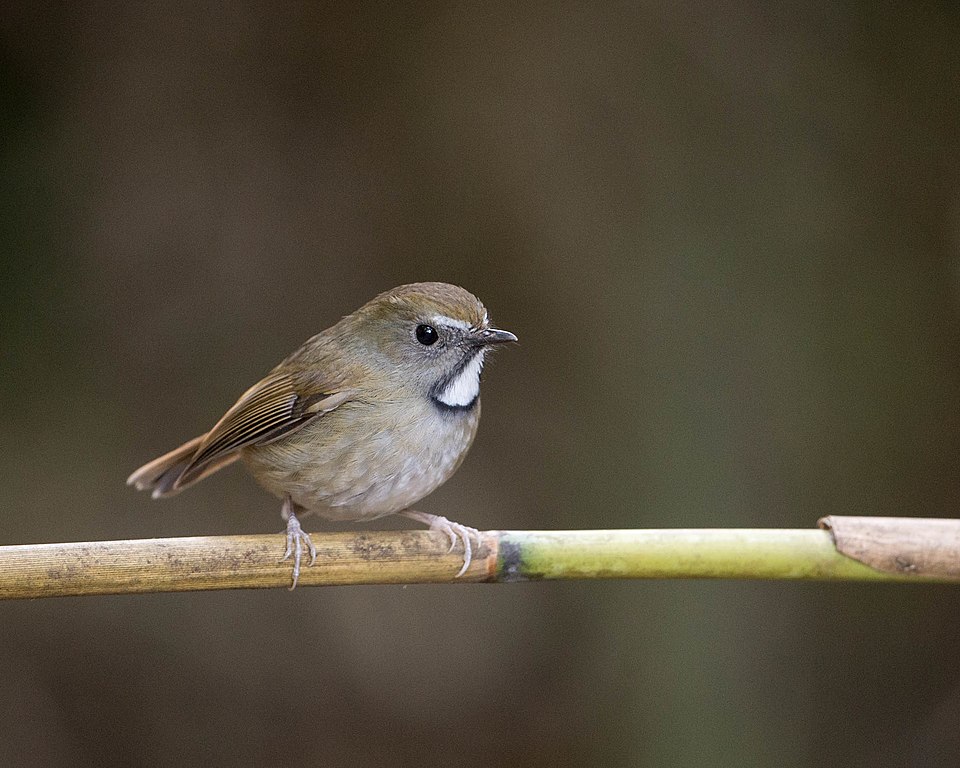
The adult Grey-streaked Flycatcher displays a predominantly gray plumage with distinctive streaks on its chest and back, providing effective camouflage against the bark of trees. Its underparts are lighter, often appearing white or very light gray. The wings and tail are darker, with subtle white markings on the edges. Males and females closely resemble each other, though males might exhibit slightly more pronounced streaking. Juvenile birds can be identified by their buffy spots on the upperparts and a generally more mottled appearance. In flight, the bird's silhouette is marked by its straight, medium-length tail and pointed wings, which are adapted for agile flight. Comparing it to similar species can be challenging due to its cryptic coloration, but its unique combination of streaked chest and tail flicking behavior often sets it apart from other flycatchers. When perched, the Grey-streaked Flycatcher tends to sit upright on exposed branches, scanning for prey while occasionally flicking its tail.
Having trouble telling birds apart? Upload a photo to our bird identification tool for an instant species match.
Muscicapa jocosa Habitat and Range
Preferred Habitat
The Grey-streaked Flycatcher inhabits a diverse array of habitats, including deciduous and coniferous forests, particularly favoring areas with dense undergrowth. It can also be found in mangroves, plantations, and suburban gardens, showcasing its adaptability to human-altered landscapes. This species is typically seen at elevations ranging from sea level up to 2000 meters, though it generally prefers lower elevations during the breeding season. During migration, the flycatcher may temporarily inhabit more open areas, such as farmland and coastal regions, as it seeks food and shelter. While it can occasionally be spotted in urban areas, it is more commonly associated with rural and forested environments.
Geographic Range
The breeding range of the Grey-streaked Flycatcher extends across northeastern Asia, including regions in Japan, Korea, and northeastern China. During the winter months, this species migrates southward to warmer climates in Southeast Asia, encompassing countries such as Thailand, Malaysia, and Indonesia. Its migration corridors include the coastal and inland routes through China and Southeast Asia, where the bird finds suitable stopover sites. Population density is typically highest in its breeding range, with notable concentrations found in Japan’s forested regions. The flycatcher's migratory patterns are driven by seasonal changes in food availability and climate, which dictate its presence across these diverse geographical areas.
Want to know which birds visit your area? Browse our backyard birds by location guides for region-specific species lists.
What Does the Muscicapa jocosa Eat?
The Grey-streaked Flycatcher's diet primarily consists of insects, including flies, beetles, and moths, which it captures mid-air with remarkable agility. During the breeding season, the abundance of insects in forested habitats supports its nutritional needs. As seasons change, this flycatcher may also consume small spiders and occasionally berries, adapting to the fluctuating availability of food sources. Its foraging technique involves sallying forth from a perch to snatch prey in flight or gleaning insects from foliage. The bird's feeding schedule is largely diurnal, with peak activity occurring during the early morning and late afternoon when insect activity is highest. Its keen eyesight and rapid flight make it an effective hunter, capable of adjusting its diet and foraging strategies as environmental conditions demand.
Muscicapa jocosa Behavior and Social Structure
The Grey-streaked Flycatcher exhibits a solitary and territorial nature, especially during the breeding season. Males establish territories through vocalizations and displays, often engaging in aerial chases to ward off intruders. Courtship involves a combination of singing and physical displays, where the male showcases his agility and strength. While generally solitary, the species may form loose flocks during migration, providing safety in numbers as they travel across long distances. In response to predators, this flycatcher relies on its swift flight and excellent camouflage to evade capture. Daily activity patterns are influenced by food availability, with increased feeding activity occurring during times of peak insect abundance. The Grey-streaked Flycatcher is known for its rapid and direct flight, often accompanied by characteristic tail flicking.
Muscicapa jocosa Nesting and Reproduction
The nesting habits of the Grey-streaked Flycatcher involve building a small cup-shaped nest, typically located in the fork of a tree branch. Preferred nest sites are concealed within dense foliage, providing protection from predators and harsh weather. The nest is constructed from a variety of materials, including grasses, twigs, and moss, meticulously woven together and lined with softer materials like feathers and animal hair. The female lays a clutch of 3-5 eggs, which she incubates for approximately 12-14 days. During this period, the male plays a supportive role, often bringing food to the nesting site. Once hatched, the chicks remain in the nest for about 15-18 days, receiving care and feeding from both parents. The Grey-streaked Flycatcher typically raises one or two broods per year, depending on environmental conditions and food availability.
Muscicapa jocosa Sounds and Vocalizations
The Grey-streaked Flycatcher's primary song is a series of melodious, whistling notes that rise and fall in pitch, often described as a soft 'chee-we, chee-we'. This song serves both for territory establishment and attracting mates. The bird also produces a range of call notes, including a sharp 'chick' and a more subdued 'tseep', used for communication between mates and alerting to threats. Alarm calls are typically harsher and more staccato, effectively signaling danger to other birds. During the dawn chorus, the Grey-streaked Flycatcher's song is prominent, contributing to the rich tapestry of sounds in its habitat.
Interesting Facts About the Muscicapa jocosa
- 1The Grey-streaked Flycatcher can travel over 3000 kilometers during its seasonal migrations between breeding and wintering grounds.
- 2Despite its small size, the Grey-streaked Flycatcher plays a significant role in controlling insect populations in its habitat.
- 3This species is known for its unique tail-flicking behavior, often observed when perched and scanning for prey.
- 4The Grey-streaked Flycatcher can be found from sea level up to 2000 meters in elevation, showcasing its adaptability to diverse environments.
- 5In Japan, the Grey-streaked Flycatcher is considered a harbinger of spring, arriving just as the cherry blossoms begin to bloom.
Muscicapa jocosa Conservation Status
As of the latest assessments, the Grey-streaked Flycatcher is listed as Least Concern by the IUCN, with a stable population trend. Despite its generally secure status, the species faces threats from habitat destruction due to deforestation and urban expansion. Conservation efforts focus on preserving key breeding and wintering habitats, ensuring the maintenance of forested areas and promoting sustainable land-use practices. Historically, the population has remained stable, though localized declines have been noted in areas where habitat loss is most significant. Continued monitoring and habitat protection are essential to safeguard this adaptable yet vulnerable species.
Other Muscicapidae Species


Birds Similar to the Muscicapa jocosa
These species are often confused with the Muscicapa jocosa due to similar appearance or overlapping range.