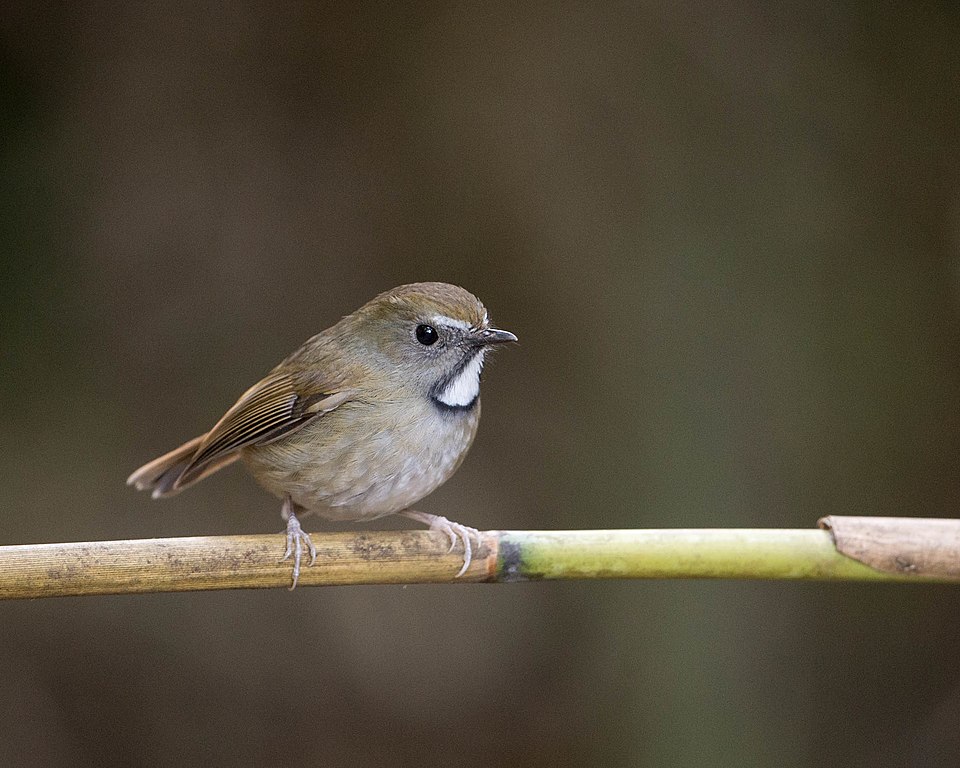
Rufous-tailed Robin
Luscinia sibilans
Order: Passeriformes / Family: Muscicapidae

Wikimedia Commons
About the Rufous-tailed Robin
The Rufous-tailed Robin (Luscinia sibilans) is a small passerine bird in the Muscicapidae family, renowned for its enchanting song that fills the forests of Asia. This bird is primarily found in the dense undergrowth of deciduous and mixed forests, particularly during the breeding season. Its presence is most notable in regions such as eastern Siberia, northeastern China, and parts of Korea, where it breeds in the summer months. The Rufous-tailed Robin is an integral part of the ecosystem, acting as both a predator and prey, balancing the populations of insects and providing food for larger birds and mammals. During the non-breeding season, this robin migrates to Southeast Asia, wintering in countries like Thailand, Vietnam, and southern China. Its seasonal movements are essential for seed dispersal and pest control across its range. The bird's ecological role emphasizes the interconnectedness of forest ecosystems and highlights the importance of preserving natural habitats. With a preference for cool, moist, and shaded environments, the Rufous-tailed Robin thrives in areas with abundant leaf litter and dense shrubbery, which provide ample foraging opportunities and nesting sites. This bird's adaptability to various forest types makes it a resilient species, although deforestation and habitat fragmentation pose increasing challenges. Conservation efforts focus on habitat preservation to ensure the continued presence of this melodious songster in its natural range.
The Rufous-tailed Robin belongs to the family Muscicapidae, within the order Passeriformes. These birds typically live average 3-5 years with a maximum recorded of 7 years..
How to Identify a Rufous-tailed Robin
The Rufous-tailed Robin is a small bird, measuring about 14 centimeters in length, with a wingspan of approximately 22 centimeters. Its most distinguishing feature is the reddish-brown tail, which contrasts with its otherwise olive-brown upperparts and pale underparts. Adults have a subtle, buffy eyebrow stripe and a white throat with faint streaking. Juveniles exhibit a more speckled appearance with darker spots across their breast and back, aiding in camouflage. Males and females are similar in appearance, though males may display slightly brighter plumage during the breeding season. The Rufous-tailed Robin can be confused with similar species, such as the Siberian Blue Robin, but it lacks the bright blue plumage of its counterpart. In flight, the Rufous-tailed Robin shows a slightly rounded wing shape and a fanned tail, which may appear more rufous in good lighting. When perching, it holds a rather upright posture, often flicking its tail in an alert manner.
Having trouble telling birds apart? Upload a photo to our bird identification tool for an instant species match.
Rufous-tailed Robin Habitat and Range
Preferred Habitat
The Rufous-tailed Robin inhabits a variety of forested environments, including deciduous, mixed, and coniferous forests. It prefers areas with dense underbrush and abundant leaf litter where it can forage for insects and other invertebrates. This bird can be found at elevations ranging from sea level to about 2000 meters, depending on the region. During the breeding season, it favors cooler, temperate forests in northeastern China and parts of Russia. In winter, it migrates to warmer, subtropical regions such as southern China and Southeast Asia. While it primarily occupies rural and forested landscapes, it can occasionally be found in urban parks and gardens, provided there is sufficient cover and food availability.
Geographic Range
The Rufous-tailed Robin's breeding range extends across northeastern Asia, particularly in eastern Siberia, northeastern China, and the Korean Peninsula. During the winter months, this migratory species travels southward to Southeast Asia, including countries such as Thailand, Vietnam, Laos, and southern regions of China. Migration corridors are primarily along the East Asia Flyway, a critical route for many bird species. Population density is generally higher in breeding areas with optimal habitat conditions, while wintering populations are more spread out across a variety of suitable habitats in Southeast Asia.
Want to know which birds visit your area? Browse our backyard birds by location guides for region-specific species lists.
What Does the Rufous-tailed Robin Eat?
The Rufous-tailed Robin primarily feeds on insects and other small invertebrates, which it diligently searches for amidst the leaf litter and lower vegetation layers. Its diet consists of beetles, caterpillars, spiders, and ants, which provide essential protein and nutrients. During the breeding season, the bird's diet is heavily focused on protein-rich insects to support the increased energy demands of rearing young. In the winter months, when insects are less abundant, it may supplement its diet with small fruits and seeds, showcasing its adaptability to seasonal changes in food availability. Foraging behavior involves a mix of hopping and short flights, allowing it to cover ground efficiently while searching for prey.
Rufous-tailed Robin Behavior and Social Structure
The Rufous-tailed Robin is generally solitary or found in pairs, especially during the breeding season. It exhibits strong territorial behavior, with males singing from elevated perches to defend their territory and attract mates. Courtship involves a series of elaborate displays, including wing flicking and tail fanning, to showcase the male's vibrant tail feathers. Outside of breeding, it is more secretive and less vocal, blending into the dense forest undergrowth. The species exhibits a diurnal activity pattern, being most active during the early morning and late afternoon when foraging and singing. When threatened by predators, it relies on its cryptic plumage and swift, low flight to escape.
Rufous-tailed Robin Nesting and Reproduction
Rufous-tailed Robins construct their nests close to the ground, often concealed within dense shrubs or underbrush. The nest is a cup-shaped structure made of twigs, leaves, moss, and lined with softer materials like feathers and hair. The female lays a clutch of 3 to 5 eggs, which she incubates for about 12 to 14 days. Both parents partake in feeding the chicks, which fledge approximately 12 to 15 days after hatching. The species typically raises one brood per year, though favorable conditions may allow for a second. Parental care extends beyond fledging, ensuring the young learn essential survival skills.
Rufous-tailed Robin Sounds and Vocalizations
The song of the Rufous-tailed Robin is a rich, melodious series of whistles and trills, often delivered from a concealed perch within dense vegetation. Its rhythm is varied, with a mix of high and low notes that create a complex and captivating melody. The bird's call notes are more subdued, consisting of sharp 'tik' or 'chak' sounds used for communication between mates or signaling alarm. During the dawn chorus, the Rufous-tailed Robin's song stands out for its clarity and musicality, often likened to the notes of a flute. This vocal prowess plays a crucial role in territory defense and mate attraction.
Interesting Facts About the Rufous-tailed Robin
- 1The Rufous-tailed Robin's song can be heard over a distance of up to 100 meters, even in dense forest.
- 2This bird is known to participate in mixed-species foraging flocks during the winter months.
- 3The tail-flicking behavior of the Rufous-tailed Robin is thought to be a form of communication or warning.
- 4It was first described scientifically by the ornithologist Robert Swinhoe in the 19th century.
- 5Rufous-tailed Robins have been observed using their songs to mimic other bird species.
- 6The species shows a preference for nesting sites with ample cover, reducing predation risk.
- 7Rufous-tailed Robins are known to migrate distances exceeding 1000 kilometers between breeding and wintering grounds.
Rufous-tailed Robin Conservation Status
The Rufous-tailed Robin is currently listed as Least Concern by the IUCN, with population trends considered stable. However, habitat loss due to deforestation and land conversion poses a significant threat in both breeding and wintering areas. Conservation efforts focus on preserving critical habitats and maintaining migration corridors. Historical data indicate stable populations, but continued monitoring is essential to detect potential declines. Protecting forested areas and promoting sustainable land use practices are key to ensuring the long-term survival of this species.