
Sharpe's Akalat
Sheppardia sharpei
Order: Passeriformes / Family: Muscicapidae

Wikimedia Commons
About the Sharpe's Akalat
The Sharpe's Akalat, scientifically known as Sheppardia sharpei, is a captivating bird belonging to the Muscicapidae family, residing predominantly in the montane and submontane forests of East Africa. It thrives in the humid, dense undergrowth of forests, often found at elevations between 800 and 2,500 meters. This bird's vibrant chestnut upperparts and olive-brown wings make it a striking presence in these lush habitats.
Ecologically, the Sharpe's Akalat plays a crucial role in its ecosystem. By preying on insects and other small invertebrates, it helps regulate these populations, maintaining a balance within its habitat. The bird's preference for dense forest undergrowth also makes it an important indicator species for forest health, as its presence often signals a well-preserved environment. The Akalat's feeding habits contribute to seed dispersal, indirectly aiding in forest regeneration.
The significance of Sharpe's Akalat extends beyond its ecological role. As a species, it embodies the intricate connections within tropical forest ecosystems. Its presence is a testament to the rich biodiversity of East African forests, regions like the Eastern Arc Mountains and the Albertine Rift. Seasonal behaviors of the Sharpe's Akalat include slight altitudinal movements, possibly in response to food availability, though it is generally a resident species. This bird's adaptability to different forest environments showcases its resilience in the face of habitat changes due to deforestation and human encroachment.
Despite not being migratory, Sharpe's Akalat exhibits some seasonal behaviors. It may move altitudinally within its range to exploit seasonal food resources. During the breeding season, generally aligning with the rainy season, the bird becomes more vocally active, marking its territory with distinctive calls. These seasonal shifts highlight the bird's adaptability and the dynamic nature of its forest environment.
The Sharpe's Akalat belongs to the family Muscicapidae, within the order Passeriformes. These birds typically live average lifespan is 5-7 years, with a maximum recorded of 9 years..
How to Identify a Sharpe's Akalat
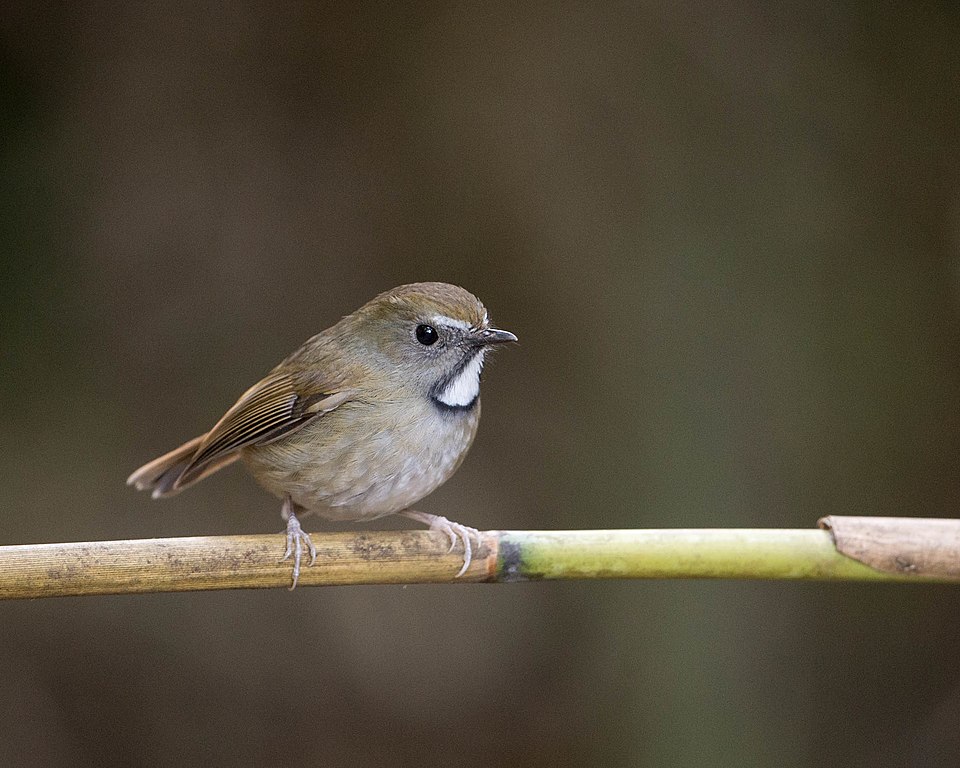
Identifying the Sharpe's Akalat involves noting several distinctive features. Adult plumage is marked by a vibrant chestnut color on the upperparts, contrasting with olive-brown wings and a paler, whitish underbelly. The bird's small size, approximately 14 cm in length, and its relatively short tail distinguish it from other forest species.
Juveniles tend to have more muted colors, lacking the full intensity of the chestnut plumage seen in adults. Males and females appear similar in the field, making sex differentiation challenging without close observation or during the breeding season when males may exhibit more prominent vocal behaviors.
In terms of behavior, Sharpe's Akalat often perches low in dense undergrowth or near the ground, adopting a rather upright posture. When compared to similar species like the White-starred Robin, the Akalat's lack of a prominent white wing pattern helps avoid confusion. Its flight is typically short and low to the ground, maintaining a direct trajectory through thick vegetation. Observers should note its distinctive bobbing motion while perching, a behavior that can aid in identification.
Having trouble telling birds apart? Upload a photo to our bird identification tool for an instant species match.
Sharpe's Akalat Habitat and Range
Preferred Habitat
Sharpe's Akalat primarily inhabits montane and submontane forests in East Africa, thriving in areas with dense undergrowth where it finds both shelter and food resources. These forests, often shrouded in mist, provide a rich environment for the Akalat's foraging habits. The bird is commonly found at elevations ranging from 800 to 2,500 meters.
The Akalat displays some adaptability to habitat changes. It can persist in secondary forests or forest edges, though it prefers undisturbed habitats. During certain seasons, such as the breeding season, it may venture into lower altitudes or more open forest areas to access food or nesting sites.
While the species is not typically found in urban environments, it can occasionally be observed on forest borders near human settlements, especially in regions where forest habitats are fragmented. However, its preference remains the dense, humid forests where it can maintain its secretive lifestyle.
Geographic Range
The range of Sharpe's Akalat encompasses several key regions in East Africa. It is predominantly found in countries such as Kenya, Tanzania, Uganda, and Rwanda, particularly within the montane and submontane forests of the Eastern Arc Mountains and the Albertine Rift. These areas are recognized for their exceptional biodiversity and endemism, providing critical habitats for the Akalat.
During the breeding season, these birds are more concentrated in specific areas with optimal nesting conditions, often higher altitudes. However, they are generally non-migratory, remaining within their forested ranges throughout the year.
Population density hotspots for Sharpe's Akalat are often associated with well-preserved forest regions. In areas like Tanzania's Udzungwa Mountains, the bird can be found in relatively higher numbers, benefiting from conservation efforts aimed at preserving these unique habitats. Despite its restricted range, the Akalat remains a resilient species, capable of surviving in fragmented habitats as long as essential resources are available.
Want to know which birds visit your area? Browse our backyard birds by location guides for region-specific species lists.
What Does the Sharpe's Akalat Eat?
The diet of Sharpe's Akalat primarily consists of insects and other small invertebrates, making it a dedicated insectivore. It forages by actively hopping along the forest floor or low vegetation, using its keen eyesight to detect prey among the leaf litter or on branches.
Seasonal diet variations occur as the Akalat adapts to the fluctuating availability of food resources. During the rainy season, when insect abundance peaks, the bird's diet is rich in beetles, caterpillars, and spiders. In drier periods, it may supplement its diet with small fruits or seeds, although insects remain the primary focus.
Foraging techniques include sallying from low perches to capture insects in flight or gleaning them from foliage. The Akalat shows a preference for smaller prey, typically less than 2 cm in size, which it consumes throughout the day. Its feeding schedule is largely dictated by the availability of prey, with peak foraging activity occurring in the early morning and late afternoon.
Sharpe's Akalat Behavior and Social Structure
The behavior of Sharpe's Akalat reflects its solitary and secretive nature. It is generally a territorial bird, with individuals or pairs maintaining defined territories that they defend from intruders. During the breeding season, these territorial boundaries become more pronounced, with males actively using vocalizations to assert their presence and ward off rivals.
Courtship displays are subtle, involving soft calls and mutual preening between pairs. The Akalat typically forms monogamous bonds, with both partners participating in nest building and chick rearing. Despite its solitary tendencies, the bird may occasionally join mixed-species flocks, benefiting from increased foraging opportunities and safety in numbers.
Daily activity patterns show the Sharpe's Akalat to be most active during the early morning and late afternoon, when it engages in foraging and territorial displays. Its response to predators involves a combination of alarm calls and evasive flight into dense vegetation, where it relies on its camouflage to avoid detection. The Akalat's ability to remain inconspicuous in its forest environment is key to its survival.
Sharpe's Akalat Nesting and Reproduction
Sharpe's Akalat exhibits specific nesting behaviors aligned with its forest habitat. It builds a cup-shaped nest, often located low in shrubbery or among roots, using materials like moss, leaves, and fine twigs. This concealed placement helps protect the nest from predators and the elements.
The typical clutch size for Sharpe's Akalat ranges from two to three eggs. Both parents participate in incubating the eggs, which hatch after an incubation period of approximately 14-16 days. Once hatched, the chicks remain in the nest for 14-16 days before fledging.
Parental roles are cooperative, with both male and female sharing responsibilities for feeding and caring for the young. The Akalat usually raises one brood per year, though in optimal conditions, a second brood may be attempted. Nesting success is closely tied to the availability of food resources and the stability of the surrounding habitat.
Sharpe's Akalat Sounds and Vocalizations
The primary song of Sharpe's Akalat is a series of melodious whistles, characterized by a clear, flute-like quality. These rhythmic sequences can be heard echoing through the forest during the breeding season, serving both territorial and mate-attraction purposes.
In addition to its song, the Akalat produces a range of call notes. These include soft contact calls used between mates and sharper alarm calls when potential threats are detected. During the dawn chorus, the bird becomes particularly vocal, contributing to the symphony of sounds within its forest environment.
The Akalat's vocalizations, though pleasant, are not as varied as those of some other songbirds. Its calls and songs are nonetheless effective for communication within the dense undergrowth it inhabits, playing a crucial role in its social interactions and territorial defense.
Interesting Facts About the Sharpe's Akalat
- 1Sharpe's Akalat, despite its small size of 14 cm, plays a vital role in controlling insect populations in its habitat.
- 2This bird's preference for dense forest undergrowth means it often goes unnoticed, contributing to its elusive reputation among birdwatchers.
- 3Sharpe's Akalat is named after the renowned British ornithologist Richard Bowdler Sharpe, who made significant contributions to bird taxonomy.
- 4Unlike many other songbirds, the Akalat's song is less complex, but its flute-like quality makes it easily recognizable in the forest.
- 5The bird's altitudinal range from 800 to 2,500 meters means it can experience diverse climatic conditions within its forested habitat.
- 6Sharpe's Akalat's ability to adapt to secondary forests highlights its resilience, although it still faces threats from habitat destruction.
- 7The Akalat's secretive nature and preference for low perches make it a challenging species to spot, even for experienced birders.
Sharpe's Akalat Conservation Status
Sharpe's Akalat is currently classified as Least Concern by the IUCN. However, its population is experiencing a gradual decline, primarily due to habitat loss. Deforestation, driven by agricultural expansion and logging, poses the most significant threat to its forest habitats. Conservation efforts focus on preserving the montane and submontane forests where the Akalat resides. Protected areas like national parks in Kenya and Tanzania offer some refuge, though habitat fragmentation remains a concern. Historical population changes show fluctuations correlating with habitat availability, underscoring the need for continued conservation initiatives. Public awareness and community involvement in conservation projects are critical for the long-term survival of Sharpe's Akalat. Sustainable management of forest resources can help stabilize populations, ensuring that this distinctive bird continues to thrive in its natural environment.
Other Muscicapidae Species


Birds Similar to the Sharpe's Akalat
These species are often confused with the Sharpe's Akalat due to similar appearance or overlapping range.

