
Small Niltava
Niltava macgrigoriae
Order: Passeriformes / Family: Muscicapidae

Wikimedia Commons
About the Small Niltava
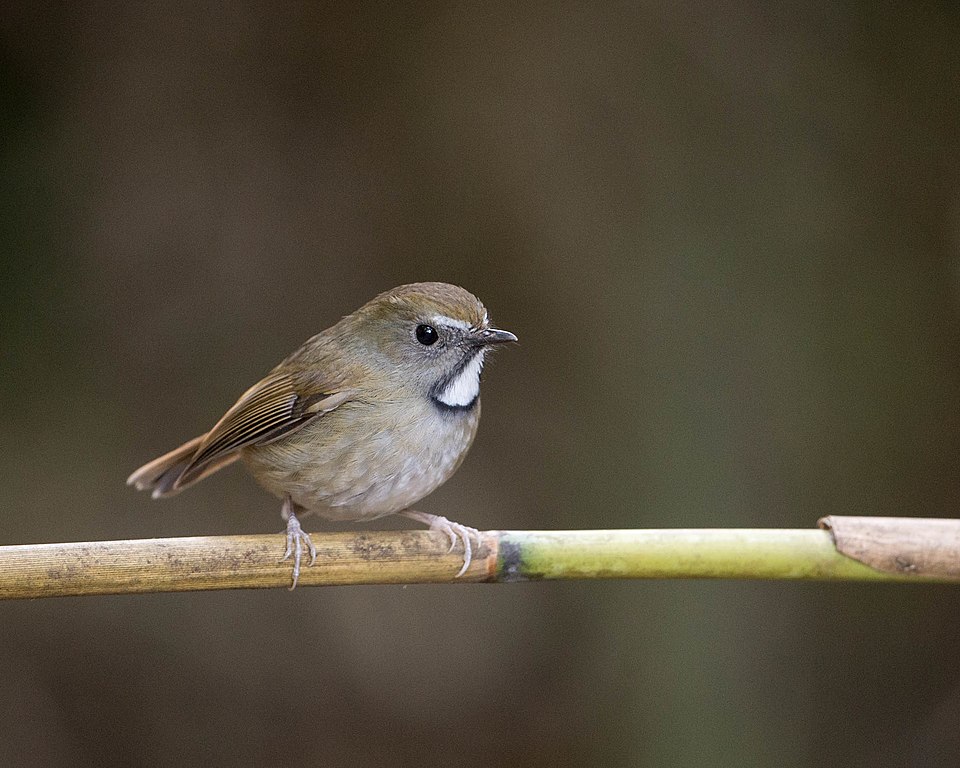
The Small Niltava (Niltava macgrigoriae) is a charming and visually striking member of the Muscicapidae family, notable for its vibrant coloration and melodic song. This small passerine bird inhabits the lush forests of Southeast Asia, where it contributes to the region's rich biodiversity. The bird's ecological role extends beyond its visual appeal, as it participates in seed dispersion and insect control. Its preferred habitats include subtropical and tropical moist montane forests, thriving at elevations ranging from 600 to 2500 meters. The presence of the Small Niltava signifies healthy forest ecosystems, given its reliance on dense, undisturbed forest environments. During the breeding season, typically from March to July, the Small Niltava displays a noticeable increase in territorial singing, enhancing its role as both a competitor and a mate-seeker. In the non-breeding season, the bird becomes less vocal but remains a critical component of the avian community, maintaining its role in the ecosystem through constant foraging and interaction with other species. The Small Niltava is particularly significant in biodiversity hotspots such as the Eastern Himalayas and parts of Indochina, where conservation efforts are crucial to preserving its habitat. Despite its small size, the Small Niltava's presence in these regions indicates a thriving environment, as it depends on a well-balanced ecosystem. Its contribution to the control of insect populations aids in maintaining the health of forested areas, showcasing the interconnectedness of species within these complex habitats. Observing the Small Niltava in its natural setting offers insight into the intricate dynamics of forest ecosystems, where each species plays a pivotal role. The bird's territorial behavior during the breeding season is a testament to its adaptability and resilience, as it competes for resources and mates in a densely populated avian community. The Small Niltava's role in these ecosystems underscores the importance of preserving their habitats, as their presence often correlates with the health of the broader environment. The bird's vibrant plumage and melodious song serve as a reminder of the natural beauty and complexity found within Southeast Asia's montane forests.
The Small Niltava belongs to the family Muscicapidae, within the order Passeriformes. These birds typically live typically 5-7 years, with some individuals living longer in protected environments..
How to Identify a Small Niltava
The Small Niltava is easily recognized by its striking blue plumage, particularly in males. Adult males boast a deep cobalt blue that covers the head, back, and tail, contrasted by a black mask around the eyes and a lighter blue throat. Females, while less vibrant, still present a subtle beauty with olive-brown upperparts and a paler underbelly, marked by a hint of blue on the wings and tail. Juveniles resemble females but are generally duller, with less blue tint and more uniform brown tones. The size of the Small Niltava is modest, measuring around 13-15 cm in length, with a wingspan of approximately 20-22 cm. Its compact body and short tail contribute to its distinctive silhouette when perched. In flight, the bird exhibits a quick, darting motion, often moving from branch to branch within the forest canopy. Similar species that might cause confusion include the Rufous-bellied Niltava and the Large Niltava. However, the Small Niltava can be distinguished by its smaller size and more uniform blue coloration in males. The perching posture of the Small Niltava is alert and upright, often with its head held high, allowing for a clear view of its surroundings. This posture aids birders in identifying the species from a distance, as its bright coloration stands out against the green foliage.
Having trouble telling birds apart? Upload a photo to our bird identification tool for an instant species match.
Small Niltava Habitat and Range
Preferred Habitat
The Small Niltava thrives in subtropical and tropical moist montane forests, preferring elevations between 600 and 2500 meters. These forests provide dense canopy cover and abundant understory, crucial for foraging and nesting. The bird is most commonly found in the Eastern Himalayas, parts of northern and northeastern India, Bhutan, and extending into Southeast Asia, including Myanmar, Thailand, and Vietnam. During the breeding season, the Small Niltava remains within dense forested areas, where it can find ample food and suitable nesting sites. In some regions, it may descend to lower elevations during non-breeding months, seeking out areas with abundant insect life and fruit availability. The Small Niltava is less frequently observed in urban environments, as its habitat preferences lean heavily towards undisturbed forest areas. However, it may occasionally venture into rural gardens and forest edges, particularly in regions where natural habitats have been fragmented. Its adaptability to different forest types, including secondary growth, highlights its resilience, although it remains vulnerable to significant habitat loss.
Geographic Range
The Small Niltava's range spans across several countries in South and Southeast Asia. It is predominantly found in the Eastern Himalayas, covering parts of northern and northeastern India, Bhutan, and Nepal. Its distribution extends into Southeast Asia, reaching Myanmar, Thailand, Laos, and Vietnam. Within these regions, the bird occupies montane forest areas, utilizing the various elevations available throughout its range. During the breeding season, the Small Niltava primarily inhabits higher elevations, from 1000 to 2500 meters, where it finds optimal conditions for nesting and raising its young. In the non-breeding season, the bird may migrate to slightly lower elevations, particularly in areas where harsh winter conditions limit food availability. Migration patterns are not well-documented, but the Small Niltava is considered a partial migrant, with some populations exhibiting altitudinal movements rather than long-distance migrations. Population density is generally highest in well-preserved forest areas, where the bird benefits from minimal human disturbance and plentiful food resources.
Want to know which birds visit your area? Browse our backyard birds by location guides for region-specific species lists.
What Does the Small Niltava Eat?
The Small Niltava primarily feeds on insects and other small invertebrates, employing a variety of foraging techniques to capture its prey. Its diet includes beetles, caterpillars, ants, and spiders, which it gleans from foliage or catches in mid-air with agile flight. The bird's sharp eyesight and quick reflexes make it an adept hunter, often seen flitting through the forest understory in search of food. During the breeding season, the Small Niltava's diet expands to include a greater proportion of insects, providing the necessary protein for raising young. In addition to insects, the bird occasionally consumes small fruits and berries, particularly during the non-breeding season when insect availability may decrease. This dietary flexibility allows the Small Niltava to adapt to varying seasonal conditions, ensuring a consistent food supply throughout the year. The foraging schedule of the Small Niltava tends to peak during the early morning and late afternoon, when insect activity is highest. By exploiting these times, the bird maximizes its energy intake while minimizing competition with other insectivores.
Small Niltava Behavior and Social Structure
The Small Niltava exhibits intriguing behavioral patterns, particularly during the breeding season when males engage in territorial displays and vocalizations. These displays involve singing from prominent perches, with the male's song serving to both attract mates and deter rivals. Territoriality is pronounced, with males defending their chosen area vigorously against intruders. Outside the breeding season, the Small Niltava becomes more solitary or pairs with its mate, maintaining a low profile within the dense forest undergrowth. It is not a highly gregarious species, typically seen alone or in pairs rather than large flocks. The bird's response to predators involves a mix of vocal alarm calls and evasive flight, retreating into thicker vegetation to avoid detection. Daily activity patterns for the Small Niltava include periods of intense foraging interspersed with rest and preening. The bird is most active during the cooler parts of the day, avoiding the midday heat, which is common in its montane forest habitats. Courtship displays involve a combination of song and visual posturing, with males showcasing their vibrant plumage and agility to potential mates. Once paired, both sexes contribute to nest building and caring for the young, although the male continues to sing and defend the territory actively.
Small Niltava Nesting and Reproduction
The nesting behavior of the Small Niltava involves constructing a cup-shaped nest, often placed on a ledge or in a crevice within a tree trunk or rock face. The nest is typically made from moss, roots, and twigs, woven together to provide a secure and camouflaged environment for the eggs. Preferred nesting sites are located in densely forested areas, offering protection from predators and harsh weather. A typical clutch consists of 2-4 eggs, which are pale with reddish-brown speckles. Both parents participate in incubating the eggs, which takes about 14-16 days. After hatching, the chicks are altricial and require constant care and feeding from both parents. Fledging occurs approximately 14-18 days after hatching, during which time the young gradually develop the skills necessary to forage independently. The Small Niltava typically raises one brood per year, although in regions with extended breeding seasons, a second brood is possible if conditions allow. Parental roles are well-defined, with both adults sharing responsibilities, ensuring the survival and success of their offspring in challenging montane environments.
Small Niltava Sounds and Vocalizations
The song of the Small Niltava is a melodious series of clear, whistled notes, often delivered from a high perch. The rhythm is steady, with a pitch that rises and falls, producing a pleasing effect that echoes through the forest. Call notes are shorter and sharper, used for communication between mates or as alarm signals. During the dawn chorus, the Small Niltava contributes prominently, its song blending with those of other forest songbirds to create a vibrant morning symphony. Alarm calls are short and sharp, intended to alert others to potential threats. The song's quality is often compared to other songbirds within the Muscicapidae family, characterized by its clarity and pleasant melody.
Interesting Facts About the Small Niltava
- 1The Small Niltava's vibrant blue plumage is a result of structural coloration, where microscopic structures scatter light to produce intense colors.
- 2Despite being a forest bird, the Small Niltava occasionally visits gardens and parks near forest edges, adapting to human-altered landscapes.
- 3The Small Niltava's song can be heard over long distances, making it an important means of communication in dense forests.
- 4In some cultures, the presence of the Small Niltava is considered a symbol of good fortune and a healthy environment.
- 5The Small Niltava is one of the few montane forest birds that can thrive in both primary and secondary growth forests, showing its adaptability.
- 6During courtship, males perform elaborate displays that include singing, wing flicking, and showcasing their bright plumage to attract females.
- 7The Small Niltava is not migratory in the traditional sense but does exhibit altitudinal movements, shifting elevations based on seasonal food availability.
Small Niltava Conservation Status
The Small Niltava is currently listed as Least Concern by the IUCN, with stable population trends across much of its range. However, habitat loss due to deforestation and the conversion of forested areas into agricultural land pose significant threats to its long-term survival. Conservation efforts focus on preserving and restoring forest habitats, particularly in biodiversity-rich areas like the Eastern Himalayas. Historically, the Small Niltava's population has remained relatively stable, thanks in part to its adaptability to secondary forest habitats. Ongoing monitoring and habitat protection are essential to ensure the species continues to thrive, maintaining its ecological role within montane forest ecosystems.
Other Muscicapidae Species


Birds Similar to the Small Niltava
These species are often confused with the Small Niltava due to similar appearance or overlapping range.

