
Snowy-browed Flycatcher
Ficedula hyperythra
Order: Passeriformes / Family: Muscicapidae

Wikimedia Commons
About the Snowy-browed Flycatcher
The Snowy-browed Flycatcher, scientifically known as Ficedula hyperythra, is a small but conspicuous bird found predominantly in the montane forests of Southeast Asia. This bird is a member of the Muscicapidae family and is celebrated for its vibrant plumage and distinctive vocalizations. It inhabits regions ranging from the Himalayas through southern China to the Malay Peninsula and the islands of Sumatra and Borneo. These flycatchers thrive in cool, moist environments, often seen flitting about in the undergrowth or perching silently on low branches. The ecological role of the Snowy-browed Flycatcher is significant as it aids in controlling insect populations, thus contributing to the health of its forest ecosystems. The presence of this bird is often a reliable indicator of intact forest habitats, given its preference for undisturbed areas. During the breeding season, which varies slightly depending on latitude, males become more territorial and vocal, establishing their presence with song. In winter, while some populations remain resident, others may display altitudinal migration, moving to lower elevations where food resources are more abundant. The Snowy-browed Flycatcher's adaptability to different forest types, from subtropical to temperate, underscores its resilience, though habitat degradation poses a constant threat. As human activities increasingly encroach upon these forests, the conservation of such species becomes vital not only for their survival but also for maintaining the ecological balance of these regions. Observers often delight in spotting this bird thanks to its striking appearance and spirited behavior, making it a favorite among birdwatchers and naturalists exploring Asian montane regions.
The Snowy-browed Flycatcher belongs to the family Muscicapidae, within the order Passeriformes. These birds typically live average 5-8 years with a maximum recorded of 10 years..
How to Identify a Snowy-browed Flycatcher
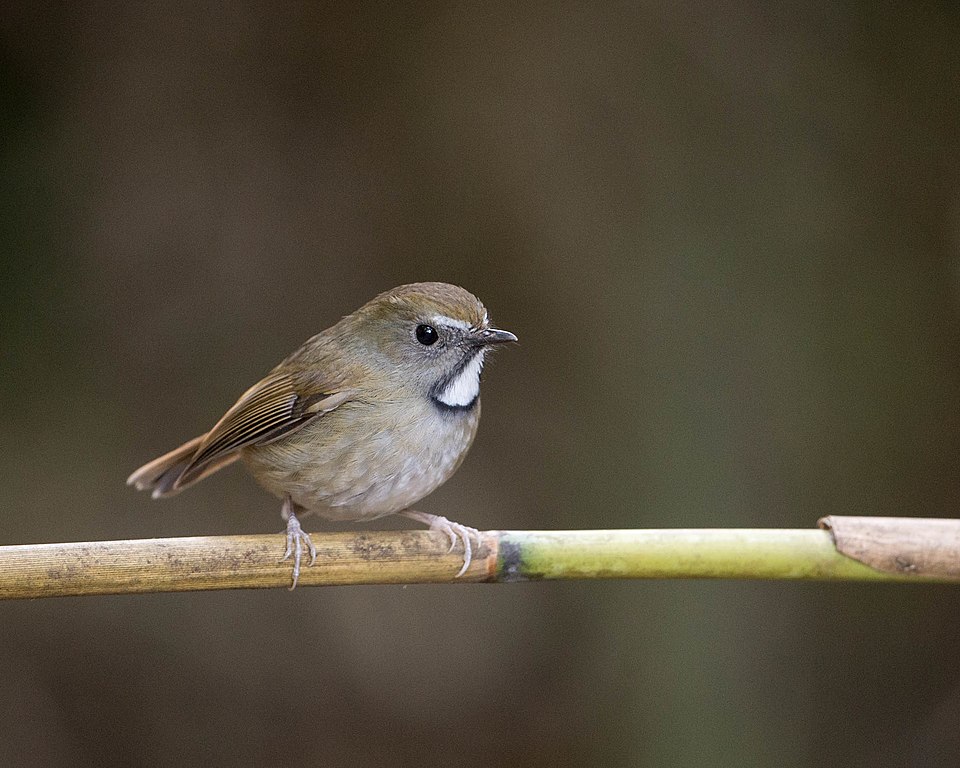
The Snowy-browed Flycatcher is easily identifiable by its striking appearance. Adult males exhibit a vivid orange throat and chest, contrasting sharply with their slate-blue upper parts. The namesake feature, a prominent white brow, stands out against the darker head, making it a key field mark. Females, while less brightly colored, present a more muted orange-buff on the chest and throat with olive-brown on the upper parts. Juvenile birds resemble females but are mottled, providing them with camouflage against predators. When comparing to similar species, the White-browed Shortwing may cause confusion, but the latter lacks the vibrancy of the flycatcher's orange coloring. In flight, the Snowy-browed Flycatcher displays a compact silhouette with rounded wings and a short tail. Its perching posture is upright, often seen sitting quietly on a branch before darting out to catch insects. This posture, combined with its distinctive color pattern, aids in quick identification in the field.
Having trouble telling birds apart? Upload a photo to our bird identification tool for an instant species match.
Snowy-browed Flycatcher Habitat and Range
Preferred Habitat
The Snowy-browed Flycatcher favors the dense, moist environments of montane forests. Typically found at elevations ranging from 1000 to 3500 meters, it thrives in both primary and secondary forests, as well as in forest edges and clearings. This bird is a resident of subtropical and tropical moist montane forests, often occupying the understory and mid-storey levels. Seasonal habitat shifts are observed as some populations may descend to lower elevations during colder months to escape harsh conditions and find food. Unlike some other flycatcher species, the Snowy-browed Flycatcher is not commonly found in urban settings, preferring the seclusion and abundance of insects offered by forested areas.
Geographic Range
The Snowy-browed Flycatcher inhabits a broad range across Asia, with breeding territories extending from the central and eastern Himalayas through northern and northeastern India, into southern China and Southeast Asia. It is found in countries such as Nepal, Bhutan, Myanmar, Thailand, Malaysia, and Indonesia. Within this range, the bird is a resident breeder, though some populations may migrate altitudinally. This species does not undertake long-distance migrations like some other flycatchers, but it does exhibit localized movements in response to seasonal changes in temperature and food availability. Population densities are generally highest in undisturbed montane forests, where the climate and ecological conditions are most favorable for its survival.
Want to know which birds visit your area? Browse our backyard birds by location guides for region-specific species lists.
What Does the Snowy-browed Flycatcher Eat?
The diet of the Snowy-browed Flycatcher primarily consists of small insects and arthropods, which it captures through agile flycatching techniques. Its hunting strategy involves perching quietly before making quick, sallying flights to nab passing prey. This bird's diet can include beetles, caterpillars, ants, and spiders, with a preference for soft-bodied insects that are easier to digest. Seasonal dietary shifts occur, with the bird consuming more insects during the wet season when they are more abundant. During drier periods, the Snowy-browed Flycatcher may also eat small fruits and berries, although insects remain its main staple. Its feeding schedule is diurnal, with peak activity occurring during the early morning and late afternoon when insects are most active.
Snowy-browed Flycatcher Behavior and Social Structure
The Snowy-browed Flycatcher exhibits a solitary or paired lifestyle, especially during the breeding season. Males establish and defend territories using their distinctive, melodious songs, which serve both to attract females and to deter rival males. Courtship displays are subtle, involving song and simple aerial maneuvers. This species is not known for flocking behavior, preferring instead to maintain a personal space, especially during breeding. When faced with predators, the flycatcher may employ distraction displays to lead threats away from its nest. Daily activity patterns involve periods of active foraging interspersed with rest and preening. The bird is most active in the cooler parts of the day, avoiding the midday heat by retreating to shaded forest areas.
Snowy-browed Flycatcher Nesting and Reproduction
The nesting habits of the Snowy-browed Flycatcher involve constructing a cup-shaped nest made of moss, grass, and fine roots. The nest is typically placed in a concealed site, such as a crevice in a rock wall or on a ledge, to protect against predators. The female lays a clutch of two to four eggs, which she incubates for approximately 14 days. Both parents participate in feeding the chicks, though the female assumes the primary role during incubation. The fledging period lasts around 14 to 16 days, after which the young birds leave the nest but remain dependent on their parents for several weeks. The Snowy-browed Flycatcher typically raises one or two broods per year, depending on the availability of resources and environmental conditions.
Snowy-browed Flycatcher Sounds and Vocalizations
The primary song of the Snowy-browed Flycatcher is a clear, melodious whistle, often rendered as a series of ascending notes that rise in pitch. This song, produced mainly by males, serves as a territorial and mating call. Calls include short, sharp chips used in communication between mates or as an alarm signal when a predator approaches. The dawn chorus, a time when males are particularly active in singing, showcases the variety and clarity of their vocalizations. Familiar sounds comparable to its song include the sweet whistles of other small passerines, but with a distinctive, slightly musical quality.
Interesting Facts About the Snowy-browed Flycatcher
- 1The Snowy-browed Flycatcher is known to inhabit altitudes as high as 3500 meters, showcasing its adaptability to cooler climates.
- 2Despite its vibrant colors, the Snowy-browed Flycatcher can be surprisingly elusive, often remaining hidden in dense foliage.
- 3The scientific name 'Ficedula hyperythra' refers to the bird's bright orange ('hyperythra') underparts.
- 4This bird's diet is so insect-focused that it rarely consumes seeds or grains, unlike many other small passerines.
- 5The Snowy-browed Flycatcher's call can be heard over considerable distances, helping it maintain territory boundaries.
- 6Their nests are often found in natural rock crevices, which provide excellent camouflage and protection.
- 7These flycatchers are more often heard than seen, as their vocalizations carry through the dense forest understory.
Snowy-browed Flycatcher Conservation Status
Currently, the Snowy-browed Flycatcher holds a status of Least Concern on the IUCN Red List. Nevertheless, its population is decreasing due to habitat loss caused by deforestation and land conversion for agriculture. Conservation efforts focus on preserving montane forest habitats and curbing illegal logging activities. The species benefits from its broad range and presence in several protected areas, but ongoing habitat degradation remains a primary threat. Historically, the population has experienced fluctuations aligned with forest health, indicating the critical need for habitat preservation.
Other Muscicapidae Species


Birds Similar to the Snowy-browed Flycatcher
These species are often confused with the Snowy-browed Flycatcher due to similar appearance or overlapping range.

