
Spot-winged Wood-Quail
Odontophorus capueira
Order: Galliformes / Family: Odontophoridae

Wikimedia Commons
About the Spot-winged Wood-Quail
The Spot-winged Wood-Quail, or Odontophorus capueira, is a medium-sized bird belonging to the family Odontophoridae. This bird is primarily found in tropical regions of South America, where it plays a crucial role in the ecosystem by controlling insect populations and dispersing seeds. The Spot-winged Wood-Quail thrives in humid montane forests and dense understory habitats, particularly in countries like Brazil, Argentina, and Paraguay. These forests offer ample cover and food resources, supporting the bird's active lifestyle. The Spot-winged Wood-Quail is known for its secretive nature, often staying within the confines of thick vegetation to avoid predators. The bird's presence in these forests contributes to biodiversity, as it aids in the propagation of plant species through its feeding habits and subsequent seed dispersal. During the wet season, the Spot-winged Wood-Quail becomes more vocal and social, with family groups often banding together to forage. This season is also crucial for breeding, as the abundance of food supports rearing young. Though not migratory, the species may make short-range movements in response to food availability and habitat conditions. These movements are typically confined to the bird's established territory. The Spot-winged Wood-Quail's ecological role extends beyond seed dispersal; it acts as a prey item for larger predators, forming a vital link in the food chain. In regions where deforestation and habitat fragmentation occur, the Spot-winged Wood-Quail faces challenges that may impact its population dynamics. Conservation efforts that focus on preserving its natural habitat are essential for maintaining the balance of these forest ecosystems.
The Spot-winged Wood-Quail belongs to the family Odontophoridae, within the order Galliformes. These birds typically live average 5-7 years, with a max recorded of 9 years.
How to Identify a Spot-winged Wood-Quail
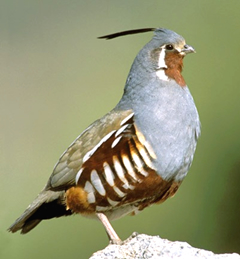
The Spot-winged Wood-Quail is characterized by its compact, robust body, and striking plumage. Adults exhibit a rich brown coloration with distinctive white spots on the wings, creating an eye-catching pattern that aids in identification. These spots are more pronounced in males, while females tend to have slightly duller coloration. The bird's head is adorned with a subtle crest, and a pale throat patch contrasts with the darker facial markings. Juveniles resemble adults but possess less vivid spotting and more uniform plumage, aiding in camouflage. In terms of size, the Spot-winged Wood-Quail measures approximately 24 to 30 centimeters in length, with a short tail and rounded wings that contribute to its distinctive flight silhouette. When perched, the bird often adopts a low, crouched posture, blending seamlessly with the forest floor or leafy underbrush. While similar in appearance to other wood-quail species, the Spot-winged Wood-Quail is most easily distinguished by its unique wing pattern. In flight, the bird's flapping is quick and direct, with bursts of activity interspersed with brief glides. This flight style is typical of ground-dwelling birds that rely on quick takeoffs to evade predators.
Having trouble telling birds apart? Upload a photo to our bird identification tool for an instant species match.
Spot-winged Wood-Quail Habitat and Range
Preferred Habitat
The Spot-winged Wood-Quail inhabits tropical and subtropical montane forests, preferring areas with dense understory and ample ground cover. These habitats provide essential resources such as food, shelter, and nesting sites. The species is commonly found at elevations ranging from 500 to 2,000 meters, where humidity levels support lush vegetation. Within these forests, the bird shows a preference for areas with a mix of mature trees and secondary growth, where insects and plant matter are abundant. Unlike some bird species, the Spot-winged Wood-Quail is rarely found in urban or heavily altered landscapes. Seasonal habitat shifts are minimal, as the bird tends to remain within the same forested regions year-round, though it may venture to slightly different elevations in response to food availability. The presence of this bird in a given area often indicates a healthy, biodiverse ecosystem, as it requires specific environmental conditions to thrive. Conservation of its habitat is crucial, not only for the Spot-winged Wood-Quail but for the myriad of other species that share these forested environments.
Geographic Range
The Spot-winged Wood-Quail is predominantly found in the southern regions of South America, with its range extending across Brazil, Argentina, and Paraguay. In these countries, the bird occupies a variety of forested habitats, from the Atlantic Forest in Brazil to the subtropical rainforests of northern Argentina. Although not migratory, the Spot-winged Wood-Quail may exhibit localized movements within its range, particularly in response to seasonal variations in food supply or habitat conditions. The species' population density is highest in areas where primary forest remains intact, as these environments offer optimal conditions for foraging and nesting. Despite the challenges posed by habitat loss and fragmentation, the Spot-winged Wood-Quail persists in several protected areas, where conservation efforts help maintain viable populations. However, outside these protected regions, population numbers can be more variable, with some areas experiencing declines due to ongoing environmental pressures.
Want to know which birds visit your area? Browse our backyard birds by location guides for region-specific species lists.
What Does the Spot-winged Wood-Quail Eat?
The Spot-winged Wood-Quail primarily feeds on a diverse diet consisting of seeds, fruits, and insects. During the wet season, when vegetation is lush, the bird consumes a higher proportion of fruits and seeds, playing a role in seed dispersal throughout its habitat. This season also sees an increase in insect activity, providing a rich source of protein for the Spot-winged Wood-Quail. It typically forages on the forest floor, using its strong legs to scratch through leaf litter in search of prey. Insects such as beetles, ants, and larvae form a significant part of its diet, especially during the breeding season when nutritional needs are heightened. The bird's feeding schedule is largely diurnal, with peak activity occurring during the early morning and late afternoon. This timing allows the Spot-winged Wood-Quail to take advantage of cooler temperatures and reduced predator activity. Its foraging behavior is methodical, often involving small groups that move slowly through their territory, ensuring thorough exploration of their feeding grounds.
Spot-winged Wood-Quail Behavior and Social Structure
The Spot-winged Wood-Quail exhibits complex social behaviors, often forming small family groups that work cooperatively when foraging and maintaining territories. Territorial behavior is pronounced, with males frequently engaging in vocal displays to assert dominance and warn off intruders. Courtship rituals involve both visual displays and vocalizations, with males performing elaborate calls and physical postures to attract females. Flocking patterns shift seasonally, with larger groups forming during the non-breeding season, providing increased protection against predators. The Spot-winged Wood-Quail demonstrates a strong fidelity to its territory, rarely venturing far from its established home range. In response to predators, the bird employs a combination of vocal alarms and evasive maneuvers, utilizing its ability to remain motionless and blend into the forest floor. Daily activity patterns reflect a balance between foraging and resting, with the bird most active during the cooler parts of the day. This behavior not only conserves energy but also reduces exposure to potential threats.
Spot-winged Wood-Quail Nesting and Reproduction
Nesting for the Spot-winged Wood-Quail involves the construction of simple ground nests, typically hidden beneath dense vegetation or fallen logs. These nests are composed of leaves, twigs, and other natural materials, providing camouflage and protection for the eggs. The clutch size ranges from 4 to 6 eggs, with both parents playing active roles in incubation, which lasts approximately 18 to 21 days. After hatching, the chicks are precocial, leaving the nest shortly after birth to follow their parents. Fledging occurs within two weeks, though the young remain dependent on their parents for guidance and protection. The parental roles are shared, with both male and female participating in feeding and guarding their offspring. The Spot-winged Wood-Quail typically raises one brood per year, although favorable conditions may permit a second. Successful nesting is highly dependent on habitat quality, as disturbances can lead to nest abandonment or failure.
Spot-winged Wood-Quail Sounds and Vocalizations
The primary song of the Spot-winged Wood-Quail consists of a series of rhythmic, resonant whistles, often described as a clear 'wheeeep-wheeeep' sound. These vocalizations serve to establish territory and communicate with family members. Call notes are softer and more varied, including quieter clucks and purrs used during close-range interactions. Alarm calls are sharp and loud, designed to alert others to potential threats. During the dawn chorus, the Spot-winged Wood-Quail's calls can be heard echoing through the forest, adding to the vibrant acoustic landscape. These sounds, while distinctive, can sometimes be confused with those of other forest-dwelling birds, though their tonal quality is unique to the species.
Interesting Facts About the Spot-winged Wood-Quail
- 1The Spot-winged Wood-Quail's white wing spots serve as a form of disruptive camouflage, breaking up its outline in dappled sunlight.
- 2Despite being ground-dwellers, Spot-winged Wood-Quails can fly short distances to escape predators, reaching speeds up to 40 km/h.
- 3The bird's diet shifts seasonally, with up to 70% consisting of insects during peak breeding periods for protein-rich nourishment.
- 4Spot-winged Wood-Quails are known for their cooperative breeding behavior, often involving older siblings in the care of young.
- 5These quails communicate using a range of vocalizations, with over 10 distinct calls identified in field studies.
- 6Their nests are strategically placed to minimize detection, often featuring overhanging foliage for added concealment.
- 7The Spot-winged Wood-Quail's presence in an area is a strong indicator of a healthy forest ecosystem due to its habitat requirements.
Spot-winged Wood-Quail Conservation Status
The Spot-winged Wood-Quail is currently listed as Least Concern by the IUCN, with populations considered stable. However, ongoing threats such as habitat destruction and fragmentation pose significant challenges. Primary threats include deforestation for agriculture and urban development, which reduce the available habitat for this species. Conservation efforts focus on habitat preservation and the establishment of protected areas, which provide sanctuary and ensure the continued survival of this bird. Historically, the Spot-winged Wood-Quail has experienced fluctuations in population numbers, largely influenced by changes in land use practices. Continued monitoring and adaptive management strategies are essential to safeguard its future.
Other Odontophoridae Species


Birds Similar to the Spot-winged Wood-Quail
These species are often confused with the Spot-winged Wood-Quail due to similar appearance or overlapping range.
