
Streak-backed Antshrike
Thamnophilus insignis
Order: Passeriformes / Family: Thamnophilidae

Wikimedia Commons
About the Streak-backed Antshrike
The Streak-backed Antshrike (Thamnophilus insignis) is a fascinating bird endemic to the montane forests of the Andes in South America. This species is a member of the Thamnophilidae family, a group renowned for their adaptability to dense, humid habitats. The Streak-backed Antshrike occupies a significant ecological niche within its range, contributing to the complex ecosystem dynamics of these forests.
This bird is predominantly found in the subtropical and tropical moist montane forests of Colombia, Ecuador, and Peru, typically at elevations ranging from 900 to 2,400 meters. The Streak-backed Antshrike plays a crucial role in controlling insect populations, making it an essential participant in maintaining the ecological balance of its habitat.
Throughout the year, the Streak-backed Antshrike exhibits particular seasonal behaviors that are crucial for its survival. During the breeding season, which typically coincides with the rainy months, males engage in elaborate courtship displays to attract females. These displays are not only vital for reproduction but also reinforce pair bonds and territorial boundaries. As the seasons change, the antshrike may adjust its foraging strategies and territory sizes in response to fluctuating food availability. The bird’s ability to adapt to these seasonal changes exemplifies its resilience and importance within its ecosystem.
The Streak-backed Antshrike belongs to the family Thamnophilidae, within the order Passeriformes. These birds typically live average 4-6 years with a maximum recorded of 9 years..
How to Identify a Streak-backed Antshrike
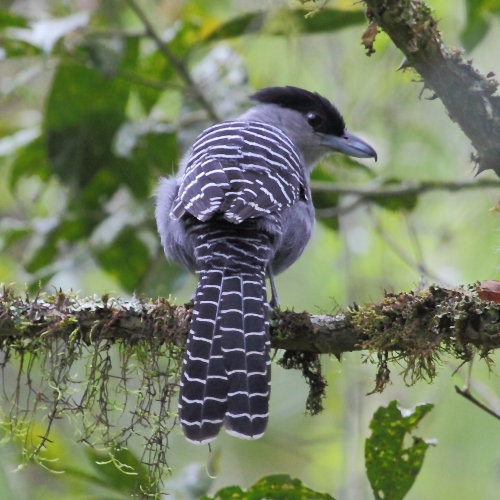
The Streak-backed Antshrike is a medium-sized songbird with distinctive plumage that aids in its identification. Adult males possess a characteristic streaked back, from which the species derives its common name. Black and white streaks adorn the back, blending into grayish wings and tail. The head is typically black with striking white markings around the eyes and throat, creating a bold contrast. Females, while similar in size, display a more subdued coloration, with browns replacing the black tones of the male, though they retain the streaked pattern.
Juveniles resemble females but often appear duller, lacking the clarity of the adult plumage. The variation in color between males and females aids in identification in the field, especially during the breeding season when both sexes are more active.
In flight, the Streak-backed Antshrike exhibits a slightly rounded tail and broad wings, which can be noted during short flights between dense foliage. Its perching posture is upright, often with the tail cocked upward, a typical stance for antshrikes as they survey their surroundings for prey.
Having trouble telling birds apart? Upload a photo to our bird identification tool for an instant species match.
Streak-backed Antshrike Habitat and Range
Preferred Habitat
The Streak-backed Antshrike predominantly inhabits the humid montane forests of the Andes, thriving in dense undergrowth that provides ample cover and foraging opportunities. These forests, characterized by high humidity and rich biodiversity, are perfect environments for the antshrike's insectivorous diet.
Within its preferred elevation range of 900 to 2,400 meters, the bird occupies subtropical and tropical zones, often found on forest edges and in secondary growth areas where light penetration is higher, promoting insect activity. While primarily a forest dweller, the Streak-backed Antshrike can occasionally be spotted in plantations or rural gardens bordering its natural habitat.
This species shows little preference for urban areas, reflecting its reliance on dense, natural vegetation for food and shelter. Seasonal habitat shifts are minimal, as the bird typically remains within its elevational range year-round, capitalizing on the consistent environmental conditions of the montane forest.
Geographic Range
The Streak-backed Antshrike's range is confined to the Andean regions of South America, specifically within Colombia, Ecuador, and Peru. This distribution is closely tied to the montane forest ecosystems at elevations between 900 and 2,400 meters.
During the breeding season, the bird's range does not significantly shift, as it remains within the same humid montane locations that offer abundant resources. Unlike many migratory species, the Streak-backed Antshrike does not undertake long-distance migrations, instead exhibiting local movements within its established range.
Population density hotspots for the Streak-backed Antshrike are found in areas where montane forests are most intact, providing the dense canopy and undergrowth essential for their survival. These birds are less common in fragmented or heavily disturbed areas, underscoring the importance of preserving contiguous forest tracts.
Want to know which birds visit your area? Browse our backyard birds by location guides for region-specific species lists.
What Does the Streak-backed Antshrike Eat?
The diet of the Streak-backed Antshrike consists primarily of insects, which it skillfully locates and captures amidst the dense foliage of its montane forest habitat. This bird employs a sit-and-wait strategy, using its keen eyesight to detect prey before making short, precise flights to capture it.
Common prey items include beetles, caterpillars, and spiders, complemented by occasional small fruits and seeds, particularly when insect abundance declines. The Streak-backed Antshrike's foraging is largely diurnal, with peak feeding activity occurring during the early morning and late afternoon when insect activity is highest.
Seasonal variations in diet are minimal, given the relatively stable climate and insect populations in montane forests. However, during wet seasons, when insect abundance peaks, the bird may take advantage of the heightened availability to enhance its nutritional intake and support breeding efforts.
Streak-backed Antshrike Behavior and Social Structure
Streak-backed Antshrikes are typically solitary or found in pairs, emphasizing their territorial nature. Males often establish and defend territories through vocalizations and displays, ensuring access to resources and breeding opportunities.
Courtship displays involve males showcasing their plumage through a series of poses and gentle wing flicks to attract females, reinforcing pair bonds. This behavior is critical during the breeding season, facilitating successful reproduction and territory establishment.
In response to predators, the Streak-backed Antshrike exhibits a range of defensive behaviors, including alarm calls and evasive flights into dense cover. These birds are most active during the morning and late afternoon, avoiding the midday heat typical of their montane habitats.
While not prone to flocking, the antshrike may join mixed-species feeding flocks, benefiting from the collective vigilance and increased foraging efficiency.
Streak-backed Antshrike Nesting and Reproduction
The Streak-backed Antshrike constructs a cup-shaped nest, intricately woven from twigs, leaves, and fine plant fibers, often situated in dense thickets or low branches to provide concealment from predators.
Preferred nesting sites are within the bird's established territory, typically at elevations that correspond with its overall habitat range (900-2,400 meters). The clutch size generally consists of two to three eggs, which are incubated by both parents over a period of approximately 14-16 days.
Once hatched, the chicks remain in the nest for about two weeks before fledging. Both parents share the responsibility of feeding and protecting the young until they are independent. The Streak-backed Antshrike usually raises one brood per year, although favorable conditions may occasionally permit a second.
Streak-backed Antshrike Sounds and Vocalizations
The primary song of the Streak-backed Antshrike is a series of clear, melodic whistles, often described as musical and far-carrying, serving as both a territorial declaration and a mate attraction tool. Each phrase typically consists of 5-8 notes, delivered in a rhythmic tempo that carries well through the dense forest understory.
In addition to their song, these antshrikes emit sharp, repetitive call notes that serve as alarms or contact calls between paired individuals. During dawn and dusk, the males are particularly vocal, contributing to the forest's dawn chorus with a distinctive melodic presence.
While their calls are not as loud as some other forest birds, their distinctiveness makes them a reliable auditory marker for identifying the species.
Interesting Facts About the Streak-backed Antshrike
- 1The Streak-backed Antshrike's intricate nest is often camouflaged with lichen to blend into its surroundings.
- 2Despite its name, the Streak-backed Antshrike rarely feeds on ants, instead preferring other insects.
- 3The species' melodious song can be heard up to 300 meters away, aiding in territory defense.
- 4Streak-backed Antshrikes often join mixed-species flocks, benefiting from increased predator awareness.
- 5Their distinctive streaked back pattern provides excellent camouflage in the dappled light of the forest understory.
- 6Males and females share nearly equal roles in nest building, incubation, and chick-rearing.
- 7The species exhibits minimal sexual dimorphism, with both sexes maintaining similar sizes and behaviors.
Streak-backed Antshrike Conservation Status
Currently, the IUCN classifies the Streak-backed Antshrike as a species of Least Concern. However, its population trend is decreasing, primarily due to habitat loss from deforestation and agricultural expansion. These activities threaten the integrity of the montane forests that the species relies upon. Conservation efforts focus on preserving large tracts of uninterrupted forest and improving land-use practices in adjacent areas. Protecting these habitats is vital for ensuring the continued survival of the Streak-backed Antshrike and other species within its ecosystem. Historically, the species has faced challenges from human encroachment, yet recent conservation initiatives aim to stabilize populations by mitigating further habitat destruction.
Other Thamnophilidae Species



Birds Similar to the Streak-backed Antshrike
These species are often confused with the Streak-backed Antshrike due to similar appearance or overlapping range.

