
Stripe-faced Wood-Quail
Odontophorus balliviani
Order: Galliformes / Family: Odontophoridae

Wikimedia Commons
About the Stripe-faced Wood-Quail
The Stripe-faced Wood-Quail, known scientifically as Odontophorus balliviani, is a remarkable bird species thriving in the humid montane forests of the Andes. These quails are predominantly found in Peru and Bolivia, where they inhabit elevations ranging from 1,800 to 3,500 meters. Their presence is a testament to the rich biodiversity of cloud forests, where they play a crucial role in the ecosystem by aiding seed dispersal through their diet. This bird's preference for dense, lush undergrowth makes it an elusive sight, often heard more than seen. The significance of the Stripe-faced Wood-Quail extends beyond mere ecological contributions. As an indicator species, its health reflects the overall condition of its forest habitat, making it vital for conservationists monitoring environmental changes. The quail's ability to thrive is linked to the preservation of these high-elevation ecosystems, which face threats from deforestation and agricultural expansion. During the breeding season, the Stripe-faced Wood-Quail engages in distinct vocalizations and group displays. These activities typically occur in family groups, which can include three to ten individuals. Their group-oriented lifestyle aids in foraging and provides protection against predators. The quail's seasonal behaviors include slightly expanded ranges during the wet season when food becomes more abundant. As the dry season approaches, they retreat to thicker forest cover, where moisture and food resources are more reliably accessible.
The Stripe-faced Wood-Quail belongs to the family Odontophoridae, within the order Galliformes. These birds typically live average 5-7 years, with a max recorded of 10 years.
How to Identify a Stripe-faced Wood-Quail
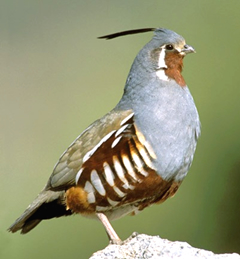
Identifying the Stripe-faced Wood-Quail in the field involves noting several key features. Adults display a distinctive pattern of white and black stripes across the face, with a striking chestnut-brown body. The flanks are speckled with white spots, adding to their unique appearance. Males and females share similar plumage, although females may appear slightly duller. Juveniles, in contrast, exhibit a more subdued coloration, lacking the pronounced facial stripes of adults. Observers should be aware of potential confusion with other forest quails, particularly those in the Odontophorus genus. However, the face pattern of Odontophorus balliviani is unmatched. In flight, this quail presents a rotund silhouette, with rapid wingbeats that are characteristic of the quail family. When perched, its posture is upright, and it often remains motionless, blending seamlessly into its forested surroundings.
Having trouble telling birds apart? Upload a photo to our bird identification tool for an instant species match.
Stripe-faced Wood-Quail Habitat and Range
Preferred Habitat
The Stripe-faced Wood-Quail occupies dense montane forests, thriving in the understory of cloud forests in the Andean region. These habitats are characterized by high humidity, frequent mist, and rich biodiversity. The quail's preferred elevation range is between 1,800 and 3,500 meters, where it finds adequate cover and food resources. Seasonal shifts in habitat include a preference for lower elevations during wetter months, while during drier periods, they move to areas with more substantial forest cover. While primarily a denizen of rural wilderness, the quail occasionally ventures near small, remote villages, although it remains largely absent from urbanized areas.
Geographic Range
The Stripe-faced Wood-Quail is primarily found in the Andes of Peru and Bolivia. It occupies a relatively narrow range, limited to specific montane forest habitats within these countries. The bird does not undertake long migrations but may shift altitudinally within its range depending on seasonal resource availability. Population density is highest in regions with well-preserved cloud forests, such as the cloud forests of Manu National Park in Peru and similar protected areas in Bolivia. These locales offer the pristine conditions necessary for the quail's survival.
Want to know which birds visit your area? Browse our backyard birds by location guides for region-specific species lists.
What Does the Stripe-faced Wood-Quail Eat?
Stripe-faced Wood-Quails primarily consume seeds and fruits, which they forage from the forest floor. Their diet changes with the seasons, as they take advantage of the varying availability of plant material. During times when fruit is abundant, it becomes a larger portion of their diet. Insects and small invertebrates supplement their diet, especially during the breeding season when protein needs increase. Foraging often involves scratching the forest floor with their feet to uncover hidden food sources. This quail primarily feeds during the early morning and late afternoon, taking advantage of cooler temperatures and reduced predator activity.
Stripe-faced Wood-Quail Behavior and Social Structure
The social structure of the Stripe-faced Wood-Quail revolves around small family groups, which provide enhanced protection and foraging efficiency. These groups exhibit strong territorial behavior, often defending their ranges with vigorous vocal displays. Courtship displays involve synchronized movements and calls, strengthening pair bonds. Unlike some quail species, the Stripe-faced Wood-Quail does not form large flocks, maintaining smaller, cohesive groups instead. Their response to predators includes a combination of camouflage and rapid, low-flight escapes. Daily activity peaks in the early morning and late afternoon, with periods of rest during the heat of midday.
Stripe-faced Wood-Quail Nesting and Reproduction
Stripe-faced Wood-Quails opt for nesting sites on the ground, often in concealed locations amidst dense undergrowth. Nests consist of shallow depressions lined with leaves and grasses. The typical clutch size ranges from four to six eggs. Incubation is primarily the female's responsibility and lasts approximately 20-23 days. Once hatched, the young are precocial, quickly leaving the nest but remaining under parental guidance. Both parents take active roles in caring for and feeding the chicks. They typically have one to two broods per year, depending on environmental conditions.
Stripe-faced Wood-Quail Sounds and Vocalizations
The primary song of the Stripe-faced Wood-Quail is a series of melodious whistles, characterized by a steady rhythm and medium pitch. These vocalizations serve as both territorial markers and communication within groups. Their call notes, often described as soft and repetitive, differ from the louder alarm calls used to warn of danger. Dawn choruses are common, with groups engaging in collective vocal displays that resonate through the forest. Comparatively, their calls share a tonal quality with those of other quail species, but the rhythmic pattern is distinct.
Interesting Facts About the Stripe-faced Wood-Quail
- 1Stripe-faced Wood-Quails can be heard more often than seen due to their elusive nature and dense habitat.
- 2They are often found in groups of up to ten, highlighting their strong social structure.
- 3These quails play a vital role in seed dispersal for many plant species within their habitat.
- 4With their striking facial stripes, they are easily distinguishable from other quail species.
- 5The Stripe-faced Wood-Quail's habitat preference includes cloud forests, unique ecosystems with rich biodiversity.
- 6Their distinctive calls serve as a key identification feature for birdwatchers in the Andean forests.
- 7Despite their reclusive nature, they are occasionally spotted near rural villages, indicating some adaptability.
Stripe-faced Wood-Quail Conservation Status
The Stripe-faced Wood-Quail currently holds a 'Near Threatened' status on the IUCN Red List, with populations experiencing a gradual decline. Primary threats include habitat destruction due to deforestation and agricultural expansion. Conservation efforts focus on habitat protection and restoration, particularly in key areas like Manu National Park. Historically, the species has faced pressure from hunting, although this threat has diminished with increased awareness and protection measures. Ongoing conservation initiatives aim to stabilize and eventually increase population numbers.
Other Odontophoridae Species


Birds Similar to the Stripe-faced Wood-Quail
These species are often confused with the Stripe-faced Wood-Quail due to similar appearance or overlapping range.
