
Two-barred Warbler
Phylloscopus plumbeitarsus
Order: Passeriformes / Family: Phylloscopidae

Wikimedia Commons
About the Two-barred Warbler
The Two-barred Warbler, scientifically named Phylloscopus plumbeitarsus, is a captivating small songbird belonging to the family Phylloscopidae. This species is particularly noted for its striking wing bars, which serve as a key identifier. Its presence is primarily concentrated in Asia, where it inhabits a variety of forested environments, from deciduous woodlands to mixed forests rich in conifers. The Two-barred Warbler plays an essential ecological role as an insectivore, helping to regulate insect populations. During the breeding season, it is predominantly found in northeastern China, Russia, and Mongolia, where it occupies dense, well-canopied forests.
Seasonally, the Two-barred Warbler embarks on extensive migrations, traveling across vast distances to reach its wintering grounds in Southeast Asia, spanning countries like Thailand, Vietnam, and Malaysia. This migration is a spectacle of endurance and navigation, showcasing the bird's adaptability to different climatic conditions. In its winter habitats, the Two-barred Warbler frequents lowland forests and sometimes ventures into secondary growth areas, making it a versatile inhabitant of various forest strata.
Beyond its ecological contributions, the Two-barred Warbler is a subject of interest for birdwatchers and researchers due to its elusive nature and the challenge it presents in accurate identification amidst similar species. Its ability to adapt across different regions and climates underscores its evolutionary success, and observing its life cycle offers insight into the dynamic systems of avian migration and survival strategies. The Two-barred Warbler not only enhances biodiversity within its habitats but also serves as an indicator of forest health and ecological balance.
The Two-barred Warbler belongs to the family Phylloscopidae, within the order Passeriformes. These birds typically live typically 3-5 years, with some living up to 7 years..
How to Identify a Two-barred Warbler
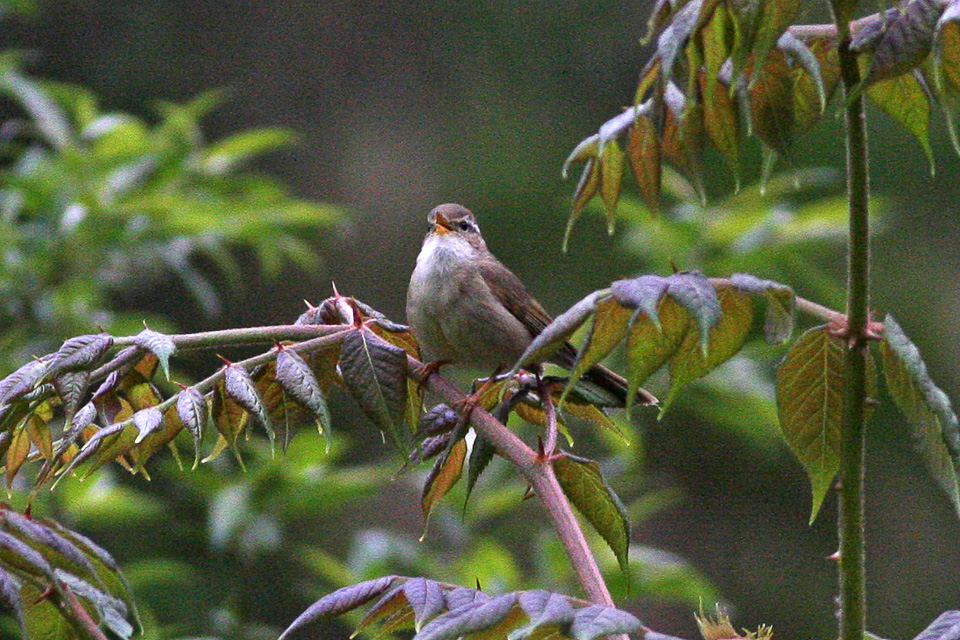
The Two-barred Warbler is a small songbird, typically measuring around 10-12 centimeters in length. Adult plumage is characterized by a vibrant greenish upper body and a pale, whitish underbody, making it well-camouflaged among leaves. The bird's most distinctive feature is its two prominent white wing bars, from which it derives its common name. The face exhibits a subtle supercilium, or eyebrow stripe, that is pale yellow, adding to its distinctive facial markings.
Juvenile Two-barred Warblers resemble adults but may display slightly duller plumage. There is minimal sexual dimorphism, meaning males and females appear similar, which can make field identification challenging without closer observation. In flight, the Two-barred Warbler shows a rapid, fluttering style typical of many small passerines, with wing bars flashing visibly.
Comparatively, the Two-barred Warbler may be confused with other Phylloscopus species, such as the Greenish Warbler, but careful attention to the wing bars and facial markings can aid in distinguishing it. When perched, the warbler often adopts a horizontal posture, remaining alert and quick to move through foliage in pursuit of insects.
Having trouble telling birds apart? Upload a photo to our bird identification tool for an instant species match.
Two-barred Warbler Habitat and Range
Preferred Habitat
The Two-barred Warbler thrives in forested environments, with a preference for dense deciduous and mixed forests. In the breeding season, it is found at elevations ranging from lowland areas up to mountainous regions, typically not exceeding 2,000 meters. These habitats offer ample foliage and insect prey, essential for feeding and nesting.
During migration and wintering periods, the Two-barred Warbler adapts to various forest types, including tropical lowland forests and secondary growth areas. It shows a degree of flexibility in habitat selection, sometimes inhabiting forest edges and disturbed areas, which highlights its adaptability to different ecological conditions. Despite this adaptability, the warbler is less commonly found in urban settings, preferring natural forested environments.
Geographic Range
The Two-barred Warbler's breeding range spans northeastern China, Mongolia, and southeastern Russia, where it occupies dense forest habitats. After breeding, it undertakes a long-distance migration to wintering grounds found in Southeast Asia, including countries such as Thailand, Vietnam, and Malaysia. This migratory pattern illustrates the bird's reliance on diverse habitats throughout its annual cycle.
Migration corridors include parts of East Asia, where the warbler is observed during its southward journey. Population density is typically higher in forested regions with abundant insect life, such as the broadleaf and mixed forests of its breeding range. During winter, it is more sparsely distributed in lowland forests across its Southeast Asian range.
Want to know which birds visit your area? Browse our backyard birds by location guides for region-specific species lists.
What Does the Two-barred Warbler Eat?
The Two-barred Warbler primarily consumes a diet of insects and other small invertebrates, making it an important insectivore within its ecosystem. It forages actively among the foliage of trees and shrubs, often catching prey on the wing with acrobatic agility. Common prey items include caterpillars, beetles, and spiders, with diet composition varying seasonally based on availability.
In the breeding season, the warbler’s diet shifts to include a higher proportion of caterpillars, which are abundant and provide necessary nutrition for rearing young. During migration and in winter habitats, it may also consume small berries and seeds as supplementary food sources, though insects remain the primary focus. Feeding occurs throughout the day, with heightened activity during early morning and late afternoon.
Two-barred Warbler Behavior and Social Structure
The Two-barred Warbler exhibits solitary and somewhat territorial behavior, especially during the breeding season when males establish and defend territories through song. Courtship displays are subtle and involve males showcasing their distinctive plumage and vocal abilities to attract females.
Outside of the breeding season, the warbler may join mixed-species foraging flocks, benefiting from the collective vigilance against predators. These flocks typically include other small insectivorous birds, enhancing foraging efficiency and predator detection. The warbler remains vigilant and quick, often seen darting through foliage, making it a challenging subject for birdwatchers.
This species shows a pronounced response to predators, using alarm calls and evasive flight patterns to deter threats. Daily activity patterns align with daylight, with increased foraging during dawn and dusk when insect activity peaks.
Two-barred Warbler Nesting and Reproduction
Nesting for the Two-barred Warbler occurs in dense forest habitats, where it constructs a cup-shaped nest using grass, leaves, and spider webs. The nest is typically situated in low shrubs or on the ground, concealed by dense vegetation to protect against predators.
Clutch size ranges from 3 to 5 eggs, which are incubated primarily by the female for about 12-14 days. During this period, the male assists by providing food to the incubating female. After hatching, the young are cared for by both parents and fledge approximately 12-15 days later.
The Two-barred Warbler typically raises one brood per year, although in favorable conditions, a second brood may occur. Parental roles are well defined, with the female primarily responsible for incubation and both parents participating in feeding and protecting the young.
Two-barred Warbler Sounds and Vocalizations
The Two-barred Warbler’s song is a rapid, high-pitched series of notes, often described as a trilling or buzzing sound that carries well through dense foliage. Its primary song serves both to establish territory and attract a mate during the breeding season.
Call notes are short, sharp, and often repeated, serving as communication between individuals. Alarm calls are more insistent and aid in alerting other birds to the presence of predators. The Two-barred Warbler participates prominently in the dawn chorus, adding to the symphony of forest sounds with its distinctive vocalizations.
Interesting Facts About the Two-barred Warbler
- 1The Two-barred Warbler can cover thousands of kilometers during its annual migration between breeding and wintering grounds.
- 2Despite its small size, the Two-barred Warbler's wing bars are a reliable field mark that helps differentiate it from similar warblers.
- 3This bird's rapid, fluttering flight is not only efficient for catching insects but also aids in navigating dense forest canopies.
- 4Two-barred Warblers often join mixed-species flocks, which helps reduce predation risks and increases foraging success.
- 5The warbler's song is a key tool for territory establishment and mate attraction during the breeding season.
- 6In winter, the Two-barred Warbler adapts to a diet that includes both insects and small fruits, showcasing its dietary flexibility.
- 7The species' alarm calls are effective at mobilizing other birds to respond to potential threats, enhancing collective vigilance.
Two-barred Warbler Conservation Status
Currently, the Two-barred Warbler holds a status of Least Concern on the IUCN Red List, with populations considered stable. While not immediately threatened, habitat loss due to deforestation poses a potential risk to its breeding and wintering grounds. Conservation efforts focus on preserving critical forest habitats and maintaining the ecological integrity of migration corridors. Historical population changes have been minimal, though ongoing monitoring is essential to detect any future declines. Protection of forest environments across its range remains vital to ensuring the long-term survival of this species.
Other Phylloscopidae Species



Birds Similar to the Two-barred Warbler
These species are often confused with the Two-barred Warbler due to similar appearance or overlapping range.

