
White-browed Jungle Flycatcher
Rhinomyias insignis
Order: Passeriformes / Family: Muscicapidae

Wikimedia Commons
About the White-browed Jungle Flycatcher
The White-browed Jungle Flycatcher, scientifically known as Rhinomyias insignis, is a small, inconspicuous bird native to the dense, humid forests of Southeast Asia. As a member of the Muscicapidae family, this bird is primarily found in the subtropical and tropical moist lowland forests of the Philippines, particularly on the islands of Luzon, Negros, and Mindanao. Its reliance on such specific habitats makes it an important indicator of forest health and biodiversity in these regions. Unlike many other flycatchers, the White-browed Jungle Flycatcher is not migratory, opting instead for a sedentary lifestyle deeply intertwined with the forest ecosystems it inhabits. The species' ecological role is significant as it helps control insect populations, thus maintaining a balance within its habitat. During the breeding season, which coincides with the rainy months from May to August, the flycatcher becomes more vocal and active, establishing territories and attracting mates. Outside of the breeding season, it continues to serve its ecological function, albeit in a more subdued manner, quietly hunting insects in the shaded understory. Conservation of this species is crucial, as it often serves as a bioindicator for the health of the understory ecosystem. The White-browed Jungle Flycatcher's presence or absence can signal changes in habitat quality, making it a focal point for conservationists aiming to preserve Southeast Asia's dwindling forest habitats.
The White-browed Jungle Flycatcher belongs to the family Muscicapidae, within the order Passeriformes. These birds typically live averages 5-7 years, with some reaching up to 9 years..
How to Identify a White-browed Jungle Flycatcher
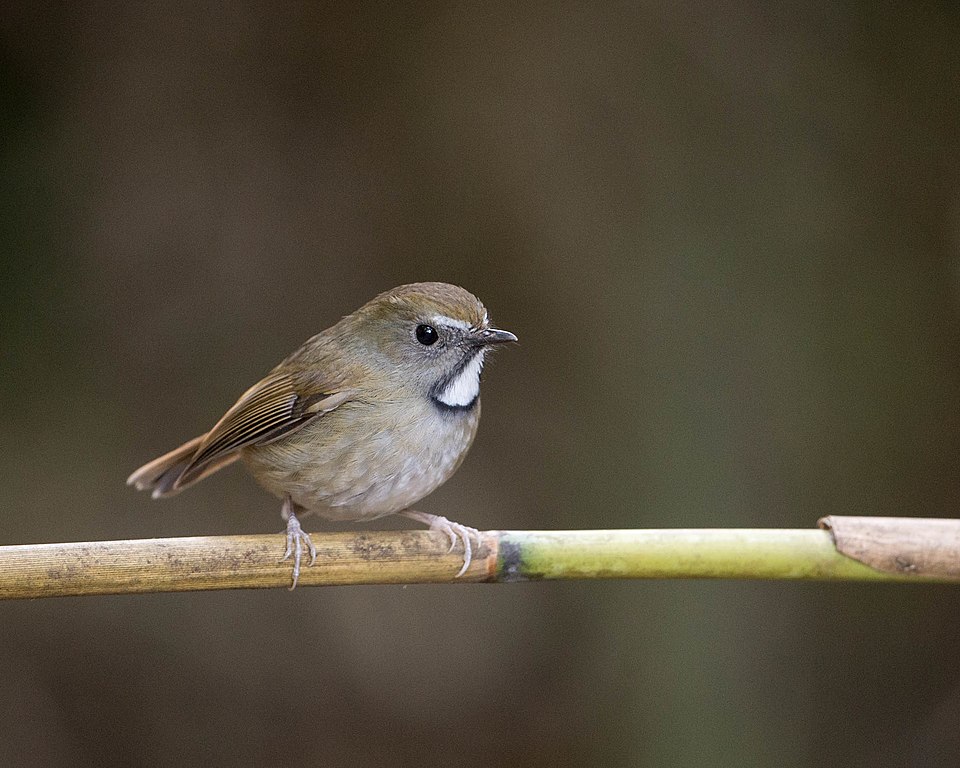
The White-browed Jungle Flycatcher is distinguished by its subtle yet distinctive field marks. Adults typically exhibit a warm brown plumage that provides excellent camouflage against the forest floor's leaf litter. Its most noticeable feature is the conspicuous white brow above the eye, which contrasts sharply with its otherwise muted coloration. Juveniles, while similar in overall appearance, tend to have a duller brow and more speckled brown plumage, which gradually transitions to the adult's more uniform hue as they mature. Sexual dimorphism in this species is minimal, with males and females appearing very similar, though males may exhibit slightly richer coloration during the breeding season. In the field, this flycatcher can sometimes be confused with other small brown birds, such as the Brown-breasted Flycatcher (Muscicapa muttui), but the White-browed Jungle Flycatcher's distinct white brow serves as a reliable identifying feature. In flight, its silhouette is compact, with a slightly rounded tail and quick, fluttering wingbeats typical of many small passerines. When perched, it often adopts an upright posture, frequently flicking its tail as it scans for insects.
Having trouble telling birds apart? Upload a photo to our bird identification tool for an instant species match.
White-browed Jungle Flycatcher Habitat and Range
Preferred Habitat
The White-browed Jungle Flycatcher thrives in dense, humid, and lowland tropical forests, where it finds ample cover and food resources. It prefers areas with a rich understory, often found at elevations ranging from sea level up to 1,500 meters. Within these forests, the flycatcher is most commonly observed in shaded thickets and near streams, where the humidity is high and insect prey is abundant. Unlike some adaptable bird species, the White-browed Jungle Flycatcher is not typically found in urban or suburban environments, as it relies heavily on the dense forest for both food and protection. Seasonal habitat shifts are minimal, reflecting the bird's non-migratory nature and strong attachment to its forest home.
Geographic Range
The range of the White-browed Jungle Flycatcher is restricted to the archipelagic region of the Philippines, where it occupies the islands of Luzon, Negros, and Mindanao. This range is relatively limited compared to other flycatcher species, making its populations particularly vulnerable to habitat loss and environmental changes. As a non-migratory bird, it does not engage in long-distance movements, remaining within its established territories year-round. Population density hotspots are typically found in well-preserved forest areas, where human disturbance is minimal. The bird's restricted range and specific habitat requirements underline the importance of targeted conservation efforts to protect its forest home and ensure its survival.
Want to know which birds visit your area? Browse our backyard birds by location guides for region-specific species lists.
What Does the White-browed Jungle Flycatcher Eat?
The diet of the White-browed Jungle Flycatcher primarily consists of insects, which it captures through a variety of foraging techniques. It employs a 'sit-and-wait' hunting strategy, perching quietly before darting out to snatch passing insects mid-air. This technique is complemented by 'gleaning', where the bird picks insects off leaves and branches. The flycatcher favors small to medium-sized insects, including beetles, flies, and caterpillars, and its diet can shift slightly with the seasons based on insect availability. During the breeding season, increased energy demands may lead the bird to hunt more actively, often venturing closer to the forest floor to exploit different insect populations. Feeding typically occurs during the cooler parts of the day, such as early morning and late afternoon, aligning with peak insect activity periods.
White-browed Jungle Flycatcher Behavior and Social Structure
The White-browed Jungle Flycatcher is predominantly solitary outside of the breeding season, exhibiting strong territorial behavior, especially during mating periods. Males engage in vocal displays and sometimes physical confrontations to defend their territory from rivals. Courtship involves a series of displays and calls, with males showcasing their plumage and engaging in fluttering flights to attract females. The species does not typically form flocks, maintaining a solitary or paired existence once breeding pairs have formed. In response to predators, the flycatcher relies on its cryptic plumage for camouflage and may freeze or retreat into dense cover to avoid detection. Daily activity patterns include periods of active foraging interspersed with resting during the hottest parts of the day.
White-browed Jungle Flycatcher Nesting and Reproduction
The White-browed Jungle Flycatcher constructs its nest in dense, sheltered areas, often choosing low branches or tree forks in the forest understory. The nest itself is a compact cup made from moss, leaves, and other plant materials, bound together with spider silk. Females typically lay a clutch of two to three eggs, which are incubated for approximately 14 days. Both parents participate in feeding the hatchlings, which fledge about two weeks after hatching. The bird's reproductive cycle is closely tied to the rainy season, ensuring a plentiful supply of food for the growing chicks. Generally, the species is believed to raise one brood per year, although this can vary depending on environmental conditions and food availability.
White-browed Jungle Flycatcher Sounds and Vocalizations
The primary song of the White-browed Jungle Flycatcher is a melodious and repetitive series of whistles, often described as a soft, clear 'wheet-wheet-wheet'. This song plays a crucial role during the breeding season, helping to establish territory and attract mates. Call notes are usually short and sharp, functioning as contact calls between mates or as alarms when predators are near. During the dawn chorus, which is particularly prominent in the early breeding season, the flycatcher's song can be heard echoing through the forest, adding to the rich tapestry of sounds in its tropical habitat.
Interesting Facts About the White-browed Jungle Flycatcher
- 1The White-browed Jungle Flycatcher is endemic to the Philippines, meaning it is found nowhere else on Earth.
- 2During breeding season, males become more vocal, using their song to assert territory and attract mates.
- 3The bird's preference for dense forest understory makes it an effective bioindicator for forest health.
- 4Despite its small size, the White-browed Jungle Flycatcher's role in controlling insect populations is crucial.
- 5The species' limited range and specialized habitat requirements highlight the importance of targeted conservation efforts.
White-browed Jungle Flycatcher Conservation Status
Classified as Near Threatened by the IUCN, the White-browed Jungle Flycatcher faces ongoing threats from habitat loss due to deforestation and land conversion for agriculture. Despite these pressures, some populations remain stable where forest protection efforts are in place. Conservation strategies include habitat preservation and restoration, focusing on curbing illegal logging and forest degradation. Historically, populations have fluctuated in response to these human activities, underscoring the need for continued vigilance and conservation action to ensure the species' survival.
Other Muscicapidae Species


Birds Similar to the White-browed Jungle Flycatcher
These species are often confused with the White-browed Jungle Flycatcher due to similar appearance or overlapping range.
