
White-throated Redstart
Phoenicurus schisticeps
Order: Passeriformes / Family: Muscicapidae

Wikimedia Commons
About the White-throated Redstart
The White-throated Redstart, scientifically named Phoenicurus schisticeps, stands out as a small but vibrant bird found primarily in the mountainous regions of Asia. Its presence is most notable across the Himalayas, extending from eastern Afghanistan through northern India, Nepal, and Bhutan, reaching into the southern regions of China. This bird thrives in alpine meadows, coniferous forests, and shrublands where it plays a vital ecological role as both a predator of insects and a prey species for larger birds and mammals. During the breeding season, which occurs from late spring to early summer, White-throated Redstarts are often observed actively foraging and nesting at elevations ranging from 2,500 to 4,500 meters. Their vibrant plumage adds a splash of color to the rugged, often stark landscapes they inhabit. With seasonal changes, these birds exhibit altitudinal movements, descending to lower elevations during the harsher winter months to access more abundant food sources and milder climates. As insectivores, they are crucial in controlling local insect populations, thereby maintaining a balance in their ecosystem. The White-throated Redstart's adaptability to various habitats, from rocky outcrops to dense thickets, highlights its resilience and ecological significance. Its role extends beyond mere insect control, as it contributes to seed dispersal and acts as an indicator of environmental health in its native regions. Observers often note its energetic behavior during breeding season, marked by elaborate courtship displays that showcase its distinct coloration. This bird's presence throughout its range signifies a healthy, functioning ecosystem, underscoring its importance in the avian community and the broader ecological landscape.
The White-throated Redstart belongs to the family Muscicapidae, within the order Passeriformes. These birds typically live average 5 years, with a maximum recorded of 7 years..
How to Identify a White-throated Redstart
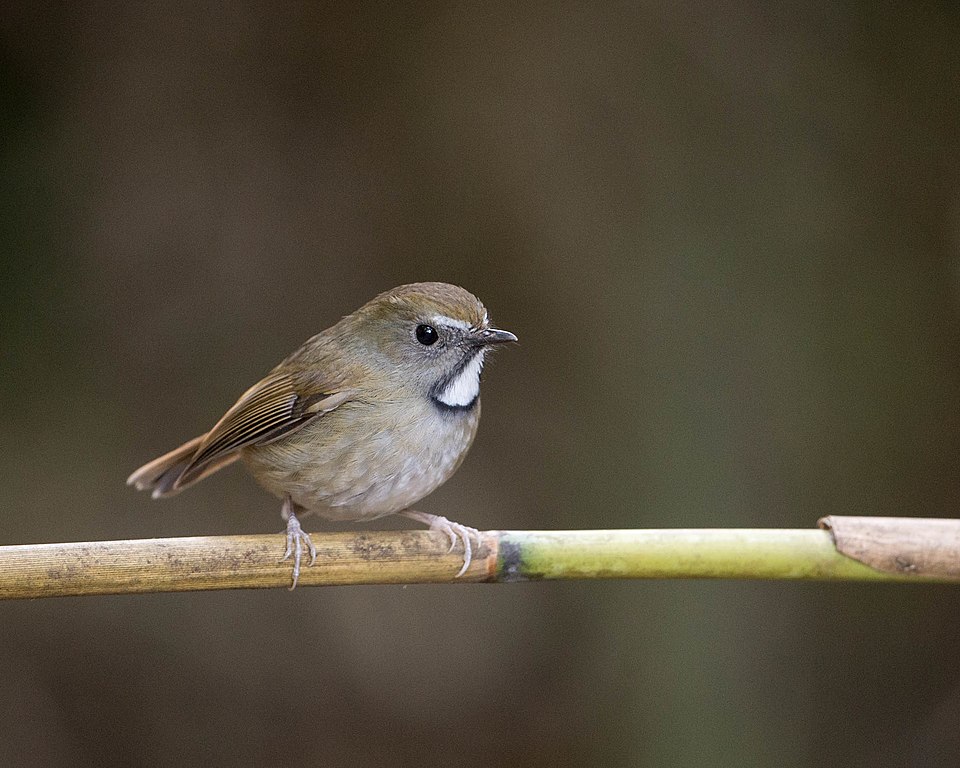
The White-throated Redstart is a small songbird, approximately 14-15 cm in length, with a remarkable and distinctive coloration that aids in its identification. Adult males boast a striking contrast between their deep red underparts and slate-gray upperparts. The defining feature, however, is the crisp white throat that gives the species its name. This white patch extends to the face, contrasting sharply with the dark lores and crown. Females and juveniles exhibit a more subdued plumage, with females showing brownish tones on the upperparts and a less vibrant red on the underparts. Juveniles resemble females but tend to have streaky underparts. In flight, the White-throated Redstart reveals a noticeable white wing patch, a key feature separating it from similar species like the Blue-fronted Redstart, which lacks the white throat and wing patch. The bird's flight is characterized as swift and direct, with rapid wing beats. When perched, this redstart often adopts an upright posture, flicking its tail frequently, a behavior that provides another cue for identification. Its bright coloration and active movements make it relatively easy to spot against the often muted tones of its mountainous habitat.
Having trouble telling birds apart? Upload a photo to our bird identification tool for an instant species match.
White-throated Redstart Habitat and Range
Preferred Habitat
The White-throated Redstart primarily inhabits montane ecosystems, favoring the diverse habitats found in the high-altitude regions of the Himalayas. Its preferred habitats include alpine meadows, coniferous and mixed forests, as well as shrubby and rocky slopes. These environments, often at elevations between 2,500 and 4,500 meters, provide ample foraging opportunities and suitable nesting sites. During the breeding season, these birds are frequently found in open forested areas where they can easily hunt insects. As winter approaches, the White-throated Redstart moves to lower elevations, descending to the edges of forests and shrubby areas where temperatures are less severe and food is more readily available. Unlike many other species, this redstart does not typically adapt to urban environments, remaining closely tied to its natural montane and forest habitats. This preference for high-altitude and rugged terrain ensures its presence in relatively undisturbed ecosystems, making it a less common sight in human-dominated landscapes.
Geographic Range
The range of the White-throated Redstart encompasses the mountainous regions of Central and South Asia. Its breeding grounds stretch across the Himalayas, from eastern Afghanistan through the northern parts of India, Nepal, and Bhutan, extending into southern Tibet and western China. During the winter months, these birds often relocate to lower elevations, including the foothills of the Himalayas and the adjacent plains, to escape the harsh conditions of their breeding altitudes. This altitudinal migration allows them to exploit different seasonal resources while avoiding severe weather. In terms of population density, the Himalayan region is a hotspot, particularly in areas with suitable alpine and forested habitats. While considered a common resident within its range, the White-throated Redstart is not evenly distributed, with its presence closely tied to specific ecological requirements related to altitude and habitat type.
Want to know which birds visit your area? Browse our backyard birds by location guides for region-specific species lists.
What Does the White-throated Redstart Eat?
The diet of the White-throated Redstart primarily consists of insects and other small invertebrates, which are abundant in its montane habitats. During the breeding season, it actively hunts for a variety of arthropods, including beetles, caterpillars, and spiders, using a combination of aerial sallies and ground foraging. This insectivorous diet shifts slightly with the seasons, as the bird may also consume small amounts of berries and seeds when insects are less available during colder months. Its foraging technique is characterized by quick, agile movements, often involving short flights from perches to catch prey mid-air or glean it from foliage. The White-throated Redstart typically feeds during daylight hours, with peak activity in the early morning and late afternoon. Its ability to adapt its diet according to seasonal availability highlights its ecological versatility and role in controlling insect populations within its habitat.
White-throated Redstart Behavior and Social Structure
The White-throated Redstart exhibits a range of behaviors that reflect its adaptation to montane environments. It is primarily solitary or seen in pairs, especially during the breeding season when males become highly territorial. These territories are defended through song and physical displays, with the male showcasing its vibrant plumage to ward off rivals and attract a mate. Courtship involves elaborate displays, including wing flicking and tail spreading, accompanied by singing. Outside the breeding season, the White-throated Redstart may join mixed-species foraging flocks, which can provide increased protection against predators. Its daily activity pattern includes periods of active foraging interspersed with rest and preening. In the presence of predators, such as raptors or larger mammals, this redstart relies on its agility and speed, often retreating to dense cover or taking flight to avoid capture. Despite its striking coloration, it employs a variety of calls as alarms, signaling danger to nearby conspecifics.
White-throated Redstart Nesting and Reproduction
The White-throated Redstart constructs its nest in well-concealed locations, often choosing rocky crevices, cliff faces, or dense shrubbery to provide protection from predators. The nest itself is a cup-shaped structure made from grass, moss, and rootlets, lined with softer materials such as feathers and animal hair. The female typically lays a clutch of 3 to 5 eggs, which are pale blue with reddish-brown speckles. Incubation lasts approximately 12 to 14 days, during which the female remains on the nest while the male provides food. After hatching, both parents participate in feeding the chicks, which fledge about 14 to 16 days later. The White-throated Redstart usually raises one brood per year, although favorable conditions may allow for a second. The choice of nesting site and parental care strategies reflect the species' adaptation to its challenging montane environment.
White-throated Redstart Sounds and Vocalizations
The primary song of the White-throated Redstart is a melodic series of clear, flute-like notes that rise and fall in pitch, often delivered from a prominent perch. This song serves both to establish territory and to attract mates during the breeding season. In addition to its song, the bird emits various call notes, which include sharp 'chip' sounds used for communication between mates or to alert others to potential threats. Alarm calls are more rapid and harsh, intended to warn conspecifics of approaching predators. During the dawn chorus, the White-throated Redstart's song becomes particularly prominent, contributing to the acoustic landscape of its mountainous habitat. While its vocalizations are less complex than some other songbirds, they are distinctive and can be a useful identification tool for birders.
Interesting Facts About the White-throated Redstart
- 1The White-throated Redstart is known to migrate vertically, moving down mountains in winter to avoid severe weather.
- 2This species often joins mixed flocks in winter, benefiting from the increased vigilance of other birds.
- 3The white wing patch of the White-throated Redstart is a key field mark, visible even during flight.
- 4Despite its vibrant colors, the White-throated Redstart blends well into its rocky mountain habitat.
- 5Courtship displays include showing off their bright plumage and singing from high perches.
- 6These birds are adept at catching insects mid-flight, showcasing their agility and precision.
- 7White-throated Redstarts are primarily insectivorous but will eat berries when insects are scarce.
White-throated Redstart Conservation Status
The White-throated Redstart is currently classified as Least Concern by the IUCN, indicating a stable global population. However, localized threats such as habitat degradation due to deforestation and human encroachment pose potential risks. Conservation efforts are primarily focused on preserving its natural habitat, particularly in regions experiencing increased agricultural development and tourism. Protected areas within its range, such as national parks and wildlife reserves, play a crucial role in maintaining suitable environments for this species. Historically, the population of the White-throated Redstart has remained relatively stable, thanks in part to its adaptability and the remoteness of its preferred habitats. Continued monitoring and habitat preservation are essential to ensuring its long-term survival.
Other Muscicapidae Species


Birds Similar to the White-throated Redstart
These species are often confused with the White-throated Redstart due to similar appearance or overlapping range.

