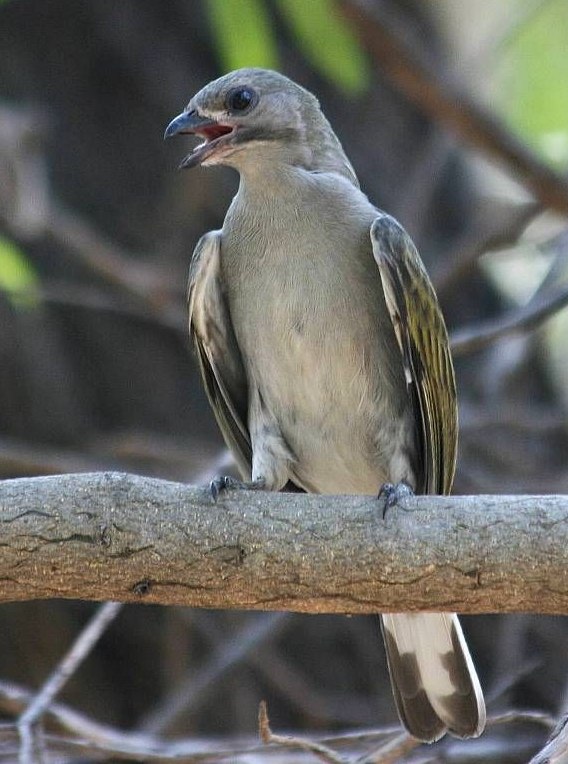
Willcocks's Honeyguide
Indicator willcocksi
Order: Piciformes / Family: Indicatoridae

Wikimedia Commons
About the Willcocks's Honeyguide
The Willcocks's Honeyguide (Indicator willcocksi) is a fascinating bird species found predominantly in the forested regions of central Africa, including countries like Cameroon, Gabon, and the Democratic Republic of Congo. As a member of the Indicatoridae family, this honeyguide plays a unique ecological role, particularly due to its brood parasitism behavior, where it lays its eggs in the nests of other bird species. This strategy allows it to exploit the parental care of its host, thereby conserving its resources for other activities. Unlike many birds that rely heavily on parental investment, the Willcocks's Honeyguide uses its energy in foraging and survival, showcasing a remarkable adaptation in avian reproductive strategies.
Ecologically, the Willcocks's Honeyguide contributes significantly to its habitat by participating in pollination and seed dispersal. Its diet, which includes a variety of insects and beeswax, allows it to play a role in controlling insect populations and supporting the health of its forest environment. The bird's presence in dense, wet, and lush forest environments highlights its preference for habitats that provide ample food resources and nesting opportunities. The Willcocks's Honeyguide is notably active during the wet season, exploiting the abundance of food and optimal conditions for reproduction.
Seasonal behaviors of the Willcocks's Honeyguide are aligned with the climatic cycles of its habitat. During the rainy season, from March to May and September to November, this bird is most active in terms of breeding and foraging. The increase in rainfall facilitates the growth of vegetation, which in turn supports a higher density of insects and other food resources. The Willcocks's Honeyguide's ability to adapt to the cyclical changes in its environment underscores the intricate balance of ecological factors that influence its life cycle. As an indicator species, changes in its population or behavior can provide insights into the health of its forest ecosystem.
The Willcocks's Honeyguide belongs to the family Indicatoridae, within the order Piciformes. These birds typically live average 5-7 years with max recorded at 10 years..
How to Identify a Willcocks's Honeyguide
The Willcocks's Honeyguide is a small bird, measuring around 15 to 18 centimeters in length, with a relatively inconspicuous appearance. Adult plumage is primarily olive-green, which serves as excellent camouflage among the forest foliage. This coloration is particularly useful in avoiding predators and remaining unseen while nesting in the territories of other birds. Males and females exhibit similar plumage, making gender differentiation challenging in the field. However, males tend to have slightly brighter plumage during the breeding season, a subtle cue that keen observers might notice.
Juvenile Willcocks's Honeyguides can be distinguished by their duller plumage and less defined markings compared to adults. This muted appearance aids in their inconspicuousness as they develop and learn to navigate their environment. When observing the Willcocks's Honeyguide in flight, note its rapid wingbeats and a slightly undulating flight pattern, which is characteristic of the honeyguide family. The bird's small size and swift movements can make it difficult to spot unless one is familiar with its characteristic calls and habitat preferences.
Similar species in the region, such as the Lesser Honeyguide (Indicator minor), can lead to confusion. However, the Willcocks's Honeyguide is generally smaller and lacks the pronounced facial markings seen in some other honeyguides. Perched, it maintains a horizontal posture, often blending seamlessly into the branches and leaves. Observers should note the bird's behavior and calls to aid in accurate identification.
Having trouble telling birds apart? Upload a photo to our bird identification tool for an instant species match.
Willcocks's Honeyguide Habitat and Range
Preferred Habitat
The Willcocks's Honeyguide primarily inhabits dense, moist forests of central Africa. These forests provide the necessary resources and cover for its survival and reproduction. The bird favors undisturbed forest areas where human impact is minimal, allowing for a rich diversity of insect life and potential host nests. It typically resides at elevations ranging from sea level to about 1,500 meters, where it finds ample food supply and nesting opportunities.
During the dry season, the Willcocks's Honeyguide may shift its habitat slightly, moving to areas with higher insect activity or where potential host species are more abundant. Urban presence is rare for this species, as it prefers the seclusion and resources of natural forest environments. However, in some regions, it may occasionally be spotted in semi-urban areas adjacent to forests where pockets of suitable habitat remain.
The Willcocks's Honeyguide does not exhibit extensive seasonal migrations but may undertake local movements in response to food availability and climatic conditions. Its reliance on specific forest habitats underscores the importance of conserving these regions to maintain the species' population.
Geographic Range
The Willcocks's Honeyguide is found across a relatively narrow range within central Africa. Its breeding range is primarily concentrated in countries such as Cameroon, Gabon, the Republic of Congo, and the Democratic Republic of Congo. These regions provide the necessary dense forest habitats that are critical for its survival and reproductive strategies.
During the non-breeding season, the Willcocks's Honeyguide remains within its established range, as it does not partake in long-distance migrations. Instead, it may adjust its location slightly within the region to take advantage of seasonal food resources or optimal nesting conditions. Migration corridors are not a characteristic of this species, given its relatively stable range year-round.
Population density hotspots for the Willcocks's Honeyguide align with areas of rich biodiversity and undisturbed forest. Regions such as Gabon's Lopé National Park and the Congo Basin exhibit higher concentrations of this species, reflecting the availability of food and nesting opportunities. Conservation efforts in these areas are crucial to maintaining the bird's habitat and supporting its ecological niche.
Want to know which birds visit your area? Browse our backyard birds by location guides for region-specific species lists.
What Does the Willcocks's Honeyguide Eat?
The Willcocks's Honeyguide has a unique diet primarily consisting of insects, particularly bees and their wax. This specialization allows it to exploit a niche food source that many other birds avoid. The bird uses its sharp beak to access hives, consuming larvae, bees, and wax. Wax is a rare dietary component in the avian world, but the Willcocks's Honeyguide's digestive system is specially adapted to break it down.
Seasonal changes do affect the diet to some extent. During the wet season, when insects are more abundant, the bird's diet becomes more varied, including other insects like ants and termites. The bird employs an active foraging technique, moving swiftly through the forest canopy, gleaning insects from leaves and branches. It also occasionally follows larger mammals or other birds to exploit disturbed insects.
Prey size typically ranges from small larvae to adult bees and insects around 1 to 2 centimeters in length. The Willcocks's Honeyguide feeds throughout the day, with peaks in activity during the early morning and late afternoon, times when insects are most active. Its ability to adapt its diet to available resources highlights its ecological versatility.
Willcocks's Honeyguide Behavior and Social Structure
The Willcocks's Honeyguide exhibits intriguing social and territorial behaviors, largely driven by its brood parasitism and need to secure resources. It is generally a solitary bird, except during the breeding season when males may display to attract females. These displays include vocalizations and flight maneuvers that showcase the male's vitality and territory.
Territorial behavior is prominent, with males defending specific areas that offer abundant food and nesting opportunities. The bird's courtship displays are subtle yet effective, involving a series of calls and flights that demonstrate ownership and suitability. Despite its solitary nature, the Willcocks's Honeyguide may participate in loose flocks when feeding, particularly during periods of high insect availability.
In response to predators, this honeyguide relies on its cryptic plumage and the dense forest canopy for protection. Its calls serve as both communication and alarm signals, alerting others to the presence of potential threats. Daily activity patterns align with food availability, with increased foraging during dawn and dusk when insects are most active. This rhythmic behavior ensures that the bird maximizes its energy intake while minimizing exposure to predators.
Willcocks's Honeyguide Nesting and Reproduction
Nesting for the Willcocks's Honeyguide involves a fascinating and rather cunning strategy known as brood parasitism. Rather than building its own nest, this bird lays eggs in the nests of other species, such as barbets and woodpeckers. The preferred nests are often those located in tree cavities, providing protection from predators and harsh weather.
The clutch size of the Willcocks's Honeyguide usually consists of a single egg, reflecting the bird's reliance on its host to rear its young. The incubation period is dependent on the host species, but the honeyguide's egg often hatches more rapidly than the host's, giving the chick a head start in the competition for food.
Once hatched, the young honeyguide may exhibit aggressive behavior towards the host's chicks, often resulting in their demise. This ensures that the honeyguide chick receives the majority of the food and care from the unsuspecting host parents. The fledging timeline is swift, with the young honeyguide leaving the nest as soon as it is capable of independent survival. Typically, the Willcocks's Honeyguide raises one brood per year, timed to coincide with the peak breeding season of its host species, ensuring the availability of suitable nests.
Willcocks's Honeyguide Sounds and Vocalizations
The Willcocks's Honeyguide's primary song is a series of clear, high-pitched whistles that vary in rhythm and intensity. These whistles often serve as territorial calls, announcing presence and warding off potential rivals. The song has a melodious quality, though it can rise to a more urgent pitch when the bird is agitated.
Call notes are shorter and more abrupt, used in communication between individuals, especially during the breeding season. These calls can sound similar to the chirps of other small forest birds, but with a distinctive tonal quality that experienced birders can recognize. The alarm call is a sharp, repetitive note that signals potential danger, such as the presence of a predator.
During the dawn chorus, the Willcocks's Honeyguide contributes its voice to the symphony of the forest, often singing from a concealed perch within the canopy. Its song, though not the loudest, adds a unique layer to the early morning soundscape, reflecting its role as both a solitary and communal participant in its environment.
Interesting Facts About the Willcocks's Honeyguide
- 1The Willcocks's Honeyguide is named after the British ornithologist William Willcocks, who first described the species in the early 20th century.
- 2Unlike most birds, the Willcocks's Honeyguide can digest beeswax, thanks to specialized enzymes in its digestive system.
- 3Willcocks's Honeyguides can lay eggs that mimic the color and size of their host's eggs, a remarkable adaptation for successful brood parasitism.
- 4The bird's calls can be heard up to 200 meters away, allowing it to communicate effectively across dense forest habitats.
- 5Willcocks's Honeyguides have been observed following honey badgers, exploiting the insects disturbed by these formidable mammals during feeding.
- 6This species plays a critical role in its ecosystem by controlling insect populations, contributing to the forest's health and balance.
- 7The Willcocks's Honeyguide's unique reproductive strategy reduces its parental investment, allowing it to focus on survival and foraging.
Willcocks's Honeyguide Conservation Status
According to the IUCN, the Willcocks's Honeyguide currently holds a status of Least Concern, reflecting a relatively stable population trend within its range. However, ongoing habitat destruction, primarily due to logging and agricultural expansion, poses a significant threat to its forest environment. Conservation efforts focus on protecting key habitats and mitigating the impact of human activities. Historically, the population of the Willcocks's Honeyguide has experienced fluctuations in response to environmental changes and human influence. Current conservation initiatives aim to preserve large tracts of forest, essential for maintaining the bird's ecological niche and supporting its unique reproductive strategies. Community-based conservation programs have been implemented in some regions, promoting sustainable land use practices that benefit both the local communities and the wildlife. Continued monitoring of the species and its habitat is crucial to ensure that the Willcocks's Honeyguide remains a thriving component of Africa's biodiversity.