Yellow-rumped Honeyguide
Indicator xanthonotus
Order: Piciformes / Family: Indicatoridae

Wikimedia Commons
About the Yellow-rumped Honeyguide
The Yellow-rumped Honeyguide (Indicator xanthonotus) is a fascinating bird species native to the Asian highlands, particularly thriving in the Himalayan region. These birds are notable for their interactions with bees and humans, a characteristic behavior of the Indicatoridae family. The honeyguide participates in mutualistic relationships with humans and other mammals by leading them to wild honeybee nests. After the larger animals break open the nests to access honey, the Yellow-rumped Honeyguide feeds on the beeswax and larvae. This wax-eating habit is facilitated by specialized digestive enzymes, which is a rare adaptation among birds. The ecological role of the Yellow-rumped Honeyguide extends beyond its interaction with bees. By feeding on the larvae and beeswax, it helps control bee populations, indirectly benefiting the ecosystem's balance. This bird primarily resides in montane forests, often found between elevations of 1,800 to 4,000 meters. Its presence is a vital indicator of forest health, as it is sensitive to habitat alterations. During the breeding season, typically from February to May, the Yellow-rumped Honeyguide becomes more vocal and visible. Its breeding behavior includes leading potential mates to bee colonies, showcasing its foraging prowess. Non-breeding months see a decrease in this guiding behavior, although the bird remains active in exploring its mountainous habitat. Overall, the Yellow-rumped Honeyguide plays an integral part in the montane ecosystems of Asia, making it a species of both ecological and cultural significance.
The Yellow-rumped Honeyguide belongs to the family Indicatoridae, within the order Piciformes. These birds typically live average 6-8 years with max recorded at 12 years..
How to Identify a Yellow-rumped Honeyguide
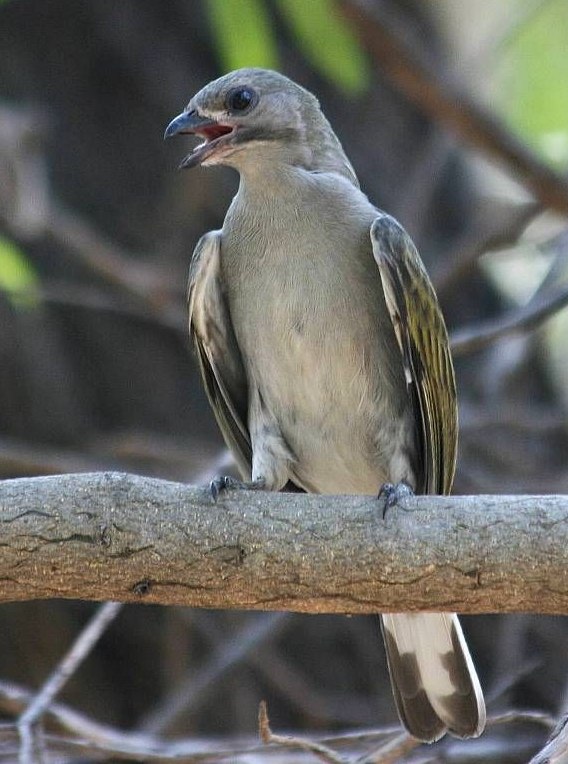
The Yellow-rumped Honeyguide is a small bird, averaging 16 to 18 cm in length. Adults possess a distinctive yellow rump patch, visible in flight and when perched. Their olive-brown upperparts blend seamlessly with the forest backdrop, while the underparts are lighter with subtle streaking. Males and females appear similar, though males often have more vivid yellow coloring on the rump. Juveniles resemble adults but with duller plumage and less pronounced yellow markings. In flight, the Yellow-rumped Honeyguide presents a compact silhouette with rapid, direct wingbeats. Its perching posture is upright, often seen clinging to vertical tree trunks like a woodpecker. While similar species like the Lesser Honeyguide (Indicator minor) share the yellow rump, the Yellow-rumped Honeyguide's specific habitat and geographic range help differentiate it. Observers should note the lack of white outer tail feathers, a characteristic that sets it apart from close relatives.
Having trouble telling birds apart? Upload a photo to our bird identification tool for an instant species match.
Yellow-rumped Honeyguide Habitat and Range
Preferred Habitat
The Yellow-rumped Honeyguide inhabits montane forests throughout the central and eastern Himalayas. It thrives in mixed deciduous and coniferous forests, often near clearings or forest edges where bee colonies are more accessible. Preferring elevations of 1,800 to 4,000 meters, this bird is rarely seen in lowland areas. During the breeding season, it remains in higher elevations, moving slightly lower in winter when snow covers its usual range. Urban presence is minimal; the bird avoids heavily populated areas, favoring remote, undisturbed habitats. Seasonal shifts are subtle, primarily driven by food availability and weather conditions, rather than drastic changes in altitude.
Geographic Range
The breeding range of the Yellow-rumped Honeyguide spans the central and eastern Himalayas, including Nepal, Bhutan, northern India, and parts of Tibet. It is a resident species across much of its range, with some altitudinal migration observed during harsher winters. These birds are seldom found outside high-altitude forests, making their presence a reliable indicator of mountainous habitats. Population density hotspots include regions like the Makalu-Barun National Park in Nepal and the Jigme Dorji National Park in Bhutan. While not considered migratory, local movements align with seasonal food sources and climatic conditions.
Want to know which birds visit your area? Browse our backyard birds by location guides for region-specific species lists.
What Does the Yellow-rumped Honeyguide Eat?
The diet of the Yellow-rumped Honeyguide is specialized, primarily consisting of beeswax and bee larvae, which it accesses after leading larger mammals to bee nests. This diet requires a unique adaptation, as few birds can digest wax. During the breeding season, its foraging behavior becomes more pronounced, actively seeking out bee colonies. In addition to beeswax, the honeyguide occasionally consumes fruit and small insects, supplementing its diet with additional nutrients. Foraging occurs primarily during the daytime, with peak activity in the early morning and late afternoon. The bird's feeding technique involves deftly removing wax and larvae with its sharp bill, showcasing its specialized dietary niche.
Yellow-rumped Honeyguide Behavior and Social Structure
Yellow-rumped Honeyguides exhibit solitary and territorial behavior outside the breeding season. Males become more aggressive during courtship, using their guiding prowess to impress potential mates by leading them to bee nests. Displays typically involve flights accompanied by vocalizations to assert dominance and attract females. While generally solitary, these birds may form loose associations when food is abundant. Their response to predators includes rapid flights to dense cover and discreet perching to avoid detection. Daily activity peaks during cooler parts of the day, aligning with bee activity. They typically defend feeding territories, especially during breeding months, with males often engaging in territorial disputes.
Yellow-rumped Honeyguide Nesting and Reproduction
The Yellow-rumped Honeyguide nests in cavities, often utilizing old woodpecker holes or natural crevices in trees. Nest sites are usually located at elevations between 3,000 and 3,500 meters. Clutch size is typically two to three eggs, with an incubation period of around 14 days. Both parents share incubation duties, although the female often assumes a more dominant role in brooding. The young fledge after approximately 20 to 22 days, with parental roles extending beyond fledging to ensure survival. Only one brood per year is common, aligning with the availability of nesting sites and food resources.
Yellow-rumped Honeyguide Sounds and Vocalizations
The primary song of the Yellow-rumped Honeyguide is a series of melodious whistles, often delivered from a concealed perch. The rhythm is variable, with high-pitched notes that rise and fall in rapid succession. Call notes include sharp 'chip' sounds, used in social interactions and territorial disputes. Alarm calls consist of rapid, harsh notes, signaling the presence of predators. During the dawn chorus, the bird's song becomes more frequent, echoing through the forest as it establishes territory and communicates with potential mates. The song resembles that of some thrush species but is distinguishable by its unique rhythm and pitch.
Interesting Facts About the Yellow-rumped Honeyguide
- 1The Yellow-rumped Honeyguide is one of the few bird species that can digest beeswax, thanks to specialized enzymes.
- 2These birds can lead humans to wild honeybee nests, a behavior documented in cultures throughout the Himalayas.
- 3Despite their name, not all honeyguides lead humans or animals; the Yellow-rumped Honeyguide is an exception.
- 4Their unique diet consists primarily of beeswax and larvae, making them ecological specialists.
- 5The bird's territorial song is more common during the breeding season, used to attract mates and deter rivals.
- 6While often solitary, Yellow-rumped Honeyguides may congregate in areas with abundant food sources.
- 7Their ability to digest wax is a rare adaptation among birds, shared by only a few other honeyguide species.
Yellow-rumped Honeyguide Conservation Status
The Yellow-rumped Honeyguide is currently listed as Least Concern by the IUCN, with stable population trends. However, primary threats include habitat loss due to deforestation and human encroachment. Conservation efforts focus on protecting montane forest habitats and preserving traditional honey-harvesting practices that support the bird's unique ecological role. While historical population changes are poorly documented, ongoing habitat protection remains crucial. Conservation organizations in Nepal and Bhutan work to safeguard key areas, ensuring the long-term survival of this remarkable species.