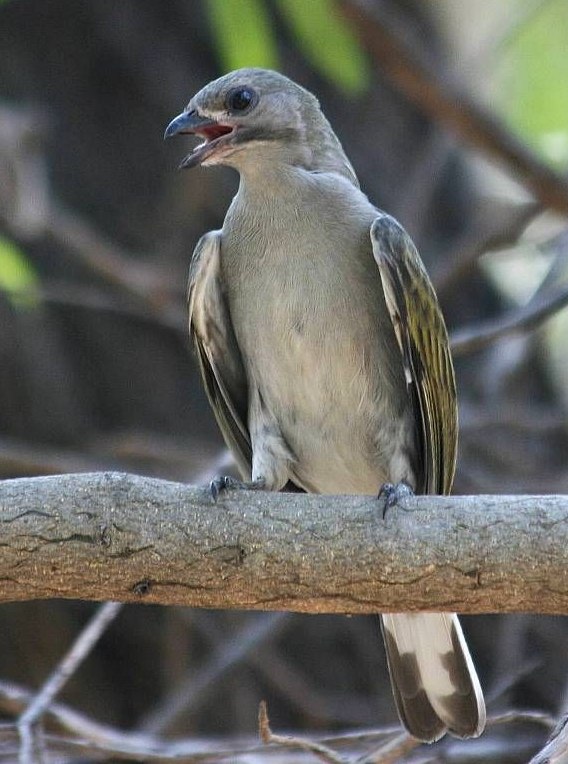
Zenker's Honeyguide
Melignomon zenkeri
Order: Piciformes / Family: Indicatoridae
About the Zenker's Honeyguide
Zenker's Honeyguide, scientifically known as Melignomon zenkeri, is an elusive bird found primarily in the dense tropical rainforests of Central and West Africa. This species belongs to the Indicatoridae family, known for their intriguing relationship with humans and other animals through the guiding behavior exhibited by some species. However, the Zenker's Honeyguide is more reticent, often avoiding human interaction and remaining deep within the forest canopy.
The ecological significance of Zenker's Honeyguide lies in its specialized diet and its role in the forest ecosystem. This bird primarily consumes beeswax and larvae, indirectly aiding in controlling bee populations within its habitat. Its strong, pointed bill is adapted for extracting these food sources from beehives. While not as renowned for guiding behaviors as some of its relatives, it plays a crucial role in the maintenance of its ecological niche.
Geographically, Zenker's Honeyguide can be observed across a range of countries including Cameroon, Gabon, and the Democratic Republic of the Congo. The bird prefers humid lowland forests, which provide ample food resources and nesting sites. Throughout the year, Zenker's Honeyguide does not exhibit significant migratory behavior, maintaining a relatively stable presence in these regions. Its adaptability to the dense forest environment underscores its importance as a resident species, contributing to the biodiversity of the African rainforest ecosystem.
The Zenker's Honeyguide belongs to the family Indicatoridae, within the order Piciformes. These birds typically live average lifespan is around 5-7 years, with a few individuals living up to 9 years..
How to Identify a Zenker's Honeyguide
Zenker's Honeyguide can be identified by its distinct greenish-yellow plumage, which provides excellent camouflage amidst the forest foliage. Adults display a subtle brownish hue on their wings and back, enhancing their ability to blend into their surroundings. The bird measures approximately 14-16 cm in length, making it a small but noticeable presence when perched.
Juvenile Zenker's Honeyguides exhibit a duller coloration compared to adults, with more subdued green tones and a slightly mottled appearance. There are no significant sexual dimorphisms in this species, with males and females appearing similar in size and plumage. This uniformity across sexes aids in maintaining an unobtrusive presence within their habitat.
In flight, the Zenker's Honeyguide shows a rapid wingbeat pattern, typical of its family, which aids in maneuvering through the dense forest canopy. When perched, it adopts an upright posture, often remaining motionless as it surveys its surroundings for potential food sources. The bird's small size and unique coloration can lead to confusion with other honeyguide species, but its specific hue and habitat preferences are key distinguishing factors.
Having trouble telling birds apart? Upload a photo to our bird identification tool for an instant species match.
Zenker's Honeyguide Habitat and Range
Preferred Habitat
Zenker's Honeyguide prefers the humid lowland forests of Central and West Africa, particularly thriving in areas with dense tree cover. These forests, rich in biodiversity, provide an abundant supply of beeswax and larvae, which are essential components of their diet. The bird can be found at elevations ranging from sea level up to 1200 meters, though it primarily inhabits lowland regions.
Seasonal habitat shifts are minimal for Zenker's Honeyguide, as the bird remains largely resident throughout the year. It thrives in areas with a high density of flowering plants and bee activity, avoiding open or semi-open habitats. This species is more likely to be found in rural forested areas than in urban settings, given its reliance on undisturbed forest ecosystems for survival.
Geographic Range
Zenker's Honeyguide has a relatively restricted range within Central and West Africa. The bird is predominantly found in countries such as Cameroon, Gabon, and the Democratic Republic of the Congo. These regions provide the dense forest habitats essential for the bird's survival.
The Zenker's Honeyguide is non-migratory, maintaining a consistent presence within its preferred range throughout the year. Its population density is highest in areas where bees and flowering plants are abundant, supporting its specialized diet. While it is not considered a widespread species due to its specific habitat requirements, it remains an integral part of the avian community in the regions it occupies.
Want to know which birds visit your area? Browse our backyard birds by location guides for region-specific species lists.
What Does the Zenker's Honeyguide Eat?
The diet of Zenker's Honeyguide primarily consists of beeswax and bee larvae, making it a specialist feeder within its ecosystem. This bird possesses a unique adaptation in its digestive system, allowing it to efficiently process wax, which is a challenging food source for many other species.
During different seasons, Zenker's Honeyguide may supplement its diet with small insects and spiders, especially when bee activity is low. The bird employs a foraging technique that involves keen observation and agile flight to locate active beehives. Once it identifies a hive, it uses its sharp bill to extract wax and larvae with precision.
Feeding typically occurs during daylight hours, with peak activity observed in the early morning and late afternoon when bees are most active. The ability to exploit beeswax as a food source allows Zenker's Honeyguide to occupy a unique ecological niche, reducing competition with other insectivorous birds.
Zenker's Honeyguide Behavior and Social Structure
Zenker's Honeyguide exhibits solitary behavior, often seen alone or in pairs rather than large flocks. This bird maintains territories within its forest habitat, using vocalizations to communicate presence and deter intruders. Territorial disputes are rare, but when they occur, involve displays of flight and vocalizations rather than direct aggression.
During the breeding season, Zenker's Honeyguide engages in subtle courtship displays that include vocalizations and short flights around potential nesting sites. These behaviors strengthen pair bonds and facilitate successful breeding.
The bird's response to predators includes remaining motionless, relying on its cryptic plumage to avoid detection. Zenker's Honeyguide is most active during the early morning and late afternoon, aligning its daily routine with the activity patterns of bees. This timing ensures optimal foraging opportunities while minimizing exposure to predators.
Zenker's Honeyguide Nesting and Reproduction
Zenker's Honeyguide exhibits a unique nesting strategy, as the bird is a known brood parasite. It lays its eggs in the nests of other bird species, relying on them to incubate and rear its young. Preferred host species include small insectivorous birds such as sunbirds and warblers.
The female Zenker's Honeyguide carefully selects a host nest, often removing one of the host's eggs before laying her own. This strategy increases the likelihood of her egg being accepted and cared for by the unsuspecting host parents. Clutch size typically consists of a single egg per host nest, ensuring focused care from the host birds.
Incubation periods align with the host species' timeline, and fledging occurs when the young honeyguide is sufficiently developed to leave the host nest. This parasitic breeding strategy allows the Zenker's Honeyguide to invest energy in foraging and territory maintenance rather than direct parental care.
Zenker's Honeyguide Sounds and Vocalizations
The vocalizations of Zenker's Honeyguide include a series of short, melodious whistles that vary in pitch and rhythm. These calls serve multiple functions, from territory defense to mate attraction during the breeding season.
In addition to its primary song, the bird emits softer call notes while foraging, which help maintain contact with its mate or nearby individuals. Alarm calls are rarely given, as the bird relies on stealth and camouflage to avoid predators.
During the dawn chorus, Zenker's Honeyguide contributes its distinctive whistles to the symphony of forest sounds. These vocalizations are crucial for establishing presence and asserting territory within the dense forest environment.
Interesting Facts About the Zenker's Honeyguide
- 1Zenker's Honeyguide is one of the few bird species capable of digesting beeswax, thanks to specialized gut bacteria.
- 2Unlike some of its relatives, Zenker's Honeyguide does not actively guide humans to beehives, preferring a more solitary lifestyle.
- 3The bird's small size, around 15 cm, makes it an agile flier capable of navigating dense forest canopies with ease.
- 4Zenker's Honeyguide is named after the German botanist Georg Zenker, who contributed significantly to African flora studies.
- 5Brood parasitism by Zenker's Honeyguide often involves deception, as it removes host eggs to increase the acceptance of its own.
- 6The species relies on its cryptic plumage to avoid predators, blending seamlessly with the forest environment.
- 7Zenker's Honeyguide's song consists of melodious whistles, contributing to the rich acoustic tapestry of African rainforests.
Zenker's Honeyguide Conservation Status
Zenker's Honeyguide holds a status of Least Concern on the IUCN Red List, with populations remaining stable across its range. However, habitat destruction due to logging and agriculture poses potential threats. Conservation efforts focus on preserving the dense forest habitats essential for the bird's survival. Protected areas within its range play a crucial role in maintaining suitable environments for this and other forest-dependent species. Historical population data indicate a stable trend, but continued monitoring is essential to ensure the species' long-term viability.