
Chapin's Flycatcher
Muscicapa lendu
Order: Passeriformes / Family: Muscicapidae

Wikimedia Commons
About the Chapin's Flycatcher
Chapin's Flycatcher (Muscicapa lendu) is a small passerine bird within the Muscicapidae family, primarily found in the high-altitude forests of Central Africa, particularly in the Democratic Republic of the Congo and Uganda. This species thrives in montane forest environments, preferring altitudes between 1,800 and 2,400 meters. The bird's ecological role is significant, mainly as an insectivore, contributing to insect population control within its habitat. Its presence in these forests also indicates the health of the ecosystem, as forest-dependent species are often sensitive to environmental changes. Chapin's Flycatcher's seasonal behaviors are somewhat restricted due to its non-migratory nature, remaining within its range year-round, although it might move slightly to exploit varying food availability. The bird often perches quietly in the forest understory, occasionally sallying forth to snatch insects mid-air or glean them from foliage. Its conservation status remains a concern due to habitat destruction, primarily from logging and land conversion for agriculture. The bird's reliance on pristine forested environments makes it susceptible to these threats, underscoring the importance of conservation efforts in its limited range. Chapin's Flycatcher also serves as an indicator species for the broader health of montane forest ecosystems, as declines in its population could signal larger environmental issues.
The Chapin's Flycatcher belongs to the family Muscicapidae, within the order Passeriformes. These birds typically live average 4-5 years, though detailed lifespan data is limited..
How to Identify a Chapin's Flycatcher
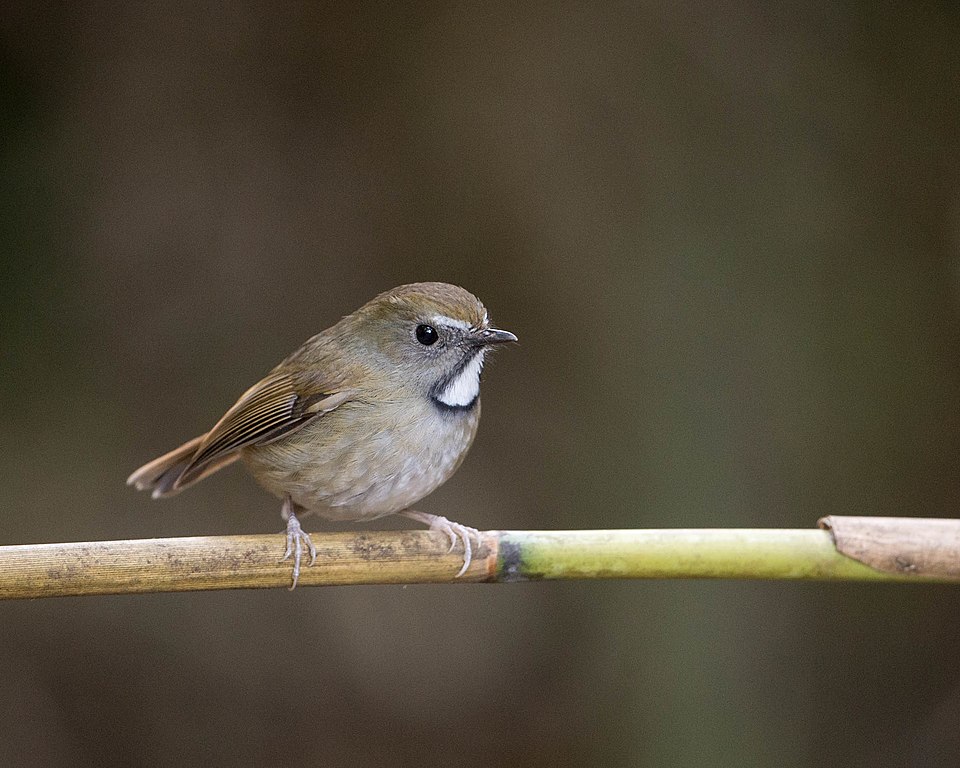
Chapin's Flycatcher is a medium-sized flycatcher with a distinctive olive-grey plumage. Adults exhibit a subtle contrast between the darker upperparts and lighter underparts, with a slight buffy tone on the belly. The wings are darker, with two faint wing bars that can be challenging to discern from a distance. Juveniles appear similar but may show more mottling on the breast and less distinct wing bars. Males and females are visually similar, making sex differentiation in the field difficult. In terms of flight, Chapin's Flycatcher shows a rapid, direct flight pattern typical of many flycatchers. When perched, it often flicks its wings and tail, a behavior that can help in its identification. Compared to similar species, such as the African Dusky Flycatcher, Chapin's Flycatcher generally appears slightly larger and darker, with more pronounced wing movements. Its perching posture is typically upright, often observed on branches within the mid-story of the forest.
Having trouble telling birds apart? Upload a photo to our bird identification tool for an instant species match.
Chapin's Flycatcher Habitat and Range
Preferred Habitat
Chapin's Flycatcher inhabits montane forests, specifically thriving in regions with dense canopy cover and abundant insect life. These forests, characterized by their high elevation and rich biodiversity, provide the ideal environment for the flycatcher's foraging and breeding activities. The bird favors elevations ranging from 1,800 to 2,400 meters, where it can be found among the thick understory and mid-story vegetation. Unlike many bird species that shift habitats seasonally, Chapin's Flycatcher tends to remain in these montane regions year-round, although it may adjust its location slightly within the forest to access different food sources. The species is notably absent from urban and lowland areas, underscoring its preference for remote, undisturbed habitats. This habitat specialization highlights the importance of preserving montane forest ecosystems for the survival of Chapin's Flycatcher and similar species.
Geographic Range
Chapin's Flycatcher has a limited geographic range, found predominantly in the montane forests of the Albertine Rift, a region known for its rich biodiversity. Specifically, its presence is concentrated within the Democratic Republic of the Congo and parts of Uganda. The species does not undertake long migrations, preferring to remain within its established territories throughout the year. Within this range, the bird occupies regions characterized by high elevation and dense forest cover. Population density hotspots include the Itombwe Mountains and the Lendu Plateau, where suitable habitat conditions are met. The restricted range of Chapin's Flycatcher, combined with its specific habitat requirements, makes it vulnerable to environmental changes and habitat destruction. Consequently, understanding and protecting its limited range is crucial for the species' conservation.
Want to know which birds visit your area? Browse our backyard birds by location guides for region-specific species lists.
What Does the Chapin's Flycatcher Eat?
Chapin's Flycatcher is primarily insectivorous, hunting a variety of flying and non-flying insects. Its diet includes beetles, flies, moths, and other small invertebrates that thrive in its montane forest habitat. The bird typically employs a 'sit-and-wait' foraging strategy, perching quietly before darting out to capture prey mid-air or glean insects from leaves and branches. Seasonal diet variations may occur, with Chapin's Flycatcher adjusting its feeding habits based on insect availability. During periods of high insect abundance, the bird may feed more frequently, taking advantage of the plentiful food supply. Prey size is generally small, matching the bird's modest stature and agile foraging technique. Feeding primarily occurs during daylight hours, with peak activity observed during early morning and late afternoon when insect activity is highest.
Chapin's Flycatcher Behavior and Social Structure
Chapin's Flycatcher exhibits solitary behavior, often seen alone or in pairs rather than in large flocks. This solitary nature aligns with its territorial behavior, as individuals or pairs defend their feeding and breeding territories from intruders. Courtship displays involve aerial chases and wing flicking, behaviors that showcase the agility and vigor of potential mates. The bird's daily activity pattern includes periods of quiet perching interspersed with active foraging bouts, where it displays its characteristic flycatching techniques. In response to predators, Chapin's Flycatcher relies on its cryptic plumage and quick flight to escape detection and capture. While generally quiet, the bird may join mixed-species feeding flocks, particularly when food resources are patchy. This behavior allows it to exploit food opportunities while benefiting from the increased vigilance of larger groups.
Chapin's Flycatcher Nesting and Reproduction
Chapin's Flycatcher constructs its nest in the dense understory of montane forests. The nest is typically a cup-shaped structure built from twigs, moss, and leaves, providing camouflage and protection from predators. Nest location preferences include branches or forks in small trees or shrubs, where the foliage offers additional concealment. The female lays a clutch of 2 to 4 eggs, which she incubates for approximately 14 days. Both parents participate in feeding the chicks, which fledge about 14 to 16 days after hatching. Chapin's Flycatcher may raise one or two broods per year, depending on food availability and environmental conditions. Parental roles are well defined, with both the male and female actively involved in chick rearing, ensuring the young receive adequate care and protection.
Chapin's Flycatcher Sounds and Vocalizations
Chapin's Flycatcher's primary song is a series of soft, melodious whistles, often described as a gentle 'wweet-wheet' followed by a trilling note. This song, utilized for territory defense and mate attraction, can be heard throughout its montane forest habitat. The bird also produces a variety of call notes, including a sharp 'chip' sound used as an alarm call when predators are near. During the dawn chorus, Chapin's Flycatcher joins other forest birds in a symphony of calls, contributing its distinctive whistles to the mix. The gentle quality and rhythm of its song differentiate it from other flycatchers, providing an auditory signature that aids in identification.
Interesting Facts About the Chapin's Flycatcher
- 1Chapin's Flycatcher was named after James P. Chapin, an American ornithologist who contributed significantly to African bird studies.
- 2Despite its elusive nature, Chapin's Flycatcher plays a crucial role in controlling insect populations in montane forests.
- 3Muscicapa lendu, the scientific name of Chapin's Flycatcher, reflects its discovery in the Lendu Plateau region.
- 4The species is a reliable indicator of forest health, as it thrives only in undisturbed montane environments.
- 5Chapin's Flycatcher's wing-flicking behavior not only aids in identification but may also help flush insects from foliage.
Chapin's Flycatcher Conservation Status
Chapin's Flycatcher is currently listed as Vulnerable on the IUCN Red List, with its population trend showing signs of decline. The primary threat to this species is habitat destruction, owing to logging and agricultural expansion within its limited range. Conservation efforts focus on protecting montane forests, enforcing sustainable land-use practices, and establishing protected areas to preserve critical habitats. Historical population changes reflect the impact of habitat loss, with declines coinciding with increased human activity in its range. To ensure the survival of Chapin's Flycatcher, ongoing conservation initiatives must address these threats and promote the restoration of degraded forest areas.
Other Muscicapidae Species


Birds Similar to the Chapin's Flycatcher
These species are often confused with the Chapin's Flycatcher due to similar appearance or overlapping range.