
Gray Bushchat
Saxicola ferreus
Order: Passeriformes / Family: Muscicapidae

Wikimedia Commons
About the Gray Bushchat
The Gray Bushchat (Saxicola ferreus) is a small passerine bird belonging to the family Muscicapidae. It is widely distributed across Asia, where it inhabits a variety of open and semi-open landscapes, including grasslands, scrublands, and agricultural fields. This bird is known for its adaptability to diverse environments, thriving in both rural and suburban areas. Throughout its range, the Gray Bushchat plays a significant role in controlling insect populations, making it an important component of its ecosystem. The Gray Bushchat is often seen perched conspicuously on low shrubs or fence posts, where it actively hunts for insects and other small invertebrates. Its plumage is predominantly gray, which provides effective camouflage against rocky or barren backgrounds, helping it avoid predators. During the breeding season, which typically occurs from April to July, males become more vocal and display prominent territorial behaviors. They sing to establish and defend their territories, using a series of melodious and varied notes. The two primary subspecies, S. f. phillipsi and S. f. ferreus, are distinguished by slight variations in size and plumage. The Gray Bushchat is non-migratory, although some altitudinal movement can occur in response to weather conditions. It maintains a year-round presence in its preferred habitats, which include the foothills of the Himalayas, the open plains of northern India, and the coastal scrublands of Southeast Asia. By providing pest control and contributing to the biological diversity of the areas it inhabits, the Gray Bushchat underscores the ecological significance of small passerines in maintaining balanced ecosystems. Its presence across a range of habitats highlights its adaptability and resilience in the face of changing environmental conditions.
The Gray Bushchat belongs to the family Muscicapidae, within the order Passeriformes. These birds typically live average 4-7 years, with some living up to 9 years..
How to Identify a Gray Bushchat
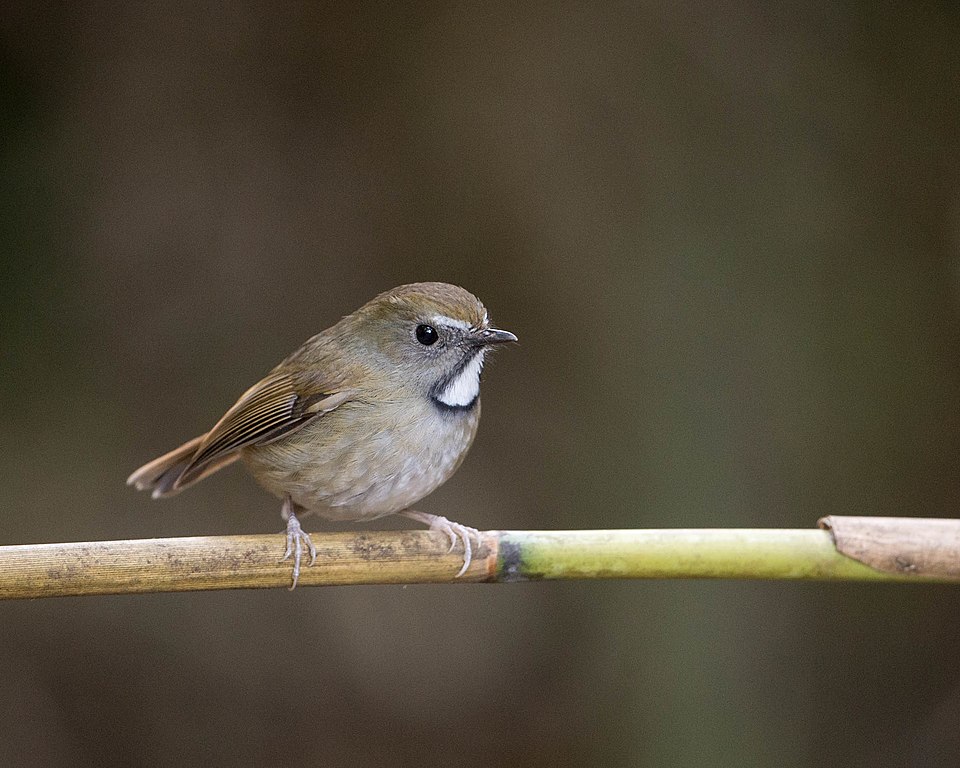
The Gray Bushchat is a small bird, measuring about 14 cm in length and sporting a wingspan of approximately 21-23 cm. Adult males have a striking gray coloration across their upperparts, with a contrasting white throat and belly. Their darker wings and tail are bordered with lighter edges, creating a pronounced pattern that aids in identification. Females, on the other hand, are more subdued with brownish-gray upperparts and a paler underside. Juveniles resemble females but often display a mottled or streaked appearance that provides additional camouflage. The Gray Bushchat can be distinguished from similar species, like the Pied Bushchat, by its more uniform gray coloration and lack of white shoulder patches. In flight, the Gray Bushchat exhibits a fluttering pattern, with its wings held closely to the body, which is typical of many small passerines. When perched, it sits upright, often flicking its tail in a characteristic manner. This bird's preference for open perches on shrubs or low fences makes it relatively easy to spot and observe.
Having trouble telling birds apart? Upload a photo to our bird identification tool for an instant species match.
Gray Bushchat Habitat and Range
Preferred Habitat
The Gray Bushchat inhabits a range of open and semi-open environments, favoring areas with scattered shrubs and low vegetation. It is commonly found in grasslands, open fields, and scrublands. In mountain regions, it can be seen up to elevations of 3000 meters. While it thrives in rural settings, the Gray Bushchat is also adaptable to urban fringe areas, where it makes use of parks and gardens. During the breeding season, it prefers secluded spots with dense undergrowth for nesting, but otherwise, it remains in exposed areas for foraging. Seasonal shifts in elevation occur, particularly in colder regions where the bird might descend to lower altitudes during winter.
Geographic Range
The Gray Bushchat's range extends across South and Southeast Asia. It breeds in the northern parts of the Indian subcontinent, including the Himalayas and regions such as Uttarakhand and Himachal Pradesh. During the winter months, some populations may move slightly southward but generally remain within the same geographic area. The bird is also found in countries like Nepal, Bhutan, and Myanmar, as well as parts of Thailand and Vietnam. While it is not a long-distance migrant, the Gray Bushchat exhibits some local movement, particularly in response to altitude and climate changes. Population density is notably higher in regions with a mix of open fields and scrub vegetation, providing ideal conditions for feeding and breeding.
Want to know which birds visit your area? Browse our backyard birds by location guides for region-specific species lists.
What Does the Gray Bushchat Eat?
The Gray Bushchat primarily feeds on insects and other small invertebrates, playing a crucial role in pest control. Its diet includes beetles, caterpillars, and flies. During the breeding season, when energy demands increase, it may also consume spiders and small snails. The bird employs a sit-and-wait foraging strategy, perching on low shrubs or rocks and scanning the ground for movement before darting down to snatch prey. This method is efficient and minimizes energy expenditure. The Gray Bushchat adjusts its diet seasonally, taking advantage of the increased abundance of certain insects during warmer months. Its feeding schedule is most active during early morning and late afternoon, aligning with peak insect activity.
Gray Bushchat Behavior and Social Structure
The Gray Bushchat exhibits a range of interesting behaviors characteristic of a territorial songbird. Males establish and defend territories vigorously during the breeding season. They sing from prominent perches to deter rivals and attract mates, displaying a series of melodious notes and varied calls. These vocalizations, coupled with visual displays like wing-flicking, are central to their courtship rituals. Despite being predominantly solitary or found in pairs, the Gray Bushchat may join mixed-species flocks during non-breeding periods, which provides safety in numbers. It is diurnal, with its activity peaking during morning and late afternoon when foraging conditions are optimal. The bird remains vigilant against predators, using alarm calls to warn others of potential threats.
Gray Bushchat Nesting and Reproduction
Gray Bushchats build cup-shaped nests using grasses, twigs, and leaves. These nests are typically located low in shrubs or hidden in dense vegetation to offer protection from predators. The female lays a clutch of 3-5 eggs, which she incubates for about 12-14 days. During this period, the male may help by bringing food to the female. Once hatched, both parents participate in feeding the chicks until they fledge, usually around 12-15 days after hatching. The species often raises two broods per year, taking advantage of favorable conditions and abundant food supply during the breeding season. Parental care extends briefly post-fledging, ensuring the young birds learn essential survival skills.
Gray Bushchat Sounds and Vocalizations
The primary song of the Gray Bushchat is a melodious series of whistles and trills, often delivered from a high perch. The pitch varies, creating an intricate melody that is both pleasant and distinctive. Call notes include sharp 'chack' sounds used in communication between mates and as alarms. During the dawn chorus, males are particularly vocal, reinforcing their territorial claims. Comparatively, the song is softer than that of the Pied Bushchat, making it a useful distinguishing feature in areas where the two species co-occur.
Interesting Facts About the Gray Bushchat
- 1Despite its name, the Gray Bushchat is not strictly tied to scrublands and can be found in a variety of open habitats.
- 2The Gray Bushchat can be seen at elevations up to 3000 meters, showcasing its adaptability to high-altitude environments.
- 3Males and females of the Gray Bushchat exhibit marked differences in plumage, aiding in sex identification during field observations.
- 4This bird's territorial song is often performed from the highest available perch, maximizing its acoustic range.
- 5Gray Bushchats are known to join mixed-species flocks outside of the breeding season, benefiting from group vigilance against predators.
Gray Bushchat Conservation Status
The Gray Bushchat is currently listed as Least Concern by the IUCN, with stable population trends across its range. Despite facing habitat loss due to agricultural expansion and urbanization, the bird's adaptability to open habitats has helped maintain its numbers. Conservation efforts focus on preserving natural and semi-natural open areas that are critical for breeding and feeding. Historically, the Gray Bushchat's population has remained resilient, owing to its wide range and diverse habitat preferences.
Other Muscicapidae Species


Birds Similar to the Gray Bushchat
These species are often confused with the Gray Bushchat due to similar appearance or overlapping range.

