
Green-backed Honeyguide
Prodotiscus zambesiae
Order: Piciformes / Family: Indicatoridae

Wikimedia Commons
About the Green-backed Honeyguide
The Green-backed Honeyguide, scientifically known as Prodotiscus zambesiae, is a fascinating member of the Indicatoridae family, known for its striking green plumage and intriguing ecological role. This bird inhabits the subtropical and tropical regions of Africa, particularly ranging from Angola and Zambia to Malawi and Mozambique. Typically found in open woodland and forest edges, this honeyguide plays a vital role in its ecosystem as a specialist parasite, laying its eggs in the nests of other bird species. Unlike its bee-eating relatives, the Green-backed Honeyguide primarily targets small passerines such as warblers and cisticolas. It utilizes its mimicry skills to blend in with its hosts, ensuring the successful rearing of its young by unsuspecting surrogate parents.
This species illustrates a remarkable evolutionary adaptation in its parasitic lifestyle, where it relies on the care of other bird species to raise its offspring. This behavior not only influences the populations of its host species but also contributes to the ecological dynamics of its habitat. The Green-backed Honeyguide typically breeds during the rainy season, when insect abundance peaks, providing ample food for its young. During this period, the bird's presence can be observed more frequently as it actively searches for suitable host nests to parasitize.
The Green-backed Honeyguide is also noteworthy for its role in pollination. While not as specialized as some other birds, it occasionally feeds on nectar and thus contributes to the pollination of certain flowering plants. This interaction highlights its ecological significance beyond its parasitic breeding strategy. Its ability to adapt to different environments and food sources underscores its resilience in the face of changing habitats and environmental pressures. As habitats continue to evolve, the Green-backed Honeyguide's adaptability will likely play a crucial role in its continued survival.
The Green-backed Honeyguide belongs to the family Indicatoridae, within the order Piciformes. These birds typically live typically 3-5 years, with some individuals living up to 8 years..
How to Identify a Green-backed Honeyguide
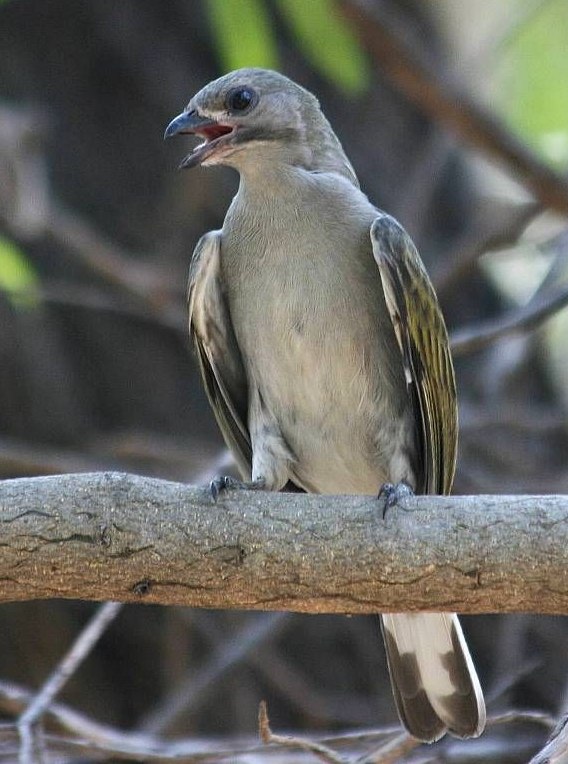
The Green-backed Honeyguide is a small bird, measuring approximately 13 to 15 centimeters in length. Its most distinctive feature is the vibrant green coloration on its back, which contrasts with its white underparts. The head and wings display a subtle mix of green and gray, providing excellent camouflage among the foliage. Juveniles resemble adults but tend to have more muted colors and lack the sheen found in mature individuals.
Sexual dimorphism is not prominently displayed in this species, with males and females appearing similar in plumage. However, experienced birders may note that males often exhibit a slightly brighter green on their backs during the breeding season. In flight, the Green-backed Honeyguide shows a quick, direct flight pattern with rapid wingbeats. Its silhouette is characterized by a small, compact body and relatively short wings, making it agile among trees.
The Green-backed Honeyguide can be confused with similar species, such as the Lesser Honeyguide, but careful observation reveals differences in size and coloration. The Lesser Honeyguide lacks the bright green back and is generally smaller. When perched, the Green-backed Honeyguide often holds its body upright, scanning its surroundings for potential hosts and food sources.
Having trouble telling birds apart? Upload a photo to our bird identification tool for an instant species match.
Green-backed Honeyguide Habitat and Range
Preferred Habitat
The Green-backed Honeyguide thrives in diverse habitats, predominantly occupying open woodlands, forest edges, and savannas. It prefers areas with scattered trees and dense shrubs, which provide ample nesting sites and food resources. Found at elevations ranging from sea level to 2000 meters, this bird can adapt to various altitudes.
Seasonal habitat shifts occur as the Green-backed Honeyguide follows its host species to suitable nesting grounds. During the breeding season, it often frequents areas with a high density of small passerines, ensuring successful parasitism. While not a common sight in urban areas, this honeyguide occasionally ventures into gardens and parks, especially if suitable nesting hosts are present.
The Green-backed Honeyguide's adaptability to different environments, from dense forests to open savannas, highlights its resilience in diverse ecological settings. This flexibility allows it to exploit a range of resources and maintain its population across its range.
Geographic Range
The Green-backed Honeyguide's range extends across central and southern Africa, with populations primarily concentrated in Angola, Zambia, Malawi, and Mozambique. It is also found in parts of Zimbabwe and northern Botswana. Its presence within these regions is often patchy, dictated by the availability of host species and suitable habitats.
During the breeding season, the Green-backed Honeyguide remains within its core range, focusing on areas rich in small passerines. It does not undertake long-distance migrations but may engage in local movements in response to seasonal changes in food availability and host abundance. Population density hotspots are typically found in areas with a high concentration of nesting hosts, such as forest edges and mixed woodlands.
Despite its broad range, the Green-backed Honeyguide is not abundant throughout its territory. Its numbers fluctuate based on environmental conditions and the success of its parasitic breeding efforts. Conservation efforts focus on protecting its preferred habitats and monitoring its interactions with host species to ensure long-term sustainability.
Want to know which birds visit your area? Browse our backyard birds by location guides for region-specific species lists.
What Does the Green-backed Honeyguide Eat?
The Green-backed Honeyguide primarily feeds on insects, with a preference for bees and wasps, which it captures in flight or gleans from foliage. Its specialized tongue allows it to deftly extract insects from crevices and flowers. During the breeding season, its diet expands to include a variety of protein-rich insects, supporting the nutritional needs of its growing young.
Nectar forms a secondary component of its diet, and the Green-backed Honeyguide occasionally visits flowering trees and shrubs to supplement its energy intake. This behavior aids in the pollination of certain plants, though it is not as pronounced as in other nectar-feeding birds.
Foraging typically occurs during the cooler hours of the morning and late afternoon. The Green-backed Honeyguide employs a combination of aerial hawking and perch-hunting techniques to locate prey. It often follows mixed-species flocks, taking advantage of the commotion to catch disturbed insects. Its diet reflects its adaptability and opportunistic nature, allowing it to thrive in a variety of environments.
Green-backed Honeyguide Behavior and Social Structure
The Green-backed Honeyguide exhibits solitary behavior outside of the breeding season, relying on stealth and mimicry to approach potential host nests. Its territorial behavior becomes more pronounced during the breeding period, as it actively searches for suitable nests to parasitize. This bird employs a combination of vocal mimicry and stealth to deceive host species, ensuring the successful placement of its eggs.
Courtship displays are subtle and involve vocalizations and posturing to establish pair bonds. Once a suitable host nest is located, the female lays a single egg, often removing or destroying one of the host's eggs to increase the survival chances of her own offspring.
The Green-backed Honeyguide is predominantly diurnal, with peak activity during the early morning and late afternoon. It demonstrates a high level of vigilance when foraging, constantly scanning for predators and potential feeding opportunities. Though not typically flocking, it occasionally associates with mixed-species groups to enhance its foraging success and reduce predation risk.
Green-backed Honeyguide Nesting and Reproduction
The Green-backed Honeyguide is a brood parasite, meaning it does not build its own nest but instead lays its eggs in the nests of other bird species. It specifically targets small passerines such as warblers and cisticolas as hosts. The female carefully selects a suitable host nest, often observing it for several days to ensure it is active and contains eggs or nestlings.
Once a target nest is chosen, the female discreetly lays a single egg, usually removing or damaging one of the host's eggs to increase her offspring's survival chances. The incubation period aligns with that of the host species, ensuring that the honeyguide chick hatches at a similar time. The host parents, unaware of the deception, raise the honeyguide chick alongside their own.
The Green-backed Honeyguide chick often exhibits aggressive behavior towards its nestmates, ensuring it receives the majority of food and care. Fledging occurs within a few weeks, after which the young honeyguide becomes independent. This species typically lays multiple eggs in different nests each breeding season, maximizing its reproductive success.
Green-backed Honeyguide Sounds and Vocalizations
The Green-backed Honeyguide's vocalizations are subtle yet distinctive, consisting of a series of soft whistles and trills. Its primary song features a rhythmic sequence of short, high-pitched notes, often delivered from a concealed perch.
Call notes include a range of sharp, metallic chips and softer, melodic warbles, used in communication with potential mates and rivals. Alarm calls are more abrupt and harsh, serving as warnings to nearby birds of approaching predators.
During the dawn chorus, the Green-backed Honeyguide's song blends with those of other woodland species, creating a harmonious backdrop to the waking forest. Its vocal repertoire, though not as varied as some songbirds, plays a key role in its interactions and territorial behavior.
Interesting Facts About the Green-backed Honeyguide
- 1The Green-backed Honeyguide's brood parasitism is similar to that of cuckoos, but it specifically targets smaller passerines.
- 2Unlike other honeyguides, the Green-backed Honeyguide does not lead humans to bee nests for honey harvesting.
- 3This species is known for its vocal mimicry, which it uses to deceive host birds and facilitate parasitism.
- 4The Green-backed Honeyguide's diet includes bees and wasps, showcasing its ability to handle stinging insects.
- 5Despite its reliance on other species for breeding, the Green-backed Honeyguide plays a role in pollination through occasional nectar feeding.
- 6The average lifespan of a Green-backed Honeyguide in the wild is around 5 to 7 years, depending on environmental conditions.
- 7This bird's adaptability to various habitats underscores its resilience in the face of environmental changes.
Green-backed Honeyguide Conservation Status
The Green-backed Honeyguide is currently listed as Least Concern by the IUCN, though its population appears to be stable. However, habitat loss due to deforestation and agricultural expansion poses a potential threat to its long-term survival. Conservation efforts focus on preserving its natural habitats, particularly open woodlands and forest edges, where it finds suitable hosts for nesting. Monitoring programs aim to track population trends and assess the impact of human activities on its breeding success. Historically, the Green-backed Honeyguide has maintained stable populations across its range, but continued habitat degradation could challenge its adaptability. Conservationists emphasize the importance of sustainable land management practices to ensure the preservation of this unique species and its ecological role.
Other Indicatoridae Species



Birds Similar to the Green-backed Honeyguide
These species are often confused with the Green-backed Honeyguide due to similar appearance or overlapping range.
