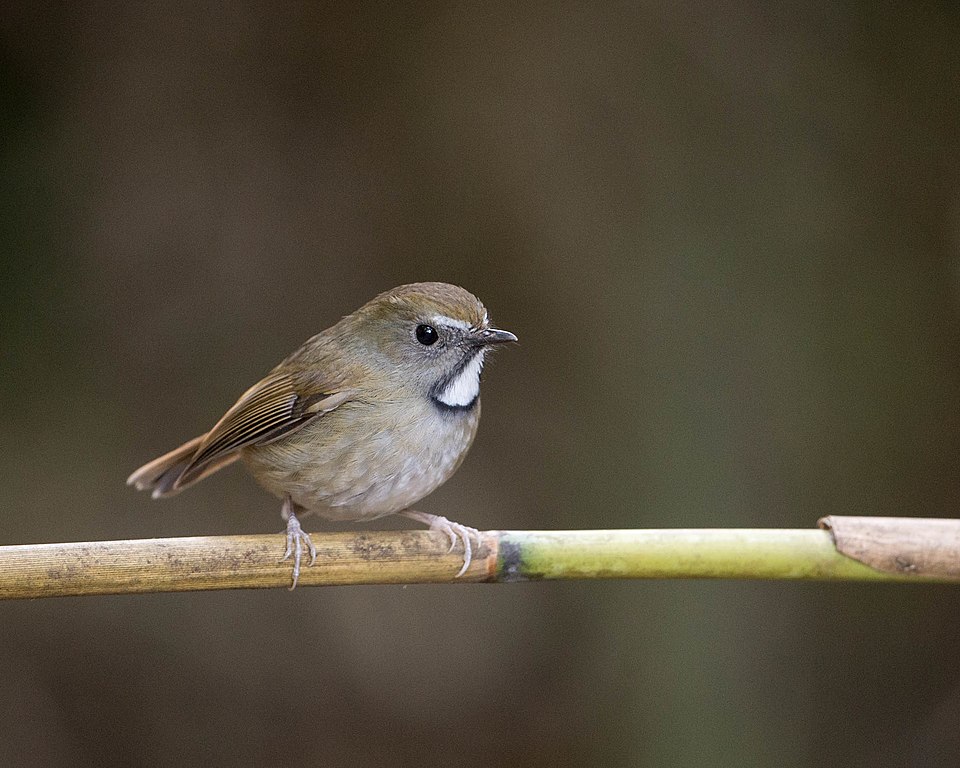
Hill Blue Flycatcher
Cyornis whitei
Order: Passeriformes / Family: Muscicapidae

Wikimedia Commons
About the Hill Blue Flycatcher
The Hill Blue Flycatcher, Cyornis whitei, is a small passerine bird belonging to the family Muscicapidae. This species is renowned for its brilliant blue coloring, which makes it a visual delight in the dense forests and wooded areas it inhabits. Found predominantly in Southeast Asia, the Hill Blue Flycatcher is spread across countries such as Thailand, Laos, Vietnam, and parts of southern China. Its preference for subtropical or tropical moist lowland and montane forests highlights its ecological significance, as it plays a crucial role in insect population control within these habitats.
During the breeding season, the Hill Blue Flycatcher becomes more vocal, with males often observed singing to defend their territory and attract mates. These birds thrive in environments ranging from sea level to mountainous regions up to 2,000 meters, adapting to various forest types. Their reliance on healthy forest ecosystems underscores the importance of conserving these habitats, which face threats from deforestation and human encroachment.
Ecologically, the Hill Blue Flycatcher serves as both a predator and prey within its ecosystem. As insectivores, they help manage insect populations, while they themselves may fall prey to larger birds and mammals. Their presence indicates a healthy, biodiverse environment, and their migratory patterns can signal changes in climate and habitat health.
The Hill Blue Flycatcher belongs to the family Muscicapidae, within the order Passeriformes. These birds typically live 5-7 years with a maximum recorded of 10 years..
How to Identify a Hill Blue Flycatcher
The Hill Blue Flycatcher exhibits a distinctive blue plumage that sets it apart from similar species. Adult males typically boast a bright blue upper side with a lighter, more azure shade on the wings and tail. Their underparts are a contrasting white or light grey, which enhances the vibrancy of their blue coloring. Females, while also blue, present a more subdued palette, with a duller blue and greyish underparts, allowing them to blend seamlessly into the forest surroundings.
Juveniles resemble females but with additional brownish tones on their wings, which gradually fade as they mature. This sexual dimorphism aids in differentiating males from females in the field. The Hill Blue Flycatcher's compact size, around 15 cm in length, and its sharp, pointed bill are useful field marks when observing these birds in their natural habitat.
In flight, the Hill Blue Flycatcher displays a rapid, fluttering motion typical of flycatchers, and perches upright on branches, often flicking its tail. Its silhouette is compact with slightly rounded wings, making it a distinctive figure even from a distance.
Having trouble telling birds apart? Upload a photo to our bird identification tool for an instant species match.
Hill Blue Flycatcher Habitat and Range
Preferred Habitat
The Hill Blue Flycatcher primarily inhabits subtropical or tropical moist lowland and montane forests. It thrives in dense, shady environments where it can find ample insect prey. These birds are often found at elevations ranging from sea level to about 2,000 meters, with a preference for the middle to higher montane zones. Though primarily forest-dwellers, they can occasionally be spotted in forest edges and secondary growth areas, where the canopy is still relatively intact.
While Hill Blue Flycatchers are not typically associated with urban environments, they may venture into more rural areas where suitable forest cover exists. During different seasons, particularly in non-breeding periods, they might shift slightly in habitat preference, moving to areas with richer insect availability.
Geographic Range
The Hill Blue Flycatcher's range includes several countries in Southeast Asia, primarily spread across Thailand, Laos, Vietnam, and parts of southern China. This species is resident in these regions, although some local movements may occur in response to environmental changes or seasonal shifts.
During the breeding season, they occupy a wide range of elevations, from lowland forests to montane regions up to 2,000 meters. Outside of the breeding season, Hill Blue Flycatchers may relocate slightly, moving within their range to areas that provide abundant food resources. Despite their limited geographical range, they are relatively common within suitable habitats.
Population density tends to be higher in areas with undisturbed forest cover, where the availability of nesting sites and food resources is optimal. Unfortunately, habitat fragmentation and deforestation pose significant threats to their range, making conservation efforts crucial for their continued presence in these regions.
Want to know which birds visit your area? Browse our backyard birds by location guides for region-specific species lists.
What Does the Hill Blue Flycatcher Eat?
The diet of the Hill Blue Flycatcher primarily consists of insects, making it an essential insectivore in its ecosystem. This bird predominantly feeds on beetles, caterpillars, ants, and other small invertebrates which it captures with precision. Its foraging technique involves quick aerial sallies from a perch to snatch prey mid-flight or gleaning insects from foliage.
During the breeding season, the need for high-protein food sources increases, as both adults and chicks require ample nutrition. This dietary preference for insects ensures that Hill Blue Flycatchers play a significant role in controlling insect populations, thus maintaining ecological balance in their forest habitats.
Seasonal variations in food availability can lead to slight changes in diet, with these birds sometimes consuming small fruits or berries when insects are scarce. However, their primary reliance on insects remains a defining feature of their feeding behavior.
Hill Blue Flycatcher Behavior and Social Structure
The Hill Blue Flycatcher exhibits fascinating behavioral patterns, particularly during the breeding season. Males are known for their territoriality, often singing from high perches to establish dominance and attract potential mates. Their song is a melodious series of whistles and trills that resonate through the forest canopy.
These birds are generally solitary or found in pairs during the breeding season. Outside this period, they may join mixed-species foraging flocks, which enhances their foraging efficiency and offers protection against predators. Although typically shy and elusive, Hill Blue Flycatchers display boldness when defending their territory.
Daily activity patterns include periods of active foraging interspersed with rest during the hottest parts of the day. Their keen eyesight and agile flight enable them to capture insects with remarkable precision, a skill that is crucial for their survival in the competitive forest environment.
Hill Blue Flycatcher Nesting and Reproduction
The Hill Blue Flycatcher constructs its nest in a variety of locations, often preferring natural cavities or crevices in trees. Nests are generally cup-shaped, crafted from materials such as moss, leaves, and roots, which provide camouflage and insulation. The choice of nest site is typically low to mid-canopy, providing protection from predators and environmental elements.
A typical clutch consists of 3 to 5 eggs, with both parents participating in incubation, which lasts approximately 12 to 14 days. After hatching, both male and female Hill Blue Flycatchers share the responsibility of feeding and caring for the chicks until they fledge, usually around two weeks after hatching.
These birds may produce two broods per year, depending on environmental conditions and food availability. The cooperative breeding efforts of both parents ensure high survival rates for their offspring.
Hill Blue Flycatcher Sounds and Vocalizations
The Hill Blue Flycatcher is known for its distinctive and melodious song, which consists of a series of clear, fluid whistles and trills. These vocalizations are particularly prominent during the breeding season, as males sing to establish and defend their territory.
In addition to its primary song, the Hill Blue Flycatcher also produces various call notes, which can be softer and used for communication between mates or to signal alarm when predators are nearby. Their call notes tend to be sharp and quick, serving as an effective alert system.
The dawn chorus, a symphony of bird songs that occurs at first light, often includes the Hill Blue Flycatcher's vocalizations. Compared to other birds in its habitat, its song stands out for its clarity and musical quality.
Interesting Facts About the Hill Blue Flycatcher
- 1The Hill Blue Flycatcher, with its vivid blue plumage, is often mistaken for the larger and similarly colored Tickell's Blue Flycatcher.
- 2Despite being a forest-dweller, the Hill Blue Flycatcher occasionally visits gardens and parks, where it can find suitable perching spots.
- 3The Hill Blue Flycatcher's song is so melodious that it is sometimes compared to the flute-like notes of the Oriental Magpie-Robin.
- 4This species is named after the British ornithologist, Herbert C. White, who contributed significantly to the study of Asian birdlife.
- 5Hill Blue Flycatchers are known to participate in mixed-species flocks, which helps them in detecting predators and finding food.
- 6In some parts of its range, the Hill Blue Flycatcher is known locally as the 'forest gem' due to its striking appearance.
- 7The Hill Blue Flycatcher has adapted to a variety of forest types, showcasing its versatility and resilience in changing environments.
Hill Blue Flycatcher Conservation Status
The International Union for Conservation of Nature (IUCN) currently lists the Hill Blue Flycatcher as a species of Least Concern. However, its population trend is decreasing due primarily to habitat loss from deforestation and land-use changes. Conservation efforts focus on preserving its natural forest habitats and implementing sustainable land-use practices to mitigate habitat destruction. Protected areas and national parks within its range offer some respite from human encroachment, but ongoing monitoring and conservation measures are crucial to ensure its continued survival. Historically, the Hill Blue Flycatcher's population was more stable, but recent changes in land use and forest management have impacted its numbers. Continued conservation efforts are essential to maintain viable populations in their natural habitats.