
Muscicapa stenura
Muscicapa stenura
Order: Passeriformes / Family: Muscicapidae
About the Muscicapa stenura
The Gray-streaked Flycatcher, known scientifically as Muscicapa stenura, is a migratory passerine bird belonging to the family Muscicapidae. It plays a significant ecological role as an insect predator, contributing to the control of insect populations in its habitats. This bird is typically found across a variety of regions in Asia, from the dense forests of Siberia to the tropical landscapes of Southeast Asia. During the breeding season, it prefers the open woodlands and mixed forests of the Palearctic region, particularly in areas like eastern Russia and northeastern China. As an insectivorous bird, it aids in maintaining the ecological balance by preying on a variety of insects, including flies, beetles, and moths. The Gray-streaked Flycatcher's presence in these ecosystems indicates a healthy, functioning environment, as it relies on abundant insect populations. Seasonally, this bird exhibits distinct migratory behaviors, breeding in temperate regions and wintering in warmer climates such as the Philippines and Indonesia. Its migration patterns are crucial for understanding the broader seasonal dynamics of avian movement across the Asian continent. The Gray-streaked Flycatcher's adaptability to different habitats and climates underscores its importance in avian biodiversity and environmental health studies.
The Muscicapa stenura belongs to the family Muscicapidae, within the order Passeriformes. These birds typically live average 3-5 years, with longer records in the wild..
How to Identify a Muscicapa stenura
The Gray-streaked Flycatcher features a compact, medium-sized form with a length typically around 13-15 cm. Adults display grayish upperparts with subtle streaking, which provides camouflage against tree bark and foliage. The underparts are whitish with fine gray streaks that run down the breast, aiding in identification. Juveniles resemble adults but often display more pronounced streaking and a buffier tone to their plumage, particularly on the underparts. There is little sexual dimorphism in this species, with males and females appearing similar, although males may exhibit slightly darker plumage during the breeding season. The flycatcher's silhouette in flight is characterized by a relatively short tail and pointed wings, allowing for agile maneuvers when catching insects mid-air. Perched, it maintains an upright posture, often observed sallying forth from a perch to snatch prey before returning. When identifying this species, it is crucial to differentiate it from similar flycatchers, such as the Dark-sided Flycatcher (Muscicapa sibirica), which exhibits darker, more uniform coloration.
Having trouble telling birds apart? Upload a photo to our bird identification tool for an instant species match.
Muscicapa stenura Habitat and Range
Preferred Habitat
The Gray-streaked Flycatcher inhabits a wide range of forested environments, from the temperate woodlands of Siberia to the tropical forests of Southeast Asia. It prefers open woodlands and mixed forests during the breeding season, often at elevations ranging from sea level to 1500 meters. In winter, it shifts to lower, warmer regions, including mangroves, coastal forests, and secondary growth areas. While primarily a forest-dweller, this species can adapt to urban environments, particularly in areas where natural habitats intermingle with human development, such as parks and gardens. Its ability to thrive in diverse habitats underscores its adaptability and resilience.
Geographic Range
The Gray-streaked Flycatcher breeds in the temperate regions of eastern Russia and northeastern China, extending into North Korea. During migration, it traverses a vast corridor through East and Southeast Asia, passing through countries like Japan, Taiwan, and parts of mainland Southeast Asia. Its wintering range includes the Philippines, Borneo, and Indonesia, where it finds suitable habitats with abundant insect prey. While generally widespread, population densities can vary, with higher concentrations often observed in more insect-rich regions during the breeding and wintering periods.
Want to know which birds visit your area? Browse our backyard birds by location guides for region-specific species lists.
What Does the Muscicapa stenura Eat?
Primarily insectivorous, the Gray-streaked Flycatcher's diet consists of flies, beetles, moths, and other small arthropods. It exhibits seasonal dietary shifts, taking advantage of the varying availability of prey species throughout its migratory range. In the breeding season, it focuses on capturing flying insects in open woodland areas. During winter, it may expand its diet to include more sedentary insects and occasionally small fruits. The flycatcher employs a 'sit-and-wait' foraging technique, often perching quietly before sallying forth to capture prey in flight. Its feeding schedule aligns with peak insect activity, typically most active in the early morning and late afternoon.
Muscicapa stenura Behavior and Social Structure
The Gray-streaked Flycatcher is generally solitary outside the breeding season, although it may join mixed-species flocks during migration and winter foraging. Territorial during breeding, males establish and defend territories through song and display flights. Courtship involves aerial displays and vocalizations to attract females. In response to predators, the flycatcher often uses alarm calls to alert nearby birds, taking cover in dense foliage. Its daily activity patterns are diurnal, with peak activity in the cooler hours of morning and late afternoon, aligning with insect activity.
Muscicapa stenura Nesting and Reproduction
Nesting for the Gray-streaked Flycatcher involves selecting a suitable site in a tree or shrub, often concealed by leaves or branches. Nests are cup-shaped, constructed from twigs, grasses, and moss, lined with softer materials like feathers. Clutch size typically ranges from three to five eggs, with an incubation period of approximately 12-14 days. Both parents share incubation duties and later feed the chicks. Fledging occurs about two weeks after hatching, with young remaining dependent on parents for several more weeks. The species generally produces one brood per year, although circumstances like abundant food may prompt a second.
Muscicapa stenura Sounds and Vocalizations
The Gray-streaked Flycatcher's primary song is a series of soft, melodious whistles and trills, with a rhythmic pattern that rises and falls in pitch. Its call notes are sharp and clear, often used in communication between mates or signaling alarm. During dawn, this species participates in the chorus, its song blending with those of other early-rising birds. Compared to more boisterous species, the flycatcher's vocalizations are relatively subdued, yet they play a crucial role in its social and territorial behaviors.
Interesting Facts About the Muscicapa stenura
- 1The Gray-streaked Flycatcher can travel over 2,000 kilometers during its migratory journey between breeding and wintering grounds.
- 2This species is known for its aerial agility, capturing insects in flight with remarkable precision and speed.
- 3Despite its small size, the Gray-streaked Flycatcher plays a significant role in controlling insect populations across its range.
- 4The Gray-streaked Flycatcher is adaptable and can thrive in urban environments where natural habitats are available.
- 5Vocalization is crucial for this species, with its song used for both attracting mates and defending territory during the breeding season.
- 6Changes in insect availability due to climate change may impact the Gray-streaked Flycatcher's feeding and migratory patterns.
- 7The Gray-streaked Flycatcher's migration involves complex navigation, possibly using the Earth's magnetic field for orientation.
Muscicapa stenura Conservation Status
The Gray-streaked Flycatcher currently holds a status of Least Concern according to the IUCN, with populations considered stable. However, habitat destruction due to deforestation and agricultural expansion poses ongoing threats, particularly in its breeding and wintering grounds. Conservation efforts focus on habitat preservation and restoration, aiming to maintain the ecological integrity of forests. While not currently endangered, monitoring is essential to prevent potential declines driven by environmental changes.
Other Muscicapidae Species
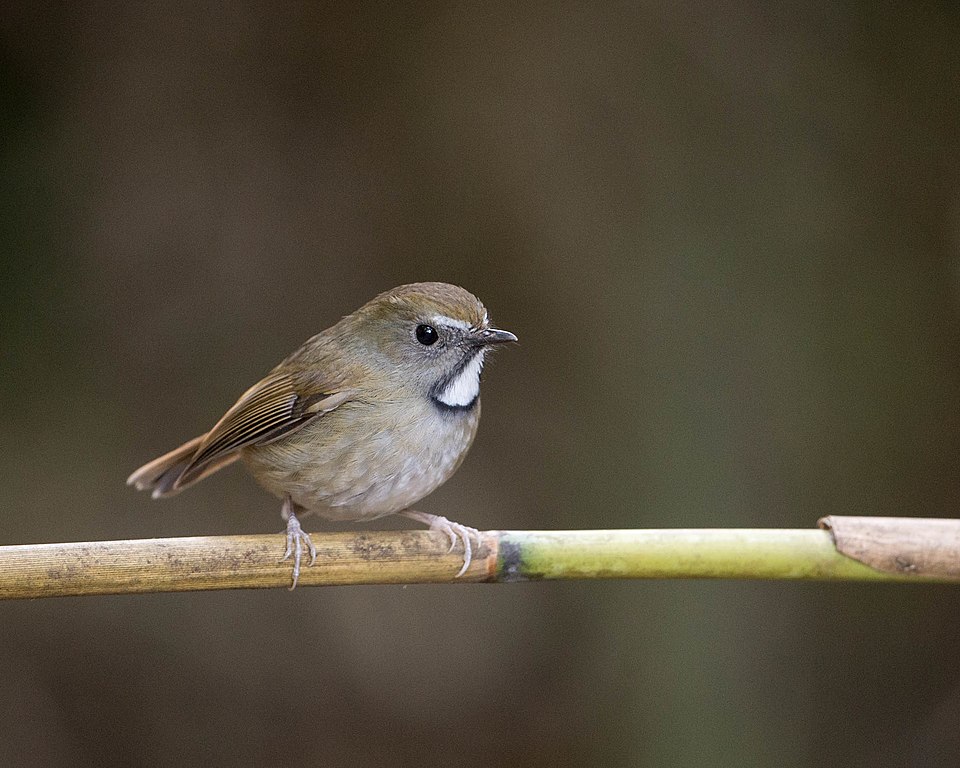


Birds Similar to the Muscicapa stenura
These species are often confused with the Muscicapa stenura due to similar appearance or overlapping range.

