
Muscicapa tessacourbe
Muscicapa tessacourbe
Order: Passeriformes / Family: Muscicapidae
About the Muscicapa tessacourbe
The Muscicapa tessacourbe, commonly known as Tess's Flycatcher, is a testament to the diverse avifauna of Africa. A member of the Muscicapidae family, this bird is a small passerine primarily found throughout sub-Saharan Africa. Its ecological role is significant, as it helps control insect populations, thus maintaining the balance within its habitat. The flycatcher inhabits a variety of ecosystems ranging from dense forests to open woodlands, and it is frequently observed in savanna regions. This adaptability to different environments highlights the species' resilience and ecological importance.
Tess's Flycatcher is most active during the early morning and late afternoon, exhibiting a distinctive hunting technique characterized by short flights from prominent perches to catch insects mid-air. During the breeding season, typically spanning from September to February, the flycatcher's activity increases as it prepares to rear young. Its breeding territories are often marked by heightened vocal activity and territorial displays, which play a critical role in mating and nesting success.
The presence of Muscicapa tessacourbe extends beyond its ecological contributions. It serves as an indicator species for environmental health, as its population dynamics can reflect changes in habitat conditions and insect abundance. Conservationists often study its population trends to assess the impact of habitat degradation and climate change on bird species within the regions it inhabits. The flycatcher's adaptability yet dependency on specific ecological niches makes it a focus of conservation efforts aimed at preserving biodiversity in sub-Saharan Africa.
The Muscicapa tessacourbe belongs to the family Muscicapidae, within the order Passeriformes. These birds typically live Unknown, but likely similar to other small flycatchers..
How to Identify a Muscicapa tessacourbe
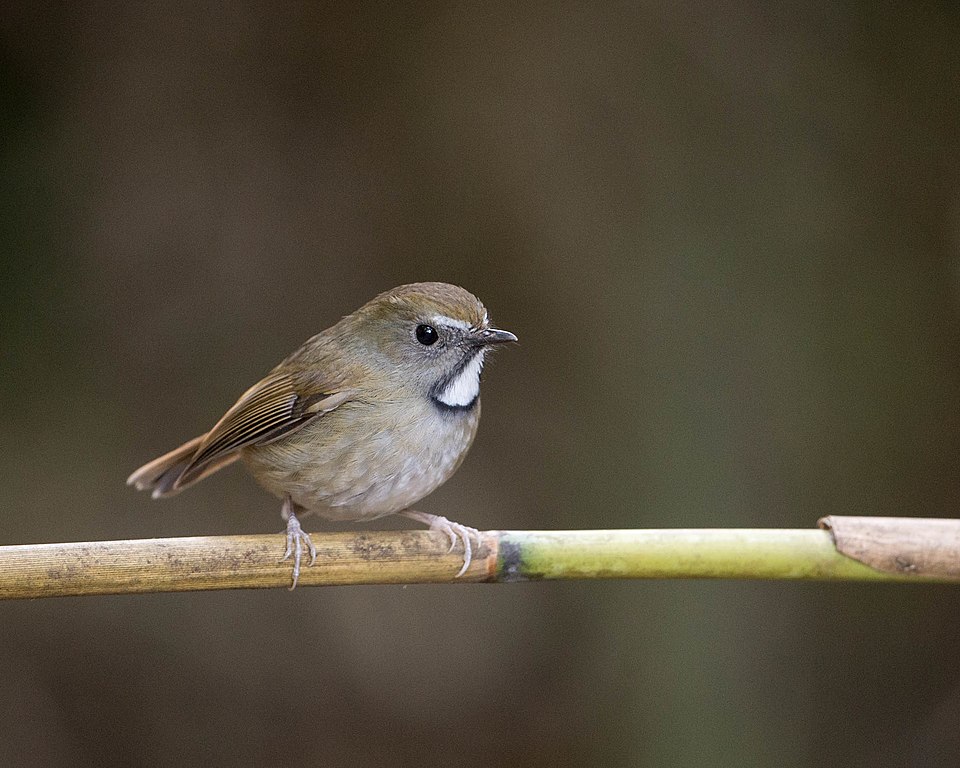
Tess's Flycatcher can be identified by its modest size and subdued coloration. Adult plumage is predominantly gray-brown, with a paler underbelly and subtle streaking on the chest. This muted coloration provides camouflage against the bark of trees and the ground. Juveniles resemble adults but often exhibit a slightly darker hue and more pronounced streaking, which dissipates as they mature.
Males and females are similar in appearance, making sex differentiation in the field challenging without behavioral observation during the breeding season. The flycatcher's silhouette is typical of the Muscicapidae family, with a short, slightly rounded tail and a medium-length, straight bill adapted for insect capture.
When perched, Tess's Flycatcher maintains an upright posture, often flicking its wings or tail as it surveys for prey. Compared to other flycatchers, such as the African Dusky Flycatcher, Muscicapa tessacourbe can be distinguished by its less contrasting plumage and more deliberate flight pattern, which involves quick, agile maneuvers to snatch insects in flight.
Having trouble telling birds apart? Upload a photo to our bird identification tool for an instant species match.
Muscicapa tessacourbe Habitat and Range
Preferred Habitat
Muscicapa tessacourbe thrives in a variety of habitats across sub-Saharan Africa. It predominantly inhabits open woodlands, savannas, and forest edges. This flycatcher is also found in riparian zones where vegetation is dense enough to support its feeding and breeding activities.
The species is typically observed at elevations ranging from sea level to about 2,000 meters, adapting to both lowland and montane environments. Tess's Flycatcher shows some flexibility in habitat preference, although it generally avoids arid regions and dense primary forests. Seasonal movements within its range reflect slight shifts in habitat use, with birds occasionally moving to areas with higher insect availability during the dry season.
While not commonly found in urban areas, it can occasionally be spotted in rural settings where natural vegetation still exists, contributing to its ecological role as a pest controller in agricultural landscapes.
Geographic Range
Tess's Flycatcher is distributed widely across sub-Saharan Africa, with its range extending from Senegal and Gambia in the west to Ethiopia in the east, and southwards to Angola and Zambia. It breeds in stable, suitable habitats throughout this extensive range, taking advantage of the diverse ecological zones provided by the continent.
In regions like the Upper Guinea forests and the central Congolian forests, population densities of Muscicapa tessacourbe are notably higher, reflecting the species' preference for areas with abundant insect prey. During the breeding season, the flycatcher remains largely sedentary, maintaining small territories suitable for nesting and rearing young.
Unlike many passerines, Tess's Flycatcher does not undertake long-distance migrations. Instead, it exhibits local movements driven by seasonal variations in food availability and habitat conditions. These movement patterns are typically within-country or between closely neighboring regions, ensuring access to optimal foraging grounds throughout the year.
Want to know which birds visit your area? Browse our backyard birds by location guides for region-specific species lists.
What Does the Muscicapa tessacourbe Eat?
The diet of Tess's Flycatcher predominantly consists of small flying insects, which it captures using agile aerial maneuvers. Its primary food sources include flies, mosquitoes, and small beetles, which are abundant in its preferred habitats. During the breeding season, the flycatcher's diet may expand to include larger prey items such as moths and caterpillars, providing necessary protein for growing chicks.
This species employs a 'sit-and-wait' foraging technique, perching on exposed branches or low shrubs before launching swift aerial sallies to snatch prey in mid-flight. Tess's Flycatcher's keen eyesight allows it to detect minute movements of insects from considerable distances, enhancing its hunting efficiency.
Seasonal diet changes correspond to shifts in insect populations, with the flycatcher exploiting periods of insect abundance. It is most active at dawn and dusk when insect activity peaks, aligning its feeding schedule with prey availability. This adaptability in foraging behavior underscores its role as an effective insect predator within its ecosystem.
Muscicapa tessacourbe Behavior and Social Structure
Tess's Flycatcher exhibits a solitary or paired social structure outside the breeding season, with individuals maintaining loose territories centered around prime foraging spots. During the breeding season, pairs become more territorial, defending their nesting area against intruders with vocal displays and aggressive chases.
Courtship displays include aerial pursuits and vocalizations, which serve to strengthen pair bonds and secure mating opportunities. Once a pair has formed, both sexes participate in nest building and rearing chicks, though males often take on a more active role in territory defense.
Flocking behavior is minimal except during times of abundant food, when small groups may congregate at rich insect sources. In the face of predators, Tess's Flycatcher relies on its agility to evade capture, often employing erratic flight patterns to confuse potential threats. Daily activity peaks during the cooler hours of the day, aligning with the times of highest insect activity.
Muscicapa tessacourbe Nesting and Reproduction
Muscicapa tessacourbe constructs open cup nests, typically located in the fork of a tree branch or within dense foliage providing concealment. The nest is composed of grasses, twigs, and sometimes spider silk, creating a sturdy structure suitable for supporting its clutch.
The typical clutch size ranges from two to three eggs, which the female incubates for approximately 12 to 14 days. During this period, the male frequently brings food to the incubating female, supporting her nutritional needs. Upon hatching, both parents share in feeding the chicks, which fledge after about 14 to 16 days.
Tess's Flycatcher may raise one to two broods per breeding season, with the timing of nesting activities closely linked to insect abundance, ensuring ample food supply for the chicks. This reproductive strategy maximizes offspring survival in variable environmental conditions.
Muscicapa tessacourbe Sounds and Vocalizations
The primary song of Tess's Flycatcher is a series of melodious, high-pitched whistles that increase in tempo before tapering off. This song serves as both a territorial declaration and a courtship display during the breeding season.
Call notes are softer and include a distinctive 'chirrip' sound, often used to maintain contact between mates or signal alarm when predators are nearby. The flycatcher is most vocal during the dawn chorus, when its song carries over long distances, asserting its presence and territorial claims.
Compared to other bird species, Tess's Flycatcher's vocalizations are less complex but no less effective in communication within its social and ecological context.
Interesting Facts About the Muscicapa tessacourbe
- 1Tess's Flycatcher can catch over 50 insects per hour during peak feeding times, showcasing its efficiency as a predator.
- 2The species is named after Tess, a fictional character from an early 20th-century novel, reflecting a tradition of literary-inspired bird names.
- 3Muscicapa tessacourbe can recognize individual humans, altering its behavior when familiar observers are present.
- 4With a wingspan averaging 20 centimeters, Tess's Flycatcher is adept at maneuvering through dense foliage during hunting.
- 5Despite its subtle plumage, the flycatcher's song is a prominent feature in the acoustic landscape of African woodlands.
- 6Research shows that Tess's Flycatcher adjusts its breeding timing by up to two weeks in response to climate variations.
- 7Unlike many birds, Tess's Flycatcher exhibits no significant sexual dimorphism, with males and females appearing nearly identical.
Muscicapa tessacourbe Conservation Status
The International Union for Conservation of Nature (IUCN) currently lists Muscicapa tessacourbe as a species of Least Concern, reflecting its widespread range and stable population trends. However, habitat loss due to deforestation and agricultural expansion poses potential threats to local populations. Conservation efforts focus on habitat preservation and the promotion of sustainable land use practices that mitigate environmental degradation. Monitoring of population trends continues, as the flycatcher's sensitivity to environmental changes makes it an important indicator species for ecosystem health. Historically, Tess's Flycatcher has shown resilience in the face of moderate habitat disturbances, but ongoing conservation measures are vital to ensure its continued survival amidst increasing anthropogenic pressures.
Other Muscicapidae Species


Birds Similar to the Muscicapa tessacourbe
These species are often confused with the Muscicapa tessacourbe due to similar appearance or overlapping range.

