
Pygmy Flycatcher
Muscicapella hodgsoni
Order: Passeriformes / Family: Muscicapidae

Wikimedia Commons
About the Pygmy Flycatcher
The Pygmy Flycatcher (Muscicapella hodgsoni) is a captivating member of the Muscicapidae family, renowned for its striking appearance and dynamic ecological role. This small passerine bird, native to parts of Southeast Asia, primarily inhabits the subtropical and tropical montane forests of regions such as Nepal, Bhutan, and northern India. These birds thrive in high-altitude environments, typically ranging from 1,500 to 3,500 meters above sea level. Their presence is most commonly noted in the Eastern Himalayas, where they play a critical role in controlling insect populations by their active foraging techniques.
The significance of the Pygmy Flycatcher extends beyond just its ecological contributions. It serves as an indicator of forest health, particularly in montane environments where its presence suggests a well-balanced ecosystem. The bird's preference for dense, moss-laden forests with abundant undergrowth highlights its reliance on healthy and undisturbed habitats. Seasonal behaviors of the Pygmy Flycatcher include altitudinal migrations, where individuals move to lower elevations during the colder months to find more favorable foraging conditions.
Ecologically, the Pygmy Flycatcher plays a pivotal role in its environment. By consuming a wide array of insects, it helps maintain a balance in the local ecosystem, preventing outbreaks of pest species. This insectivorous diet also means the bird indirectly supports plant health by reducing herbivore populations. Its presence in these forested areas contributes to the overall biodiversity, as it interacts with various species, both plant and animal, forming intricate ecological networks that underscore the complexity and interdependence of montane forest ecosystems.
The Pygmy Flycatcher belongs to the family Muscicapidae, within the order Passeriformes. These birds typically live average 3-4 years with a maximum recorded of 5 years.
How to Identify a Pygmy Flycatcher
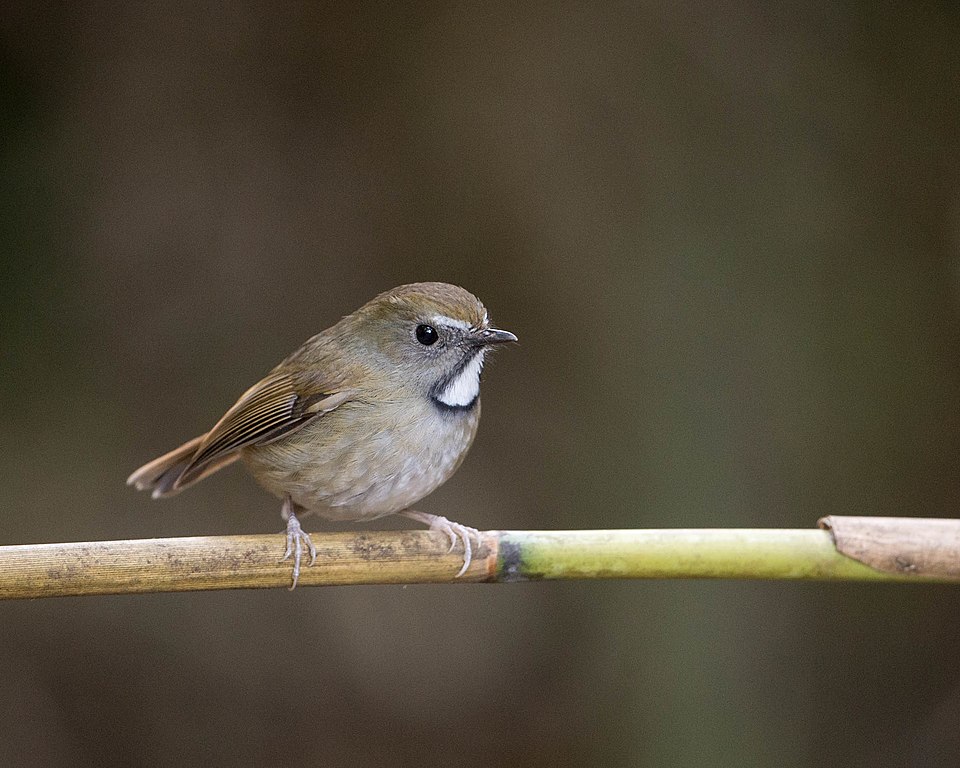
Identifying the Pygmy Flycatcher involves noting several distinctive field marks. The adult Pygmy Flycatcher boasts a vibrant plumage, with olive-green upperparts that blend seamlessly into its environment. Its underparts are a striking yellow, providing a stark contrast that makes it easier to spot against the forest backdrop. A small, compact bird, it measures approximately 9-10 cm in length, making it one of the smaller flycatchers in its range. The bird's short tail and rounded wings contribute to its characteristic silhouette, whether fluttering through the forest canopy or perched on a branch.
Juvenile Pygmy Flycatchers generally exhibit duller plumage compared to adults, with muted colors that offer better camouflage while they learn to navigate their complex forest habitats. Males and females are similar in appearance, though females may have slightly less vibrant yellow underparts. This sexual monomorphism can sometimes make it challenging to distinguish between the sexes in the field.
In terms of behavior and posture, the Pygmy Flycatcher often perches upright, using its vantage point to scan for insects before launching into swift, direct flight to capture prey. While similar in size to some warblers, the Pygmy Flycatcher can be distinguished by its distinct color pattern and the rapid, darting flight typical of many flycatchers. Its active foraging behavior and distinctive calls further aid in its identification.
Having trouble telling birds apart? Upload a photo to our bird identification tool for an instant species match.
Pygmy Flycatcher Habitat and Range
Preferred Habitat
The Pygmy Flycatcher is primarily associated with subtropical and tropical montane forests. These birds show a strong preference for dense, mossy forests rich in epiphytic growth, which provide ample foraging opportunities and nesting sites. Typically, they inhabit elevations ranging from 1,500 to 3,500 meters, often in the lower montane zone of the Eastern Himalayas.
These birds thrive in environments where moisture levels are high, supporting lush vegetation. While they are most commonly found in forested areas, some populations may venture into secondary growth or forest edges, particularly during periods of resource scarcity or altitudinal migrations. Seasonal habitat shifts occur when colder temperatures drive the Pygmy Flycatchers to lower elevations in search of food.
The Pygmy Flycatcher is not typically found in urban areas, as its reliance on forested habitats limits its presence in more developed regions. Instead, it remains a creature of the forest, dependent on the stability and health of its natural environment to sustain its populations.
Geographic Range
The range of the Pygmy Flycatcher primarily encompasses the Eastern Himalayan region, with its breeding grounds concentrated in the montane forests of Nepal, Bhutan, and northeastern India. These birds are largely sedentary, although some altitudinal migration occurs as they adjust to seasonal changes in temperature and resource availability.
During the breeding season, which aligns with the warmer months, Pygmy Flycatchers inhabit higher elevations, taking advantage of the insect-rich environments provided by the lush montane forests. As winter approaches and temperatures drop, some populations may descend to lower altitudes. This movement is primarily within their breeding range, as they seldom venture far from the habitats they are adapted to.
While not considered migratory in the traditional sense, the Pygmy Flycatcher's movements reflect a strategic response to environmental conditions, ensuring their survival in the fluctuating climates of their mountainous homes. Population density hotspots are typically within well-preserved forest areas, where human disturbance is minimal and ecological conditions are optimal for supporting their insectivorous lifestyle.
Want to know which birds visit your area? Browse our backyard birds by location guides for region-specific species lists.
What Does the Pygmy Flycatcher Eat?
The Pygmy Flycatcher's diet is primarily insectivorous, with a strong preference for small, flying insects. Its foraging strategy involves sallying from perches to capture prey mid-air, a technique that showcases its agility and precision. During the breeding season, when insect abundance peaks, these birds exploit the rich supply of caterpillars, beetles, and other invertebrates that populate the forest.
Seasonal changes in diet occur as insect availability fluctuates with weather patterns. In colder months or during periods of food scarcity, the Pygmy Flycatcher may expand its diet to include spiders and other arthropods found within the forest undergrowth. This flexibility allows it to maintain a steady food intake throughout the year.
Foraging mostly occurs during daylight hours, with peak activity in the early morning and late afternoon. The bird's small size means it primarily targets prey that is similarly small, often less than a few centimeters in length. Its activity patterns reflect the availability of prey, with some opportunistic feeding during less active periods if conditions permit.
Pygmy Flycatcher Behavior and Social Structure
The Pygmy Flycatcher exhibits a solitary or loosely paired social structure, particularly during the breeding season when pairs form to raise their young. These birds are territorial, defending their chosen nesting areas with vigor against intruders, both avian and otherwise. Territorial displays include vocalizations and physical displays, such as wing flicking and aerial chases.
Courtship involves a series of displays where males showcase their plumage and agility to attract females. These displays are often accompanied by vocalizations that serve to both woo potential mates and deter rivals. Once a pair bonds, they remain monogamous for the season, working together to raise their offspring.
In response to predators, the Pygmy Flycatcher relies on its agility and the dense forest cover for protection. Alarm calls are used to alert nearby conspecifics when threats are detected. Daily activity patterns are largely diurnal, with periods of intense activity focused around foraging interspersed with quieter moments of rest and preening. These behaviors ensure that the Pygmy Flycatcher remains a vibrant and active participant in its forest ecosystem.
Pygmy Flycatcher Nesting and Reproduction
The Pygmy Flycatcher constructs well-camouflaged nests, typically choosing sites in dense vegetation or on the branches of trees where moss and lichens provide natural concealment. Nests are cup-shaped and crafted from an assortment of natural materials, including moss, twigs, and fibers, often bound together with spider silk to enhance durability and flexibility.
Preferred nest locations are within the mid to upper canopy, which offers protection from ground-based predators and access to abundant food resources. Clutch size usually ranges from two to four eggs, with both parents sharing responsibilities for incubation, which lasts approximately 12 to 14 days.
Once the eggs hatch, the nestlings are altricial, requiring constant care and feeding by the parents. Fledging occurs around 14 to 16 days post-hatching, at which point the young birds gradually become independent. Typically, Pygmy Flycatchers raise one to two broods per year, depending on environmental conditions and resource availability.
Pygmy Flycatcher Sounds and Vocalizations
The Pygmy Flycatcher is known for its melodious song, a series of clear, high-pitched notes that rise and fall in a rapid sequence. The rhythm is fast and lively, often described as a musical trill that carries well through dense forest environments. These songs play a crucial role in territory establishment and mate attraction.
In addition to its primary song, the Pygmy Flycatcher produces a variety of call notes, including sharp chips and whistles used to maintain contact between mates and signal alarm. Alarm calls are more abrupt and harsh, serving to alert others to the presence of potential threats.
Dawn chorus behavior is pronounced in this species, with males typically singing the most vigorously at first light, taking advantage of the stillness of morning to broadcast their presence. The bird's vocalizations are not only a delight to the ear but also a key component of its behavioral repertoire, facilitating communication and interaction within its forest habitat.
Interesting Facts About the Pygmy Flycatcher
- 1The Pygmy Flycatcher measures just 9-10 cm, making it one of the smallest members of the Muscicapidae family.
- 2This species is an agile flyer, frequently seen darting through the forest in pursuit of insects with remarkable precision.
- 3Despite its small size, the Pygmy Flycatcher plays a significant role in controlling insect populations in its montane forest habitat.
- 4Pygmy Flycatchers often use spider silk to bind their nests, a technique that adds strength and flexibility to the structure.
- 5The bird's vibrant yellow underparts make it a striking sight against the green backdrop of its forest home.
- 6Muscicapella hodgsoni is named in honor of British naturalist Brian Houghton Hodgson, who made significant contributions to the study of Himalayan fauna.
- 7During the dawn chorus, male Pygmy Flycatchers can be heard singing vigorously as they establish territory and attract mates.
Pygmy Flycatcher Conservation Status
Currently, the Pygmy Flycatcher is classified as Least Concern by the IUCN, indicating a relatively stable global population. However, habitat destruction and fragmentation pose significant threats to its long-term survival, particularly as logging and agricultural expansion encroach on its montane forest habitats. Despite these challenges, conservation efforts focus on preserving the integrity of forest ecosystems within the bird's range. Protected areas and national parks in Nepal, Bhutan, and India offer refuges where populations can thrive without the pressure of human disturbance. Ongoing research and monitoring are essential to track population trends and adapt conservation strategies as necessary. Historically, the Pygmy Flycatcher has benefitted from the relative inaccessibility of its preferred habitats, which has shielded it somewhat from the more severe impacts of human activity. Nevertheless, vigilance remains crucial to ensure that these vibrant birds continue to flourish in their natural environments.
Other Muscicapidae Species


Birds Similar to the Pygmy Flycatcher
These species are often confused with the Pygmy Flycatcher due to similar appearance or overlapping range.

