
White-bellied Blue-Robin
Myiomela albiventris
Order: Passeriformes / Family: Muscicapidae

Wikimedia Commons
About the White-bellied Blue-Robin
The White-bellied Blue-Robin, also known as Myiomela albiventris, is a captivating bird found predominantly in the montane forests of southern India, particularly in the Western Ghats. This region, a biodiversity hotspot, provides the ideal environment for the species, offering dense undergrowth and a plethora of insect prey. The White-bellied Blue-Robin plays a significant role in its ecosystem by controlling insect populations and providing food for predators such as hawks and larger mammals. Its presence indicates a healthy forest ecosystem. During the breeding season, typically from March to June, these robins become more conspicuous, engaging in territorial displays and vocalizations. In contrast, they remain elusive in the non-breeding winter months, quietly foraging in dense understory. Their ecological role extends beyond simple insect control; they also assist in seed dispersal, indirectly supporting forest regeneration. The White-bellied Blue-Robin’s preference for high-altitude forest habitats makes it particularly vulnerable to the effects of deforestation and climate change, as these factors continue to threaten the delicate balance of their montane environments.
The White-bellied Blue-Robin belongs to the family Muscicapidae, within the order Passeriformes. These birds typically live average 4-6 years with a maximum recorded of 8 years.
How to Identify a White-bellied Blue-Robin
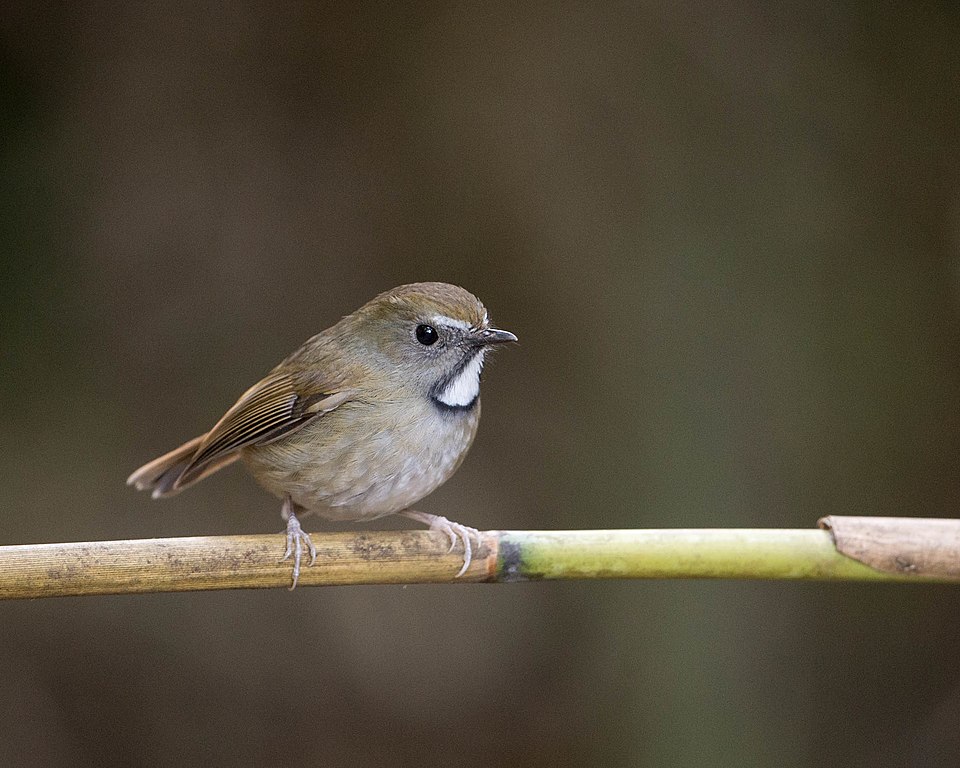
Adult White-bellied Blue-Robins showcase a vibrant blue plumage on their upperparts, with a distinct white belly that gives the bird its common name. Males have a more intense blue compared to females, whose tones are slightly more subdued, allowing for easier differentiation between the sexes. Juveniles, on the other hand, exhibit a browner appearance with less pronounced blue, gradually acquiring their adult coloration as they mature. The bird's striking dichromatic pattern sets it apart from many other species. However, it can sometimes be confused with the Nilgiri Blue Robin, another endemic species in the same region. To differentiate, note that the White-bellied Blue-Robin has a more pronounced white belly and a slightly different vocalization pattern. In flight, the robin's silhouette is compact, with a relatively short tail and rounded wings, aiding in agile maneuvers through dense foliage. When perched, it often holds its tail slightly cocked, a behavior typical of many robins.
Having trouble telling birds apart? Upload a photo to our bird identification tool for an instant species match.
White-bellied Blue-Robin Habitat and Range
Preferred Habitat
The White-bellied Blue-Robin prefers evergreen and shola forests, typically between altitudes of 1,200 to 2,000 meters. These habitats offer a rich understory, providing cover and abundant feeding opportunities. During breeding season, they are mainly found in dense, moist forests where the canopy is closed, and the undergrowth is thick. In the non-breeding season, they may move slightly but remain within forested areas. Unlike some adaptable bird species, the White-bellied Blue-Robin is rarely found in urban or heavily disturbed areas, underscoring its reliance on undisturbed forest environments. Its presence in these habitats often indicates a well-preserved ecosystem, free from the extensive human encroachment affecting many other regions.
Geographic Range
The geographical range of the White-bellied Blue-Robin is restricted to the Western Ghats of southern India, a mountain range spanning the states of Kerala, Tamil Nadu, and Karnataka. This region serves as both the breeding and non-breeding habitat for the species, with no significant migratory movements outside the area. Within the Western Ghats, the robin's populations are more concentrated in specific high-altitude regions, where suitable habitats are available. These populations remain relatively stable throughout the year, as the bird does not undertake long-distance migrations. The White-bellied Blue-Robin’s restricted range makes it particularly vulnerable to habitat loss, although its current population is not critically low in numbers.
Want to know which birds visit your area? Browse our backyard birds by location guides for region-specific species lists.
What Does the White-bellied Blue-Robin Eat?
The diet of the White-bellied Blue-Robin primarily consists of insects and other small invertebrates, which it gleans from the forest floor and low foliage. Ants, beetles, and caterpillars constitute the majority of its diet, with occasional consumption of small fruits and seeds, especially during times when insects are less abundant. During the breeding season, the demand for protein-rich food increases, prompting the robins to forage more actively throughout the day. Their foraging technique involves quick, darting movements through the underbrush, using their keen eyesight to spot prey. The White-bellied Blue-Robin’s feeding habits play a critical role in controlling insect populations, thus maintaining ecological balance in its forest habitat.
White-bellied Blue-Robin Behavior and Social Structure
White-bellied Blue-Robins typically exhibit solitary behavior, except during the breeding season when they form monogamous pairs. These pairs are highly territorial, defending their space against other robins with vocal displays and physical confrontations. Courtship involves the male performing elaborate songs and displaying its bright plumage to attract a mate. Flocking is uncommon, but juveniles may form small groups post-fledging as they learn to forage independently. The species is primarily diurnal, with increased activity during early morning and late afternoon when foraging conditions are optimal. When faced with predators, such as snakes or raptors, the birds rely on their agility and dense cover for protection, often employing alarm calls to warn others.
White-bellied Blue-Robin Nesting and Reproduction
The White-bellied Blue-Robin constructs its nest in dense undergrowth, often at the base of small trees or shrubs. Nests are cup-shaped and built using a variety of materials, including moss, leaves, and twigs, providing excellent camouflage. A typical clutch consists of 2 to 3 eggs, which are incubated by the female for about 14 to 16 days. During this period, the male plays a crucial role in feeding the incubating female. Once hatched, both parents share responsibilities in feeding the chicks, which fledge approximately 12 to 14 days post-hatching. The species usually raises one brood per year, but if conditions are favorable, a second brood may be attempted.
White-bellied Blue-Robin Sounds and Vocalizations
The primary song of the White-bellied Blue-Robin is a melodious and repetitive series of clear whistles, often delivered from a concealed perch in the forest. This song, varying slightly between individuals, serves as a territorial and mate-attraction call. In addition to its song, the robin produces a variety of call notes, including sharp 'chip' sounds used for communication between mates and as alarm signals. During the dawn chorus, the robin's song is most prominent, contributing to the symphony of forest sounds at first light.
Interesting Facts About the White-bellied Blue-Robin
- 1The White-bellied Blue-Robin is endemic to the Western Ghats, making it a unique species of southern India.
- 2Its song is often compared to the melody of a flute, adding a musical element to its dense forest habitat.
- 3Unlike many robins, the White-bellied Blue-Robin prefers high altitudes, thriving in montane forests.
- 4It plays a vital role in insect control, preying on a variety of forest-dwelling invertebrates.
- 5Despite its name, juveniles lack the striking blue color, instead showing a more camouflaged brown.
White-bellied Blue-Robin Conservation Status
The IUCN currently lists the White-bellied Blue-Robin as Near Threatened, primarily due to habitat loss from deforestation and land conversion in the Western Ghats. While the population trend is stable for now, ongoing habitat destruction poses a significant threat. Conservation efforts focus on protecting critical habitats and promoting sustainable land-use practices. Historical data shows a decline in population density in areas where forest cover has been reduced, highlighting the importance of habitat conservation for this species.
Other Muscicapidae Species


Birds Similar to the White-bellied Blue-Robin
These species are often confused with the White-bellied Blue-Robin due to similar appearance or overlapping range.

