
White-browed Forest-Flycatcher
Fraseria cinerascens
Order: Passeriformes / Family: Muscicapidae

Wikimedia Commons
About the White-browed Forest-Flycatcher
The White-browed Forest-Flycatcher, Fraseria cinerascens, is a small passerine bird native to the dense forests of Central and West Africa. This species is an important insectivore within its habitat, playing a crucial role in controlling insect populations. Found primarily in countries like Cameroon, Gabon, and the Democratic Republic of the Congo, the flycatcher frequents tropical moist lowland forests and subtropical or tropical moist montane forests. Its presence often indicates a healthy, undisturbed forest ecosystem due to its preference for dense canopy cover. During the breeding season, which generally coincides with the rainy months, the White-browed Forest-Flycatcher exhibits increased vocal activity. It establishes territories through its distinctive calls, which play a role not only in mate attraction but also in territorial disputes. Outside the breeding season, this bird remains relatively sedentary, with no significant migratory behavior observed. Its ecological role extends beyond mere insect control as its presence supports the rich biodiversity of the forest floor. The White-browed Forest-Flycatcher contributes to the seed dispersal of certain plant species, although indirectly, as it consumes insects that feed on seeds. By maintaining a delicate balance within its ecosystem, this flycatcher proves vital to the intricate tapestry of life that defines its forested home. Despite being somewhat elusive due to its preference for dense cover, the bird's distinctive plumage and vocalizations make it an engaging subject for birdwatchers and ornithologists alike. Understanding the dynamics of its habitat and behavior sheds light on the broader health of African forest ecosystems.
The White-browed Forest-Flycatcher belongs to the family Muscicapidae, within the order Passeriformes. These birds typically live typically 4-6 years, with a maximum of 8 years recorded..
How to Identify a White-browed Forest-Flycatcher
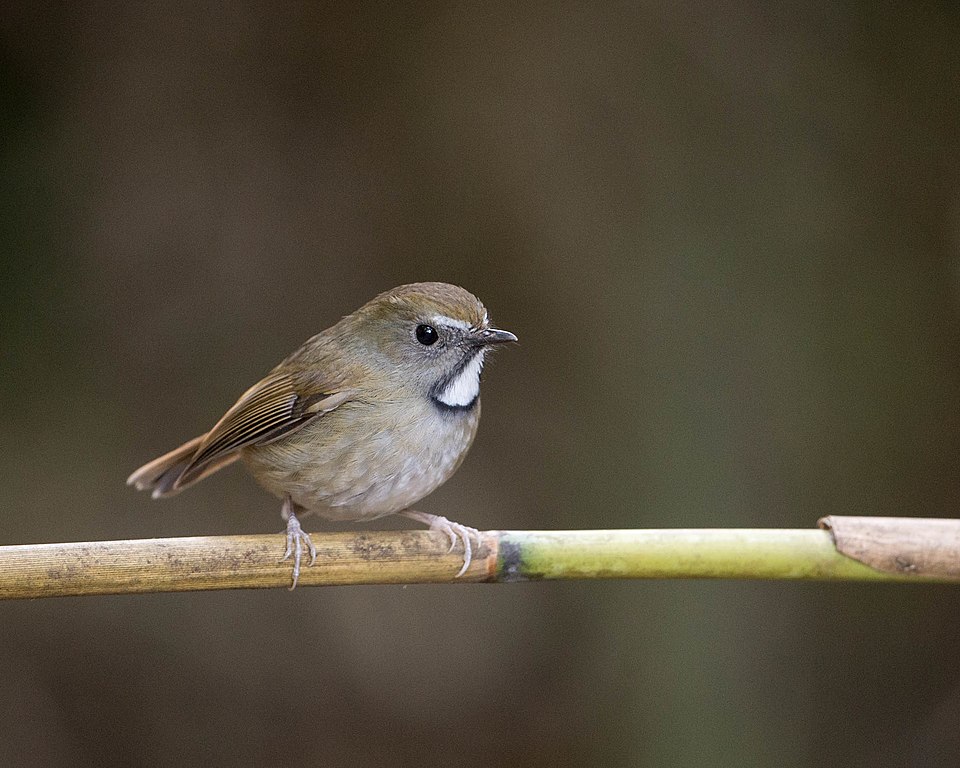
The White-browed Forest-Flycatcher can be identified by its striking white eyebrow, which stands out against its primarily olive-brown plumage. Adult birds display a subtle gray wash over the upperparts, with underparts that are paler, almost off-white. Males and females exhibit similar plumage, though males may appear slightly brighter during the breeding season. Juveniles resemble adults but have a more pronounced streaking on the upperparts, which fades as they mature. In flight, the flycatcher showcases a compact silhouette with broad wings and a relatively short tail, characteristics that aid in its agile foraging. Its perching posture is upright, often seen from low to mid-canopy levels, where it hunts for insects. Confusion may arise with other small forest flycatchers, but the White-browed Forest-Flycatcher's distinctive eyebrow and habitat preferences help differentiate it from similar species. Observers should note its active foraging behavior, which often includes short, darting flights to capture prey.
Having trouble telling birds apart? Upload a photo to our bird identification tool for an instant species match.
White-browed Forest-Flycatcher Habitat and Range
Preferred Habitat
The White-browed Forest-Flycatcher inhabits tropical and subtropical moist forests, thriving in areas with dense canopy cover. It is predominantly found in lowland forests but can also occupy montane regions up to 1,200 meters in elevation. The species shows a strong preference for primary forests with minimal human disturbance, though it can occasionally be found in secondary growth areas. Seasonal habitat shifts are minimal, as the bird remains within forest interiors year-round. Unlike some flycatchers, it rarely ventures into urban environments, sustaining its existence in the lush, secluded woodlands of its range. Its reliance on undisturbed habitats underscores the importance of forest conservation efforts in retaining its population.
Geographic Range
The White-browed Forest-Flycatcher is distributed across a swath of Central and West Africa. Its breeding range includes countries such as Cameroon, Gabon, and the Democratic Republic of the Congo, where it inhabits rich, biodiverse forests. The species does not engage in long-distance migration, remaining largely resident within its range throughout the year. Some local movements may occur in response to food availability or environmental conditions, but these are typically limited to short distances within its forest habitat. The flycatcher is most abundant in areas with extensive forest cover, where it finds ample foraging opportunities and suitable nesting sites. Despite its specific habitat requirements, the bird maintains a relatively stable population across its range, though deforestation poses a significant threat to its continued presence.
Want to know which birds visit your area? Browse our backyard birds by location guides for region-specific species lists.
What Does the White-browed Forest-Flycatcher Eat?
The White-browed Forest-Flycatcher primarily feeds on insects, making it an adept aerial predator within its forest habitat. Its diet includes a variety of insect species such as beetles, flies, and caterpillars, which it captures through agile, darting flights. This flycatching technique is characterized by short sallies from a perch, where the bird waits patiently before launching itself at prey. During the rainy season, when insect abundance peaks, the flycatcher increases its feeding activity, ensuring ample energy for breeding. It may also consume small berries and fruits opportunistically, particularly when insect prey is scarce. This dietary flexibility allows the White-browed Forest-Flycatcher to sustain itself in varying environmental conditions, although its primary reliance remains on insects.
White-browed Forest-Flycatcher Behavior and Social Structure
The White-browed Forest-Flycatcher exhibits a solitary and territorial nature, particularly during the breeding season. Males establish and defend territories through vocalizations and occasional physical displays. Courtship involves subtle displays and vocal exchanges, strengthening pair bonds. Although generally solitary outside the breeding season, the flycatcher may form loose associations with other small insectivorous birds during foraging. This species exhibits a crepuscular activity pattern, being most active during the early morning and late afternoon when insects are abundant. In response to predators, the bird employs evasive maneuvers and seeks refuge in dense foliage, relying on its drab plumage for camouflage. The flycatcher remains vigilant, often perching quietly to scan its surroundings before engaging in any activity.
White-browed Forest-Flycatcher Nesting and Reproduction
The White-browed Forest-Flycatcher constructs a cup-shaped nest using materials such as grasses, leaves, and spider silk, usually positioned in a tree fork or dense shrub. Nesting sites are selected with care, often concealed within thick foliage to protect against predators. The female typically lays 2 to 3 eggs per clutch, with both parents sharing incubation duties over a period of approximately two weeks. After hatching, chicks are fed by both parents and fledge within three weeks. The species may produce two broods per year, particularly in regions with extended wet seasons. Parental care continues for a short period post-fledging, ensuring the young develop necessary survival skills.
White-browed Forest-Flycatcher Sounds and Vocalizations
The primary song of the White-browed Forest-Flycatcher is a series of soft, melodious whistles, varying in pitch and rhythm. These songs function in territory establishment and mate attraction. Its call notes are sharp and brief, serving as communication between mates or as alarms when predators are nearby. The bird participates in a dawn chorus, its song mingling with those of other forest birds. Compared to other flycatchers, its vocalizations are gentle and less conspicuous, yet distinctive enough to identify in the dense forest habitat.
Interesting Facts About the White-browed Forest-Flycatcher
- 1The White-browed Forest-Flycatcher is a specialist insectivore, consuming up to 80% of its diet in insects.
- 2Despite its small size, the White-browed Forest-Flycatcher can defend territories as large as three hectares.
- 3This species is often a key indicator of forest health due to its reliance on primary forest habitats.
- 4The flycatcher's nest is intricately built, using spider silk for added strength and flexibility.
- 5White-browed Forest-Flycatchers exhibit site fidelity, often returning to the same nesting area each year.
- 6Their vocalizations are less conspicuous than those of other flycatchers, aiding in discreet territory maintenance.
- 7The species' preference for dense forests makes it less frequently observed compared to more open-habitat flycatchers.
White-browed Forest-Flycatcher Conservation Status
Currently, the White-browed Forest-Flycatcher is listed as Least Concern by the IUCN. Its population trend appears stable, though localized declines may occur due to habitat loss and fragmentation, primarily from logging and agricultural expansion. Conservation efforts focus on preserving forest habitats within its range, with some protected areas providing refuge. Monitoring population trends and habitat integrity remains crucial, as any significant habitat alteration could quickly impact this forest-dependent species. Historical data suggest the species has maintained a relatively stable population, but ongoing threats necessitate vigilance to ensure its continued survival.
Other Muscicapidae Species


Birds Similar to the White-browed Forest-Flycatcher
These species are often confused with the White-browed Forest-Flycatcher due to similar appearance or overlapping range.

